
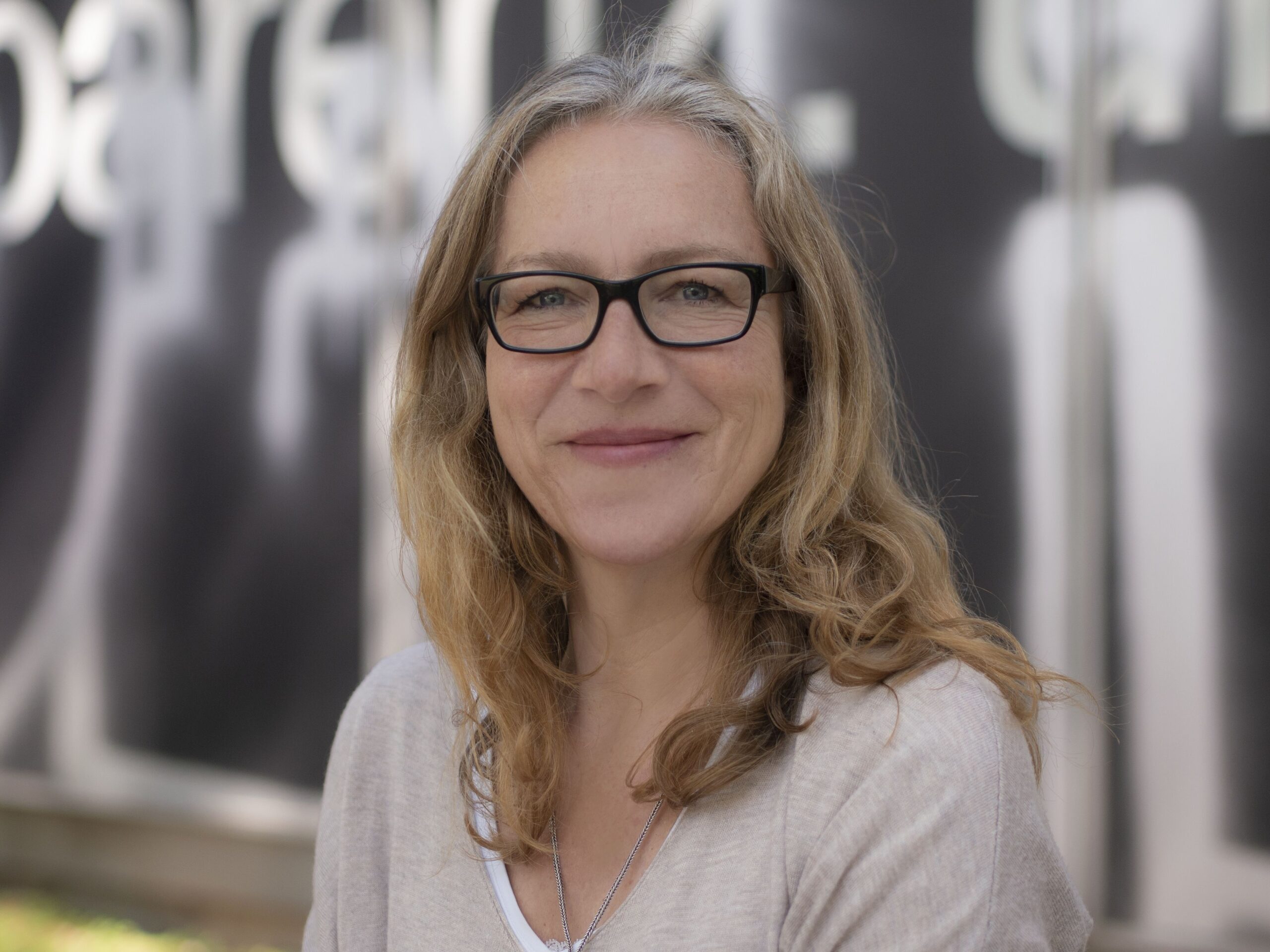
Annette Lechner has spent decades bringing Austrian and international literature to readers across the world. We spoke to her about publishing, translation, and the enduring appeal of Austrian writing.
Thanks so much for speaking to New Books in German, to kick off, could you tell us a little about your background and your role with Zsolnay?
I have been responsible for the rights department at Paul Zsolnay Verlag in Vienna for over 25 years now – particularly for foreign rights, but also for film and theatre rights as well as paperback and book club rights in the domestic market. As I suspect may also be the case for some of my colleagues, I came to rights more or less by chance. After training as a bookseller in an academic publishing house in Heidelberg, I studied economics, German and English in Vienna and then worked at a small Viennese children’s publisher. There I was mainly responsible for sales and marketing and – when time allowed – for the rights department. At Zsolnay I was finally able to focus fully on this area. Fascination for books, exchange with international publishing colleagues at book fairs, getting to know and to better understand cultural differences as well as to discover similarities; these all feel extremely exciting and enriching.
Zsolnay has a strong literary legacy. How does that history shape the way you approach contemporary publishing today?
Paul Zsolnay Verlag, which celebrated its 100th anniversary in 2024, is one of the most renowned and largest Austrian literary publishers based in Vienna. Since 1996 it has been part of Carl Hanser Verlag in Munich, though it operates as an independent company. As early as the post-war period, Zsolnay gained a reputation for an internationally oriented list through German translations of internationally successful authors such as Graham Greene, H. G. Wells, Colette and Nobel laureate Pearl S. Buck. At the same time, the publisher also achieved international success through the sale of translation rights to works by German-language authors – including Austrian classics such as Leo Perutz, Marlen Haushofer and Ernst Lothar. The works of these authors still form an integral part of our international backlist licensing business today. Marlen Haushofer is currently experiencing a significant renaissance and is being rediscovered as a pioneer of feminist literature.
Alongside contemporary Austrian literature by authors such as Birgit Birnbacher, Franzobel, Daniel Glattauer, Michael Köhlmeier, Paulus Hochgatterer and Susanne Gregor, as well as younger voices like Elias Hirschl, another focus lies on literary reportage and travel writing, for example by Karl-Markus Gauß and the recently deceased Martin Pollack. Due to Vienna’s geographical position and its proximity to the countries of the former Yugoslavia, the Balkans and Southeastern Europe, contemporary literature from these regions is also a central part of the programme. In some cases we now represent authors from these regions internationally, including Mircea Cărtărescu (Romania), Ivana Bodrožić and Milica Vučković (Serbia) and Drago Jančar (Slovenia).
In 1996 Zsolnay became part of Carl Hanser Verlag. How do you work with Hanser colleagues and how can being part of Hanser benefit authors and their works?
Decisions about our publishing programme are made independently in Vienna. In other areas – I’m thinking particularly about sales, publicity, marketing and production – we work closely with Hanser and so benefit from numerous synergies.
There are also many overlaps in the rights department: for example, we share a foreign-rights website, are represented by joint agents in some territories, produce a joint rights catalogue and send out joint newsletters. In editorial and programme terms, however, we work separately. While I represent Zsolnay titles worldwide, my rights colleagues are responsible for the other publishers in the Hanser group. Despite clearly distinguishable publishing profiles, Hanser and Zsolnay occasionally compete with one another in international rights business. Overall, however, because we work so intensively together the benefits overcome this, and I really value the teamwork within the group.
What excites you most about the authors Zsolnay is publishing? Who should readers be looking out for?
Although our list is not very extensive in terms of the number of new titles each year, I am constantly struck by its diversity. In fiction, the spectrum ranges from classics to contemporary Austrian and international literature to more commercial titles. In nonfiction it spans aspects of cultural history as well as essays, reportage, philosophical texts and biographies. It is precisely this breadth that can make it a challenge to position our books, match them with the best rights partners, and enthuse those partners about our programme.
How do you see Austrian writing as distinct within the German-language world? Are there particular themes or styles that resonate beyond its borders?
I think literature always reflects the historical, cultural, political, social and geographical circumstances from which it emerges. Following on from that, it is only logical that German, Austrian and Swiss texts differ: they have different focus points, reflect different perspectives and sensibilities, and not least differ in their humour.
This is by no means new. The works of Franz Kafka, Joseph Roth, Karl Kraus, and Stefan Zweig would be almost inconceivable without an examination of the Habsburg Monarchy and its downfall – think of the ‘Habsburg myth.’ This influence is still clearly visible in Thomas Bernhard: without his constant friction with Austrian realities, Bernhard would not be Bernhard. Conversely, a Thomas Mann in an Austrian context is difficult to imagine.
Austria is a small country shaped by mountains and valleys and with a strong rural structure; Vienna is not a metropolis like Berlin. I believe all of this is reflected -consciously or unconsciously – in what Austrian authors write.
Austrian literature is internationally popular and has been increasingly in demand in recent years. Many Austrian authors are translated into numerous languages, including English – no longer just the classic or big names like Canetti, Handke, Jelinek or Bernhard, but also Eva Menasse, Monika Helfer, Milena Michiko Flašar, Raphaela Edelbauer, Robert Seethaler, Robert Menasse, Arno Geiger, Daniel Glattauer, Paulus Hochgatterer, Christoph Ransmayr and Norbert Gstrein, to name just a few. Perhaps this international resonance lies in the playfulness with language, the subtle humour, the often more melancholic tone, a slightly morbid charm – and of course always in the specific local colour.
What are your hopes for the next generation of Austrian writers, especially in terms of their international visibility?
I can name a few!
That budgets for literature and culture will not be cut further.
That literature will continue to receive sufficient support so that even substantial works can be translated despite high costs.
That the diversity of literary voices will be preserved despite AI and other technological developments.
And that there will continue to be a market beyond mainstream bestsellers.
Annette Lechner photograph © Nele Steinborn