
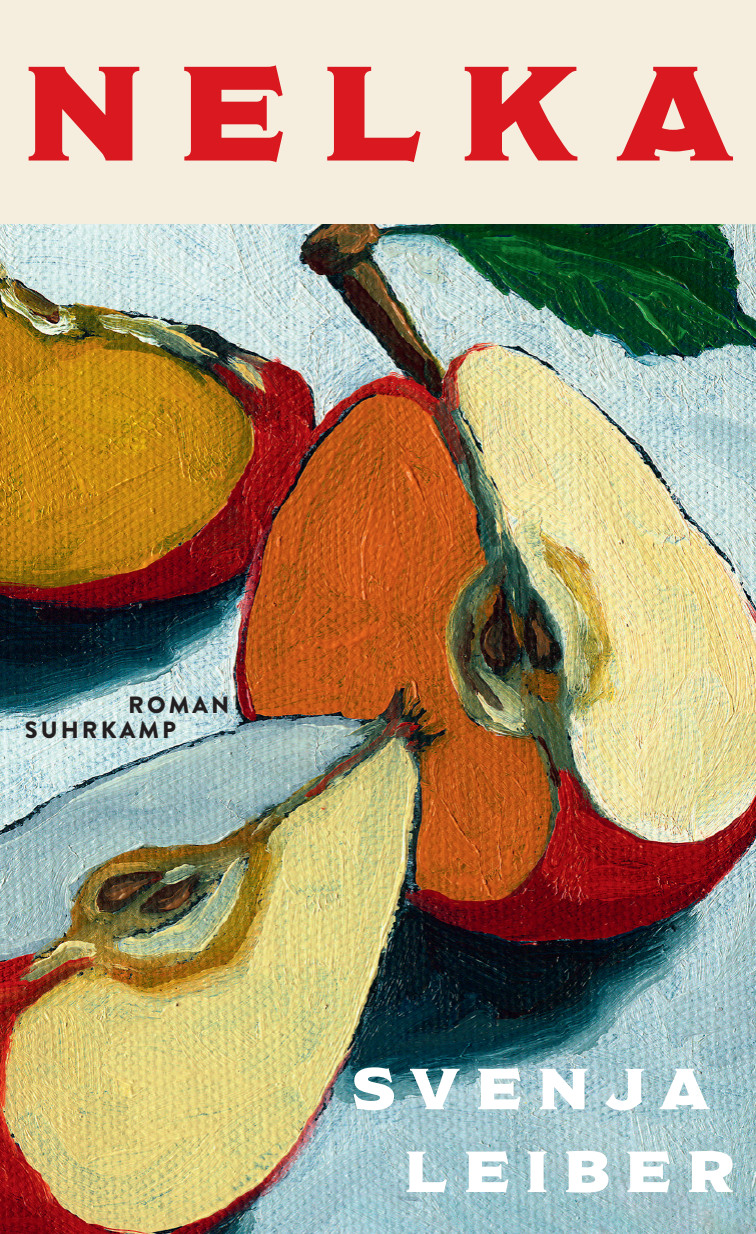
review
In this concise, clear-eyed novel, Svenja Leiber brings a fresh angle to wartime fiction, focusing on a young female forced labourer and the specific forms of exploitation she faces. Set in the Second World War and the early 1990s, ‘Nelka’ follows a woman who returns, decades later, to the northern German estate where she was once imprisoned and put to work on an apple farm, and where an unresolved reckoning still hangs in the air.
The story opens with a letter sent by Nelka, the young woman in question, to Marten, the estate manager, and then alternates between their perspectives. In the 1990s strand of the narrative, Nelka has travelled back from Lviv (Lwów, then Lemberg) to revisit the place that shaped and damaged her. In the wartime chapters, we see her being taken from her home, transported west, and made to labour on the estate alongside other displaced women, forming fragile, sustaining friendships in a world that aims to break them.
Nelka’s father taught her fruit cultivation and grafting, knowledge that becomes both a tool for survival and a trap. Marten recognises her expertise, pulls her into the house, and uses the orchard project as a pretext to keep her close. What looks, from the outside, like ‘better work’ is also a tightening net, separating her from her friends and increasing her exposure to his attention.
Leiber’s decision to give Marten a viewpoint is unsettling but highly effective. His sections do not excuse him, but they do show the self-justification, the entitlement, and the petty pressures he converts into cruelty. What begins as sexual interest in Nelka escalates into abuse whose aftermath only becomes fully clear at the end of the novel.
Tautly structured and rich in recurring images, ‘Nelka’ returns over and over again to the theme of grafting: what is joined, what is cut, what takes, what does not, and what grows. It is a novel about knowledge and the body, about stolen labour and lives reshaped, and about the long half-life of coercion.
For English-language publishers, the familiar terrain of the Second World War is sharpened by a highly feminist angle, and the moral friction of the perpetrator’s lens. Fans of Bernhard Schlink’s The Reader will recognise the uneasy intimacy of hindsight and self-justification; the text also recalls the countryside wartime setting of Walter Kempowski’s All for Nothing and its highlighting of how private lives become a pressure cooker in the context of public history.
Find out more: https://www.suhrkamp.de/rights/book/svenja-leiber-nelka-fr-9783518432761


All recommendations from Spring 2026