
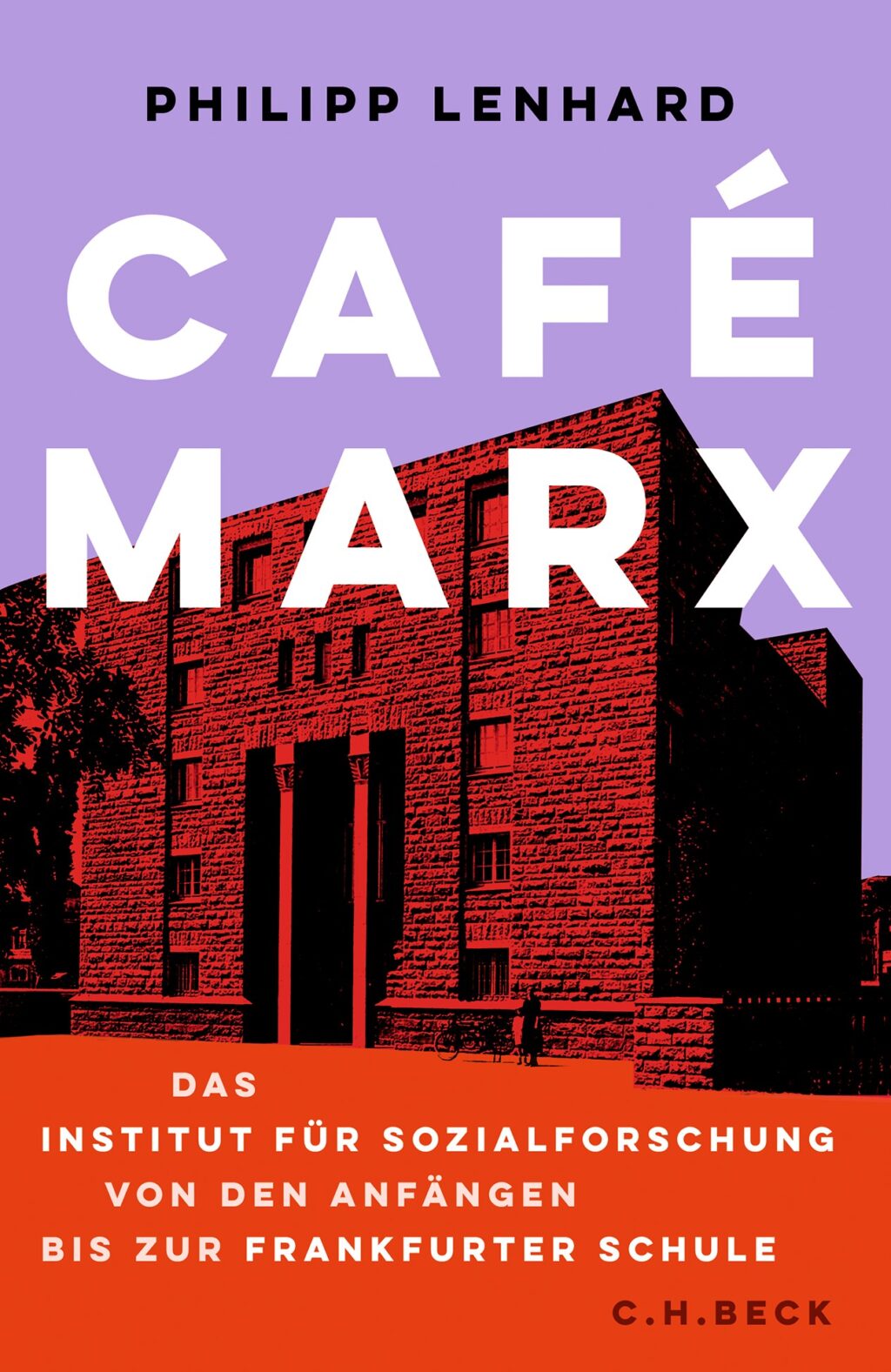
review
Philipp Lenhard’s ‘Café Marx’ is a compelling, panoramic intellectual history of the Frankfurt School on its centenary, tracing the rise, evolution, and lasting global influence of the Institute for Social Research (1924–2024). This thoroughly researched book offers more than a history of ideas; it tells the human story behind a century of critical theory, placing philosophical debate within the often-perilous context of political upheaval and exile.
Structured in six parts spanning over a hundred years – from the Weimar Republic to the rise of the far-right in today’s Europe – Lenhard’s account focuses less on abstract ideas and more on how they emerged from the lived experiences of the people who developed them. While he covers the intellectual giants – Horkheimer, Adorno, Marcuse, Benjamin, Arendt, Angela Davis – the real strength of the book lies in how it treats lesser-known figures and unsung contributors: the secretaries, caretakers, librarians, and women who were often erased from earlier histories. These vignettes, embedded within a fluid narrative, offer a more egalitarian picture of the intellectual ecosystem the Frankfurt School both created and relied upon.
Lenhard’s narrative is shaped by historical turning points: flight from Nazi Germany, rebuilding in American exile, and later navigation of Cold War tensions and New Left radicalism. ‘Café Marx’ shows how theory was shaped in response to economic precarity, racialised violence, and rising authoritarianism. Lenhard’s Marxist perspective is evident, but never heavy-handed; he shows how the conditions of intellectual production are inseparable from the ideas produced.
What makes ‘Café Marx’ particularly relevant today is its resonance with contemporary political anxieties: authoritarian resurgence, disinformation, and the continued commodification of public life. Lenhard’s meticulous research, global scope, and narrative flair make this book a vital resource not just for scholars, but for general readers interested in the intertwined history of politics and philosophy.
Comparable to Wolfram Eilenberger’s The Visionaries (Allen Lane, 2023, tr. Shaun Whiteside) in tone and ambition, ‘Café Marx’ is broader in scope and historical range. A potential landmark publication in English, it would offer a nuanced understanding of the intellectual tools we inherit and the historical crises that shaped them. This is a timely, absorbing work that deserves a wide international readership.
Find out more: https://www.chbeck.de/lenhard-cafe-marx/product/36194844

All recommendations from Autumn 2025