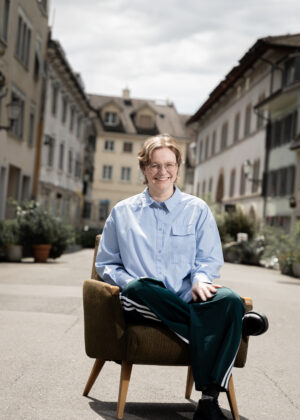
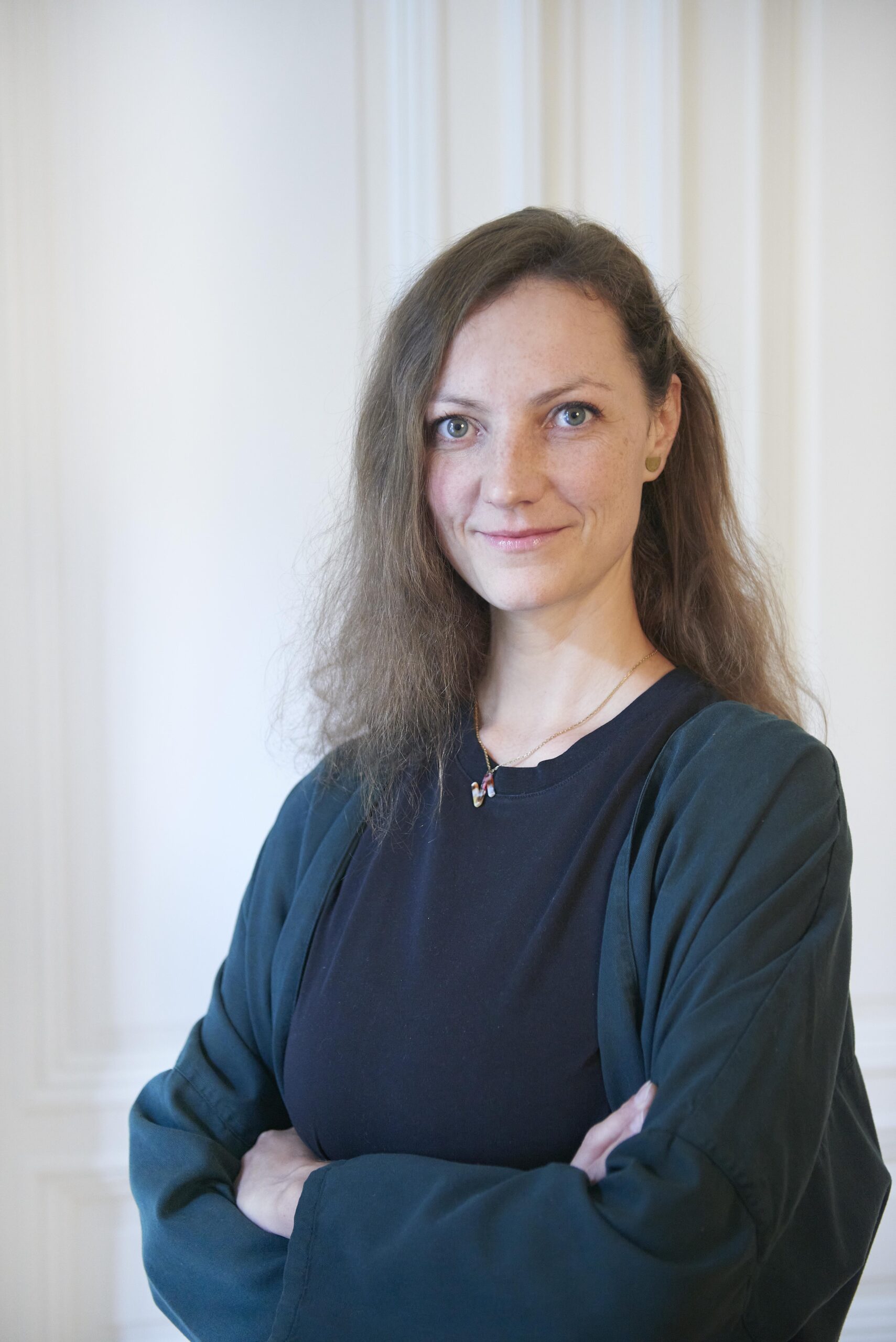
Nadya Reich-Hartmann from the Frankfurter Verlagsanstalt speaks to NBG about her work and some of the publisher’s exceptional books and authors
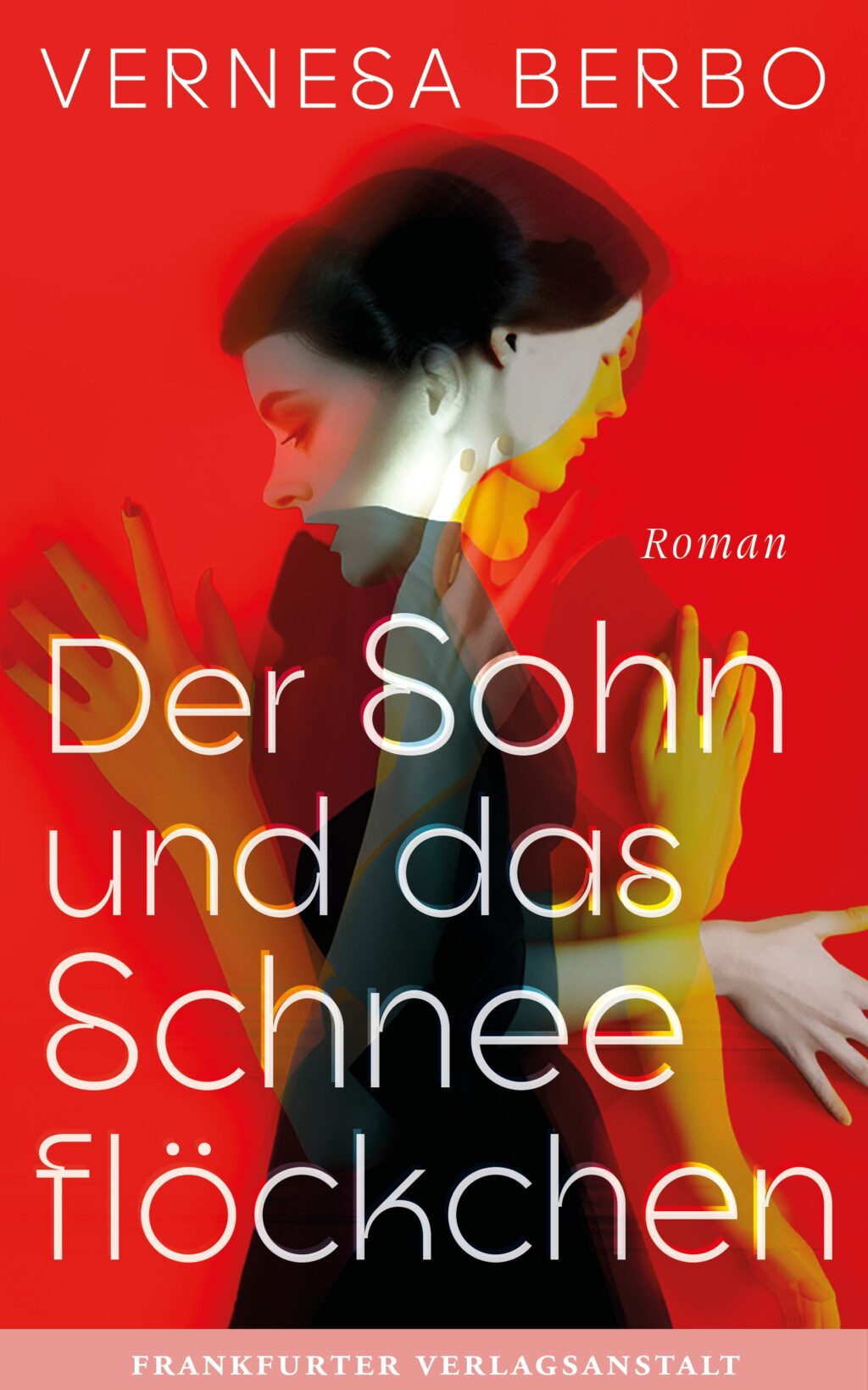
Anna Compton: Our jury just chose Vernesa Berbo’s debut Der Sohn und das Schneeflöckchen. Saša Stanišić has called it ‘A novel against war and for love. A great joy.’ Can you tell us a little about the book and why you hope it will find a home with an English-language publisher?
Nadya Reich-Hartmann: Vernesa Berbo is one of those rare forces of nature. When you read her book, it just whisks you away and you forget everything around you; you love, laugh and hope together with the characters while also learning a bit about the war in Yugoslavia and the siege of Sarajevo – but on an emotional level rather than an intellectual one. Dada, Dijana, Mirza and Zoka stay with you even after you’ve finished reading. It’s an extraordinary novel about friendship, the will to survive, humour in the face of horror, pain and the beauty of a first, great love – and, above all, about two sisters sticking together against all odds. It’s the most vivid, most stirring novel I’ve read or edited in a long time. There’s nothing I can compare it to but, if I had to, the work of our bestselling author Nino Haratischwili comes closest.
Why did you decide to work in publishing? Could you tell us a bit about your career so far?
Throughout my time studying French, Spanish and Sociology at university, I was always doing something related to literature. I did internships in various industries alongside my studies – at broadcasting companies, newspapers, publishing houses and more. The one that had the biggest impact on me was my traineeship at the literary institution Literarisches Zentrum Göttingen. As a trainee there, I got the chance to do (almost) everything: working at the till, operating the lighting, writing programme texts, moderating – and I experienced new authors every week, who I only knew from books, including Günter Grass, Herta Müller, Judith Hermann… it was a dream. And then I was lucky enough to always have someone open a door for me at the right moment; I’m very grateful for that.
What do you like best about your job? What’s it like to work in a small team?
Oh, there’s so much I like about my job! There’s collaborating with the authors, working with texts all the time, talking to colleagues and the publisher every day – the fact that we’re a small team means you get involved in a lot of things and know exactly what others are working on; we’re always thinking outside the box, which I find really refreshing in my day-to-day work and means I’m constantly learning. We’re also very flexible, which I really appreciate, particularly when it comes to the catalogue. And then there’s the little things – I recently said to my husband that I’m probably the only person who still sharpens pencils at work! I still do my first edit on paper, and I love it.
How was the Frankfurter Verlagsanstalt established? What kind of books does it publish?
The Frankfurter Verlagsanstalt dates back many years, as it was founded for the first time in 1920. However, it lay dormant and was revived again several times, including by Eugen Kogon and Alfred Andersch (in 1951) and Ida and Klaus Schöffling (in 1987). The Frankfurter Verlagsanstalt has existed in its current form since 1994, when Joachim Unseld took over after leaving Suhrkamp Verlag.
We publish literature, mainly contemporary German-language literature, but also translations from French and Georgian, as well as special finds in other languages, and we place particular emphasis on new discoveries – we have one or even two debuts in almost every catalogue. That’s a big risk for a publisher, but it pays off time and time again. Authors like Zoë Jenny, Marion Poschmann, Nora Bossong, Julia Wolf, Mareike Fallwickl, Elsa Koester and Demian Lienhard are just a few of these discoveries.
How does the publishing house differ from other German publishers?
Nino Haratischwili is an international bestselling author, whose most successful work The Eighth Life has sold over 1.5 million copies. That would, of course, make it seem like we’re a juggernaut.
Nadya Hartmann
Publishing houses are probably like families – no two are really alike when you look closely. People often think the FVA is ‘bigger’ than it actually is – apart from the publisher, there’s only four of us working here at the moment. It may be because of the ‘-anstalt’ (‘establishment’) part of the publishing house’s name, or because of the authors. Nino Haratischwili is an international bestselling author, whose most successful work The Eighth Life has sold over 1.5 million copies. That would, of course, make it seem like we’re a juggernaut.
The English translation of The Eighth Life was also nominated for the International Booker Prize. Was it clear from the beginning that you were dealing with a really special book?
Oh yes. We all cried the first time we read it. It was obvious that it was one of those incredibly rare, brilliant books that will stand the test of time – a ‘pyramid’ work, rather than a beacon.
Do you think the success of The Eighth Life shows that readers have an appetite for longer works?
Definitely. Of course, there are lots of other examples, and there always have been – the works of Leo Tolstoy, Roberto Bolaño, Donna Tartt and David Foster Wallace are not exactly slim either. I think there will always be both shorter and longer books.
Which of your other books have achieved success in translation?
The Pollen Room by Zoë Jenny from 1997 holds its own against the works of Nino Haratischwili. I’m still granting licences for it now, most recently to Azerbaijan. I’ve lost count of how many countries it has sold in, and second editions are being published in many of them.
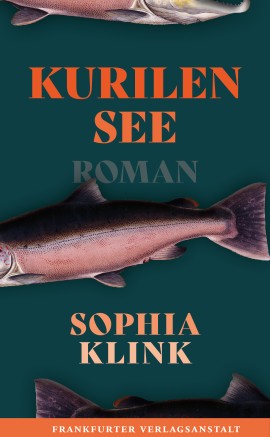
Zehn Bilder einer Liebe and Kurilensee have also been recommended byNew Books in German. Why do you think they are worth reading? Why should they be translated into English?
I’d been looking for a modern romantic novel like Zehn Bilder einer Liebe by Hannes Köhler for so long. How do you tell a love story without using clichés? How do you write a book that people can relate to, yet still feels new? Hannes Köhler pulls this off masterfully – one of the main reasons why it has become an absolute hit with booksellers and book bloggers.
Kurilensee by Sophia Klink is an outstanding nature-writing debut with its own literary language – I haven’t read anything like it anywhere else. The poet with a PhD in biology blends rational, scientific language with emotional and poetic language; it’s so enthralling that it pulls you from page to page in its wake. You also learn a lot about salmon, bears, volcanoes, the beauty of the Kamchatka Peninsula and the threat of climate change, but it doesn’t feel like learning – her imagery simply shines through.

Are there any other authors you would particularly recommend or new books you would especially like to highlight?
So, I would highly recommend reading the works of Nino Haratischwili, Elsa Koester, Amanda Lasker-Berlin, Hannes Köhler, Christian Mitzenmacher, Vernesa Berbo, Bianca Nawrath, Sandra Weihs and Sophia Klink – and look out for the new novels by Franziska Hauser and Verena Stauffer, which we’re publishing in early 2026.
Nadya Hartmann
It’s always difficult to choose, because all our authors are very dear to me. But, of course, I don’t want to pass up the opportunity to name some of them. So, I would highly recommend reading the works of Nino Haratischwili, Elsa Koester, Amanda Lasker-Berlin, Hannes Köhler, Christian Mitzenmacher, Vernesa Berbo, Bianca Nawrath, Sandra Weihs and Sophia Klink – and look out for the new novels by Franziska Hauser and Verena Stauffer, which we’re publishing in early 2026.
Thank you for the conversation and brilliant book recommendations, Nadya!
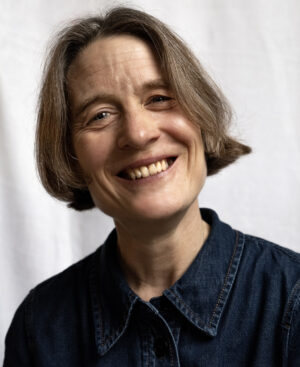
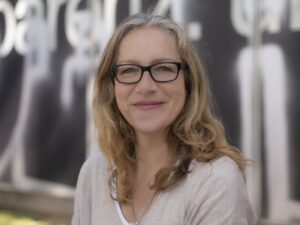
Nadya Hartmann photo (c) Laura J Gerlach

Nadya Hartmann is a Program Director (Programmleiterin) at the Frankfurter Verlagsanstalt, where she plays a pivotal role in shaping the literary identity and future of the esteemed independent publisher.

Anna Compton is a freelance translator working from German and French. She previously spent nine years as an in-house translator at a language service provider, where she ran translation internships and gave talks about translation as a career, as well as translating and revising a wide variety of texts.