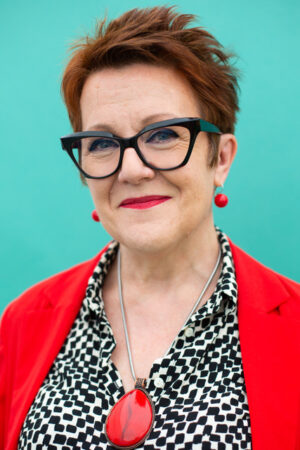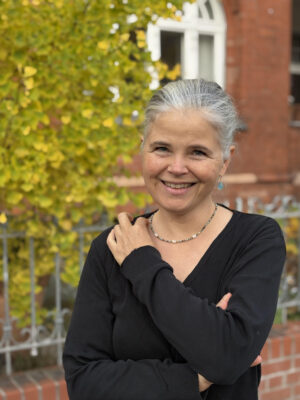
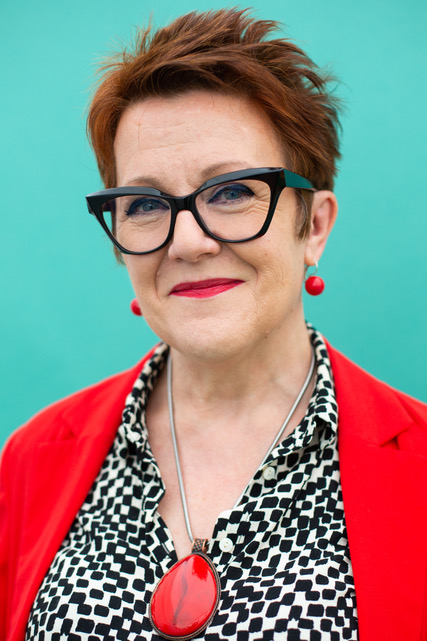
Rosie Goldsmith, former BBC journalist and the founder and director of the European Literature Network and Editor-in-Chief of The Riveter magazine talks to NBG about the forthcoming European Writers’ Festival, which she curates, due to take place at the British Library on 16–17 May 2026.
You’ve described the European Writers’ Festival (EWF) as a ‘dream come true’ both personally and professionally. Was there a specific gap in the UK literary landscape that convinced you this festival needed to exist?
EWF is not only a dream but a necessity and there would certainly be a gap in the market if it didn’t exist, especially in 2026, ten years after the Brexit vote: it’s the only literature festival in the UK focusing on shared UK-European cultural values, showcasing not only excellent individuals in individual events (the usual festival format) but uniting writers from all over Europe to debate and perform together in a series of panels over one weekend. Things happen, sparks fly and new ideas are born when you engage in creative conversation. And with the writers come their translators, publishers and readers, so it’s a magnificent networking opportunity as well as a chance for audiences to engage with European issues and stories that matter to all of us, from war to climate change, love to humour. The twenty-six authors – many are Booker Prize equivalents in their own countries – were chosen by me and the selection panel (Bee Rowlatt, British Library; Noreen Masud, Bristol University and Toby Lichtig, Times Literary Supplement) for their outstanding literature as well as their contemporary relevance – nearly all their books are recent translations.
I’ve been involved in chairing and running European festivals and events in the UK since 2009, when I created the European Literature Network after leaving the BBC, and when the British Library staged its first European Literature Night, thereby filling several gaps in the UK market – and the European Writers’ Festival is a continuation of our joint commitment, steered by the European Union National Institutes of Culture, EUNIC London. Each participating European country has to want to participate, and to be able to afford to attend, so it is a massive challenge, and, yes, times are hard. Arts funding in most countries is suffering but after a decade of the Brexit disaster (my words!), this festival is as essential as ever: we can’t give up. It is a signal to our cultural leaders that we are still here and still care about belonging to Europe.
The festival is a huge collaboration between the European Literature Network, EUNIC, the British Library, the European Parliament and the EU Delegation to the UK. As the festival’s curator, how do you navigate the different cultural priorities of these different organisations to create a cohesive weekend programme?
That word ‘collaboration’ is key and there is enormous behind-the-scenes planning but the reality is that core team is small, the budget is tiny, but we have all worked together before, know our specialism and share a common passion, which is to create something bigger than ourselves within a compact format! Everyone does their bit. The role of the programmer is to ensure the quality of the literature and to carefully curate nine panels with twenty-six vastly different authors, so that each can shine and engage with themes they feel inspired by. A cohesive festival also comes from having a feel for the zeitgeist: the themes must reflect what’s going on in the world – these authors have their fingers on the pulse and we must too.
That word ‘collaboration’ is key and there is enormous behind-the-scenes planning but the reality is that core team is small, the budget is tiny, but we have all worked together before, know our specialism and share a common passion, which is to create something bigger than ourselves within a compact format!
Rosie Goldsmith
With writers from twenty-six countries representing nearly every corner of Europe, how do you choose which authors to invite?
As ever it is a balancing act, with many players. There are several countries we would have loved to include but there are so many reasons they couldn’t. My real ‘dream come true’ (see question one!) would be to one day run a well-funded pan-European festival in the UK for a whole week: why not?!
Twenty-six writers is an exceptional achievement though and hats off to the twenty-six European cultural institutes and embassies in London who are funding their authors. As for my role, it is essential that I keep on top of what’s happening in European literature and last year I travelled to several European book festivals and met many of the authors featured in this year’s EWF festival: it was so helpful to see them in action and understand what’s happening in their countries. Added to which after fifteen years promoting European literature and translation in the UK, I have amassed significant knowledge and networks. For example, I’ve worked with Fiston Mwanza Mujila, who is coming from Austria, before, and with Nino Haratischwili from Germany; they both have new books out in English; they both deserve to be better known in the UK; their translators are superb and they are scintillating speakers – so the choice was clear. And they both represent something at the heart of the festival: neither was born in Austria or Germany and neither spoke German as a first language, but they prove that multilingualism and multiculturalism are aspirational and qualities of all healthy societies.
Also, Nino Haratischwili has been selected as UCL’s 2026 European Literary Writer in Residence, so she’ll be in London for a whole month. These continuing partnerships – with the TLS, UCL and others – also help to make the festival cohesive and give it that extra value. Every single author at the festival is a star, either established or debut, and every single one has an original story to tell: that’s why they’re there. Most of them are novelists – is that a coincidence or a trend? I’m not sure, a few are also poets and essayists but it’s fascinating to note how broad the fiction genre is in Europe today and how all the festival writers juggle genres, topics, styles and disciplines, from the play-writing memoirist to the crime-writing screenwriter and the war-reporting short story writer.
You are a fierce advocate for translated fiction in the UK. How central is the work of translators to the programming of this festival, and do you see the UK’s appetite for translated work finally shifting?
This might be my shortest answer (you’ll be pleased to hear!) because of course translation is central to the festival. Without the translators this festival would not take place. Apart from a couple of authors who write in English (Wendy Erskine and Christy Lefteri) each festival author will be bringing their translated books, which will also be on sale. We also like to involve translators in the festival where possible, for example Polish translation queen Antonia Lloyd-Jones will be chairing one of the events. As far as the changing scene and appetite in the UK, I firmly believe there is greater normalisation and acceptance of translated fiction, especially among young people, but the book trade infrastructure for it is still weak and under constant commercial pressure (not just from AI) so we cannot be complacent. Another reason that festivals like ours must continue to exist!
This year the EWF takes place between 16–17 May, with over two days of panels, readings and conversations; some of Europe’s most compelling voices will explore ideas that shape our world – from migration and belonging to freedom of expression, nature, democracy and more. You can book tickets for the festival here.
Main photo © Billie Charity
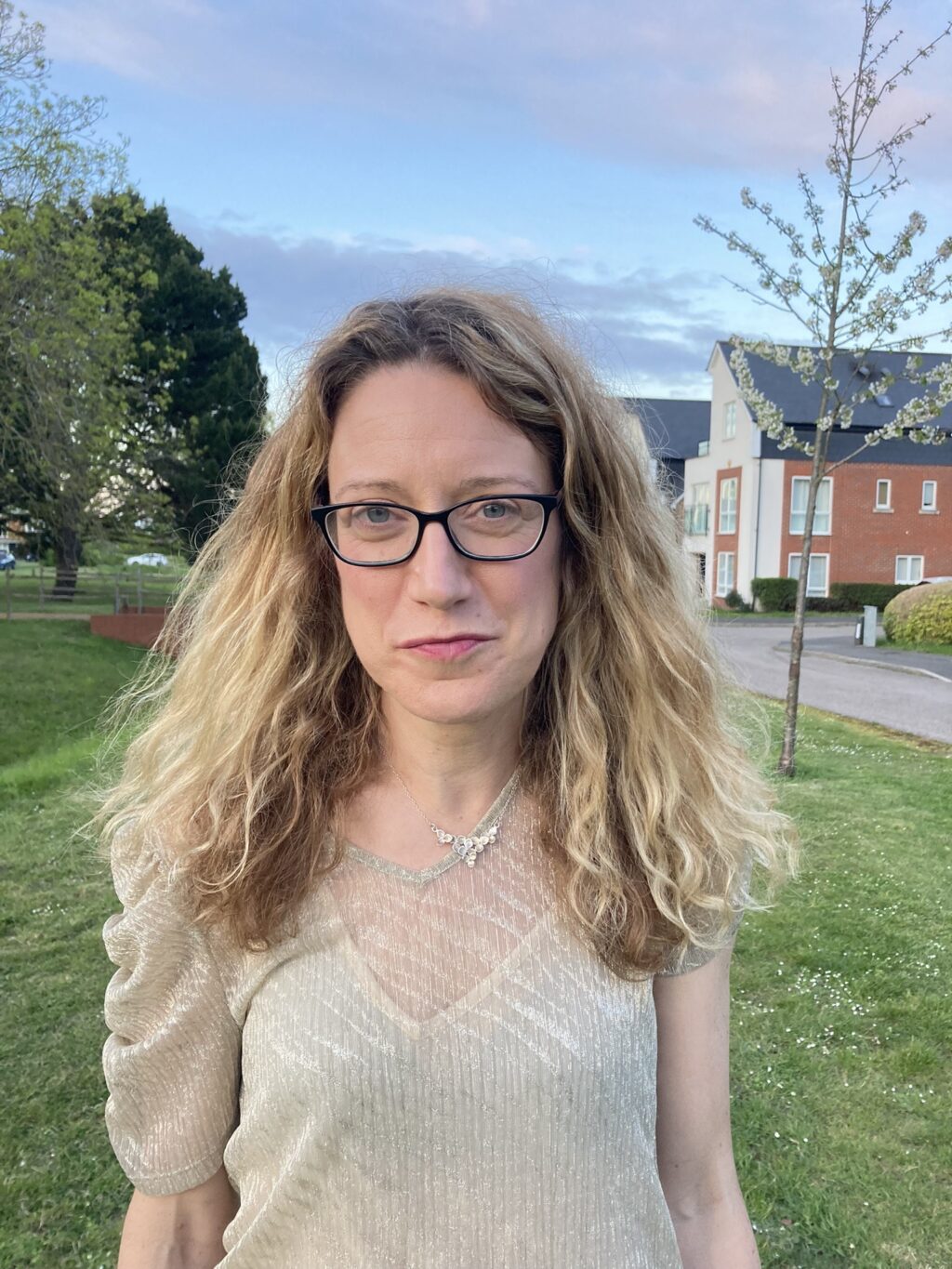
Sheridan Marshall works as Editorial Consultant for New Books in German. She is a translator from German into English.