
review
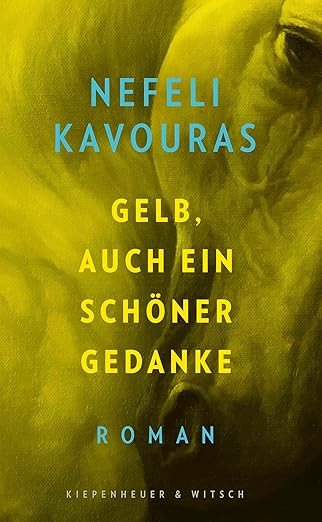
Nefeli Kavouras’s striking debut, ‘Centaur’, offers an unusual and profoundly moving exploration of at-home palliative care through the lens of a fractured mother-daughter relationship, with echoes of Patrick Ness’s iconic novel, A Monster Calls.
While the premise – a teenage girl, Lea, and her mother, Ruth, navigating the protracted demise of Lea’s father, Georg – suggests a sombre domestic drama, Kavouras elevates the narrative with a startling twist of magical realism. Georg has been dying since Lea’s early childhood, existing in a vegetative state that has consumed Ruth and left Lea yearning for an ordinary life. The tension between them is palpable: Lea feels repulsed by the stagnation of their home, while Ruth is so tethered to her husband’s care that she has become a stranger to her daughter.
The narrative takes a Kafkaesque turn when Lea enters her father’s room to find that he has turned into a horse. This metamorphosis serves as a poignant metaphor for the ‘transitional space’ of terminal illness. The equine Georg is moved to a stable managed by a mysterious woman named Edna – a facility for those whose final days require a different kind of holding ground. This shift forces a role reversal; Lea takes over caring duties at the stables, while Ruth, unable to cope with the absurdity of the transformation, retreats into a fantasy world of past affairs.
The novel’s short, unadorned chapters alternate between Lea and Ruth’s perspectives and provide insights into their mutual isolation. We see Ruth’s lingering envy of the ‘secret language’ Georg and Lea once shared, and Lea’s struggle to admit a forbidden truth: that she wants her father to finally be released from his suffering. The inclusion of a brief, lyrical prose poem from Georg’s viewpoint is the source of the book’s title and offers a fleeting, sensory glimpse into the mind of the dying.
Kavouras handles the heavy themes of grief and end-of-life care with a light touch, finding moments of normal teenage exuberance in Lea’s romance with Max and her friendship with Anna. The prose is evocative yet restrained, allowing the emotional weight of the final reconciliation between mother and daughter to feel earned. This is a powerful, quirky debut that marks Kavouras as a significant new voice in German fiction.
Find out more: https://www.kiwi-verlag.de/verlag/rights/book/nefeli-kavouras-gelb-auch-ein-schoener-gedanke-9783462008708

All recommendations from Spring 2026