
review
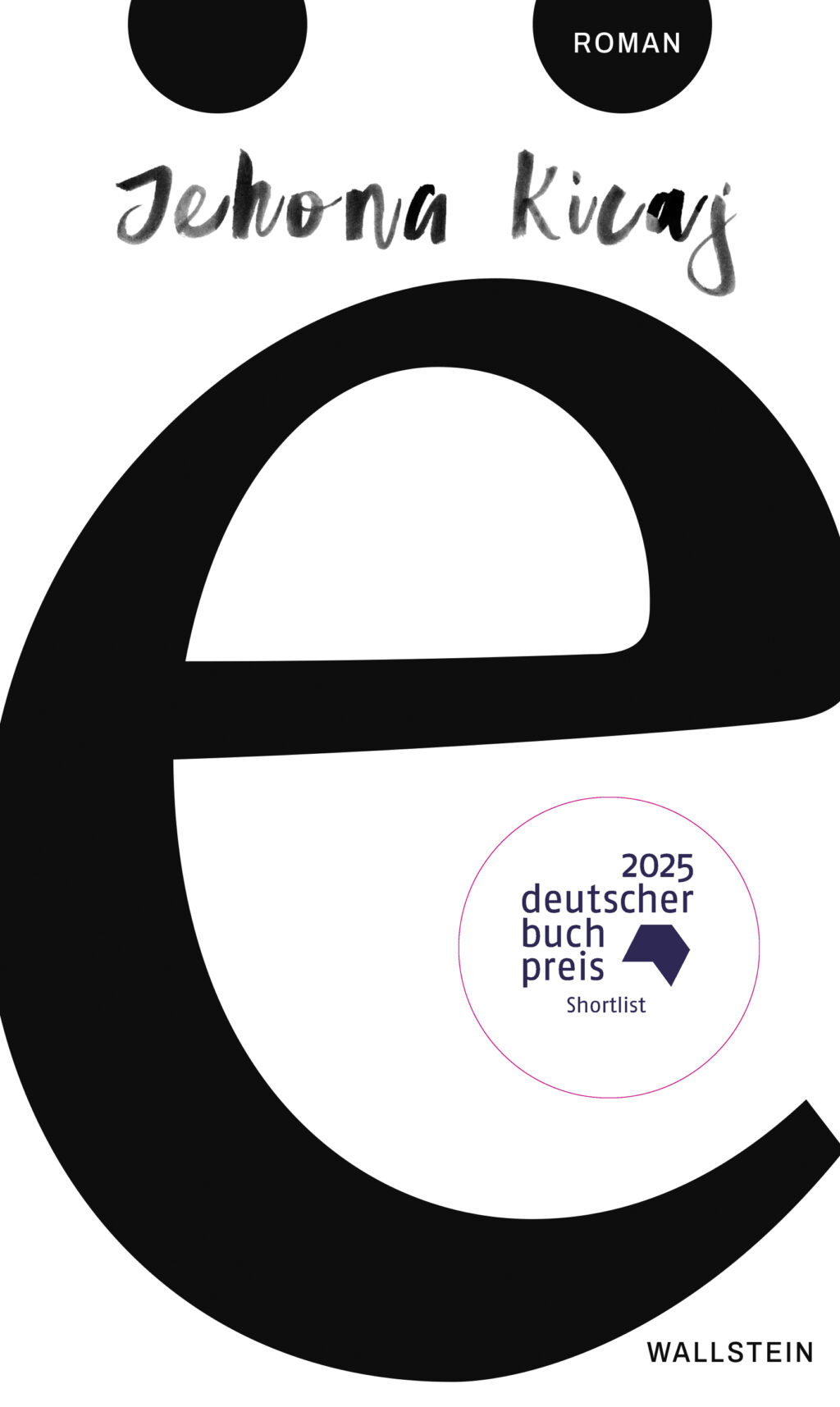
Jehona Kicaj’s debut novel ë, shortlisted for the 2025 German Book Prize, is a quiet, exacting book about the Kosovo war’s legacy in the diaspora, and about everything that cannot be properly said but nonetheless shapes a life.
The narrator, the youngest daughter of Kosovo-Albanian migrants in Germany, is educated, articulate, and yet constantly feels like a misfit. The book opens with her grinding her teeth so hard that fragments splinter in her mouth. Bruxism is the diagnosis, but Kicaj treats it as a clue: a bodily response to histories that are present in the family, but never spoken about.
A series of dentist visits becomes the frame for an obsessive, piecemeal search for knowledge about the 1998–99 conflict and what it did to the narrator’s relatives. She collects information the way you might gather evidence: family recordings, conversations with relatives in Germany and Kosovo, online traces, TV documentaries, and lectures by a forensic anthropologist that look at bones and teeth as testimony when names and records have failed. The result is not a tidy lesson, but a personal investigation that keeps catching on gaps, evasions, and blunt disinterest.
Kicaj’s structure is fragmentary and deliberate. Scenes recur and answer one another, images are picked up, shifted, and re-seen, so that what looks at first like a scatter of episodes gradually reveals itself as a carefully constructed pattern. This sense of composition matters. It mirrors the narrator’s problem, namely that there is no single linear narrative to inherit, only pieces that one has to hold together without forcing them into false certainty.
Language is the book’s core subject, and also its method. The title refers to ë, a letter in the Albanian alphabet that is often barely pronounced, yet changes the sound around it. Kicaj turns this linguistic feature into a precise metaphor for unspoken experience: ë alters everything from inside the word. The text moves between German, Albanian, and occasionally English, making the reader feel the pressures of translation, mislabelling, and belonging, rather than simply reading a description of these experiences.
For English-language readers, ë offers something rare: a Kosovo Albanian perspective on a conflict that is still comparatively underrepresented in literary fiction, told without melodrama, but with real formal intelligence and emotional bite. It will appeal to readers who enjoy language-led, memory-driven writing such as that of Saša Stanišić and Ronya Othmann, and fans of Eva Hoffman’s Lost in Translation.
Find out more: https://www.wallstein-verlag.de/9783835359499.html

All recommendations from Spring 2026