
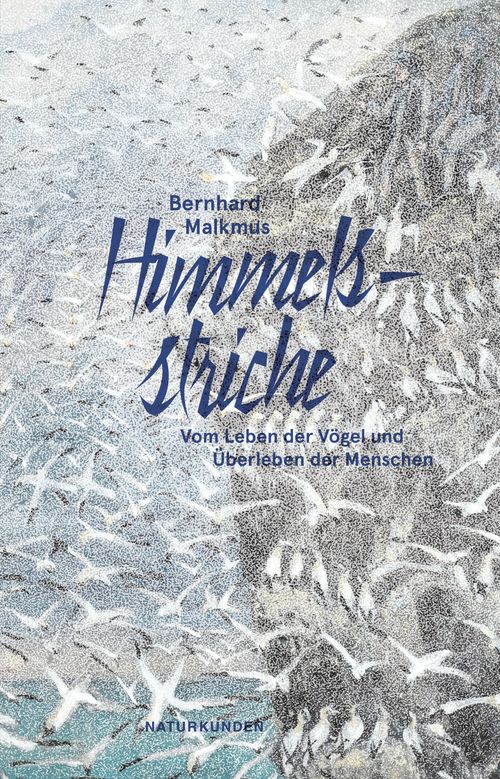
review
A beautifully observed work of nature writing that combines memoir and cultural history, ‘Flight Lines’ follows the migratory paths of seabirds along the north-eastern coast of England and southern Scotland to explore what they reveal about the relationships between people, place and the natural world. Written by German scholar Bernhard Malkmus during his year living on England’s North Sea coast, this is an original meditation on attention, belonging and ecological loss.
Structured as a diary spanning the annual migration cycle of the Arctic tern, the book accompanies Malkmus as he walks the coastline from Northumberland towards Scotland, observing birds, meeting local residents and tracing the histories embedded in the landscape. Each encounter opens up a wider constellation of ideas: the legacy of industrialisation and deindustrialisation, the devastating impact of climate change and avian influenza, the cultural significance of seabirds and the ways in which human lives remain intertwined with the more-than-human world. Alongside close observations of kittiwakes, puffins, gannets and terns, Malkmus reflects on writers and artists including Nan Shepherd, Robert Macfarlane, Katrina Porteous and Samuel Taylor Coleridge, creating a rich tapestry in which literature, ecology and local history continually illuminate one another.
‘Flight Lines’ evolves through patient acts of observation. The diary form allows ideas to accumulate gradually, mirroring the seasonal rhythms of bird migration while revealing how environmental catastrophe is experienced through dramatic events, but also through subtle changes in landscapes and wildlife. Malkmus writes as both participant and attentive outsider: a German living in Britain who approaches the region with affection, curiosity and quiet political awareness. His reflections never become overly personal, but his presence gives the book warmth and coherence, grounding its wider ethical questions in the realities of everyday encounters.
Malkmus’ elegant and precise prose places ornithological detail sits comfortably alongside literary criticism, philosophy and social history. The result is a thoughtful work that asks how we might learn to inhabit damaged landscapes with greater humility and responsibility.
Blending nature writing with cultural history and environmental inquiry, ‘Flight Lines’ introduces an important new voice to English-language readers. Its lyrical prose, profound sense of place and attentive exploration of the environmental challenges shaping the contemporary world will appeal to readers of Robert Macfarlane and Jackie Morris’s The Lost Spells, Kathleen Jamie’s Surfacing and Cal Flyn’s Islands of Abandonment.
Find out more: https://www.matthes-seitz-berlin.de/book/himmelsstriche.html


All recommendations from Autumn 2026