
review
rights have already been sold to
Meridiaan (Dutch); JC Lattès (French); Einaudi Stile Libero (Italian); Prostor (Czech)
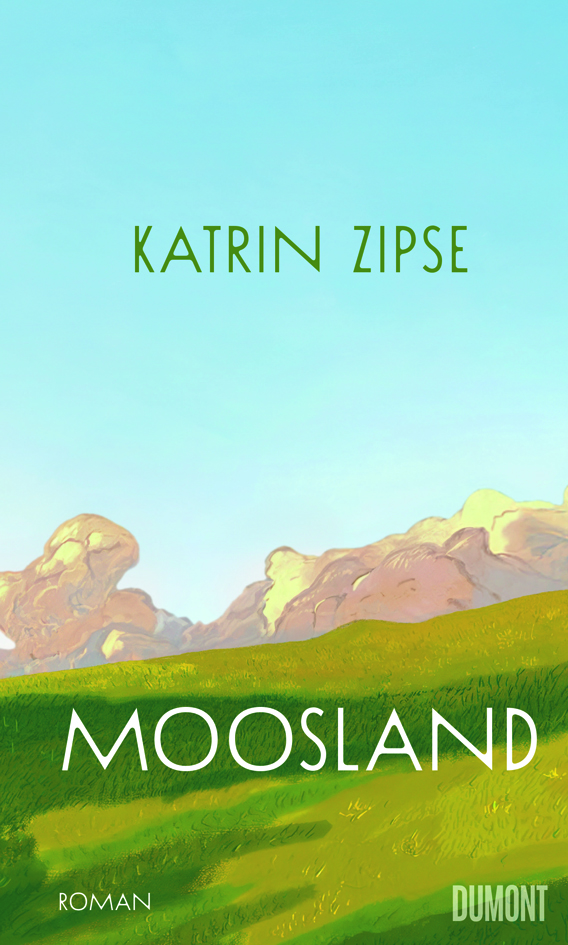
Katrin Zipse’s debut novel is an atmospheric, finely detailed novel about silence, survival, and the slow, risky work of learning to belong again. Set in 1949, it draws on a little-known post-war episode: hundreds of young German women travelled to Iceland for a year of farm work, arriving with little knowledge of the language and few options, and often finding their lives remade by the place.
Elsa is one such woman. War and loss have left her shut down, and even in German she speaks sparingly, grieving her friend Sola and refusing, at least at first, to imagine a future. On an isolated farmstead, the turf house, the hanging fish, the endless light, and the brutal practicalities of rural labour speak more immediately to her exhausted body than any words.
Zipse stays tightly with Elsa’s perspective, letting the reader share her disorientation as she tries to find her footing in a household and a language she cannot yet properly engage with. Names come late, sometimes only as phonetic impressions, neatly recreating the experience of being surrounded by speech you cannot make sense of. A farmhand quietly teaches her new words at night, and Zipse makes language feel physical: something learned in the mouth, tested in the air, and chosen, each time, to counteract fear.
The novel is equally alive to the forces of nature. The landscape is something Elsa must negotiate day by day: the glare and vastness of the Icelandic sky, the pull of the sea, the sudden shifts in weather, the turning of the seasons, the elements dictating what can be done and when. This is a new, strange environment that contrasts with what Elsa remembers from home (woods, trees, familiar smells), and it becomes a measure of her distance from herself, as much as from other people. Traditional farm work, attuned to the land, sits alongside the inner work of endurance.
The seasons move from summer 1949 towards the following year, and the plot is threaded with flashbacks that catch Elsa off guard, pushing her towards flight and self-harm. Around her, the farm’s internal balance shifts. Elsa’s presence changes the dynamic between the sons, and a missing daughter, never spoken of directly, haunts the household in ways Elsa can sense before she can explain.
With its strong historical hook, careful psychological insight, and vivid sense of place, ‘Land of Moss’ should appeal to English-language readers of post-war women’s stories and quietly suspenseful rural fiction. It’s a novel about departure and arrival, and about the moment a new language stops being noise and becomes, cautiously, a way back to life.
Find out more: https://www.dumont-buchverlag.de/en/buch/katrin-zipse-moosland-9783755811831-t-7798

All recommendations from Spring 2026