
review
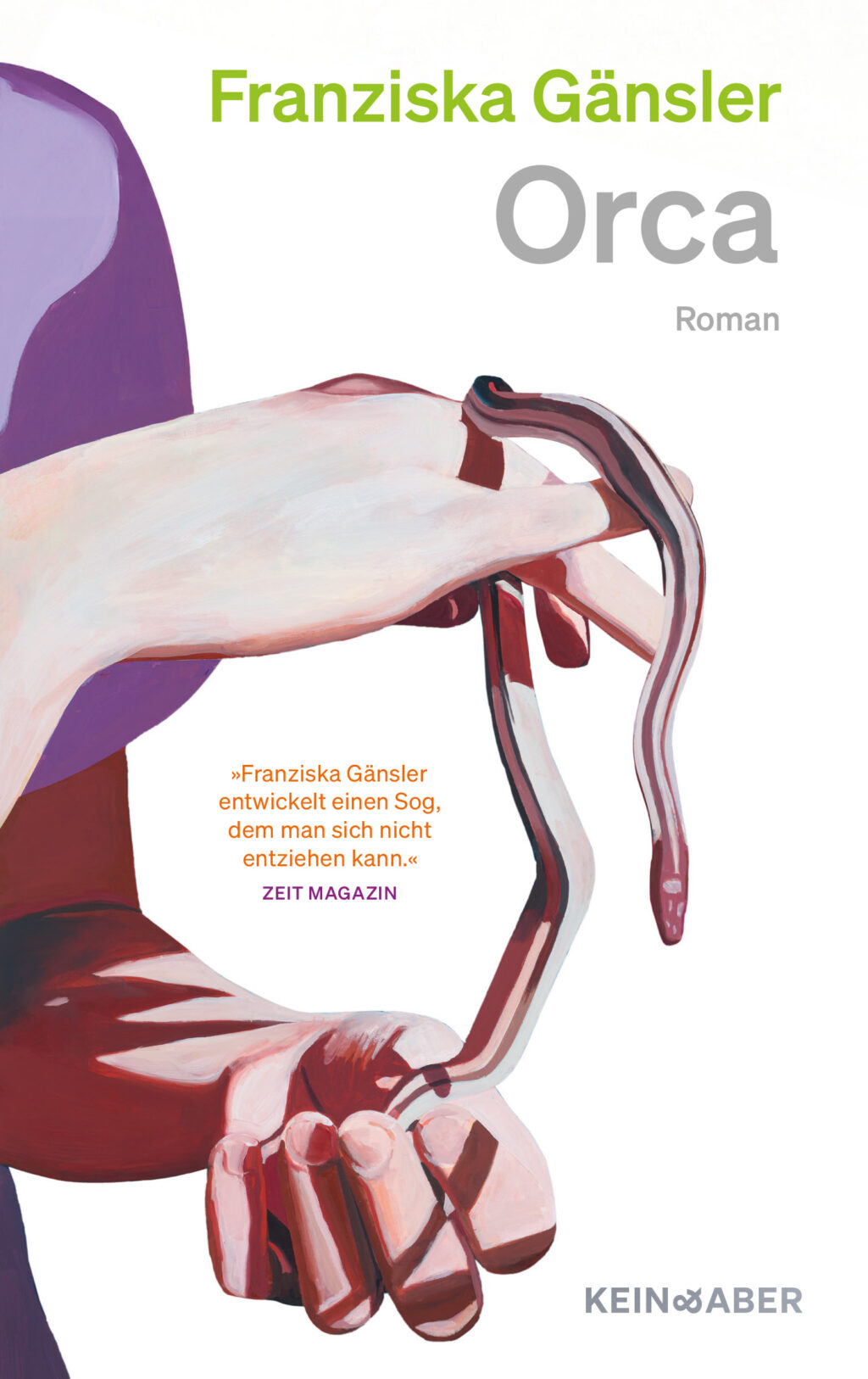
Franziska Gänsler’s ‘Orca’ follows two teenage friends whose involvement with a climate activist group leads to violence that has lasting consequences. In the present day, Cora is in her early twenties, working at a supermarket meat counter, when she learns that her childhood friend Olympia has been arrested for the murder of a prominent CEO, Eleonore Brecht.
The narrative moves back to Cora’s high school years during the Covid lockdowns, during which time she reconnects with Olympia after years apart. The two become close again, and Cora begins helping Olympia clean the home of a couple, Sylvia and Elson, while they are away. When the couple return unexpectedly, the girls are drawn into the household’s wider circle, a community of climate activists preparing for ecological collapse while protesting against fossil fuels and land development. Over the summer, the girls take part in the group’s activities, including a confrontation with a local official who behaved aggressively towards them at a protest. Olympia grows closer to another group member, Ariel, and Cora increasingly feels like an outsider.
When the school year resumes, Cora begins volunteering at a care home, where she meets Lilian, the daughter of CEO Eleonore Brecht, a vocal advocate for continued fossil fuel use. Cora and Lilian become involved romantically, and Cora uses the relationship, along with a claimed journalistic interest, to gain access to Eleonore’s world, including an energy conference and later a private dinner at the family home. Drawing on details she has learned through Lilian, including security codes and the layout of the house, Cora proposes to Olympia and Ariel that they disrupt the dinner. Before the event, she drugs Lilian with her mother’s sleeping pills and disables the property’s security cameras using Lilian’s phone. Amid the resulting chaos, Cora pushes Eleonore over the edge of a deep hole/installation feature, causing her death. The present-day sections follow Cora as she begins to reconstruct the story for herself and gradually confides in a new coworker as Olympia’s trial approaches.
Narrated in the first person, the novel alternates between the present day, four to six years after the central events, and the earlier timeline covering Cora’s school years. The prose is dense with period-specific pop culture references, including the television series Euphoria, Billie Eilish lyrics, and Covid-era social conventions such as elbow-bump greetings, anchoring the earlier sections firmly in the pandemic years.
The story explores questions of friendship, belonging and the unpredictability of violence among a group of teenagers, and is threaded through with the ecological concerns characteristic of all Gänsler’s work to date. Readers of her earlier novel Ewig Sommer (published in English as Eternal Summer, tr. Imogen Taylor, Other Press, 2025) will find continuity of themes and style. Emma Cline’s The Girls comes to mind as a comparison, for its portrait of teenage entanglement in a charismatic group heading towards violence.
Find out more: https://www.keinundaber.ch/buecher/orca?variant=21473851


All recommendations from Autumn 2026