
review
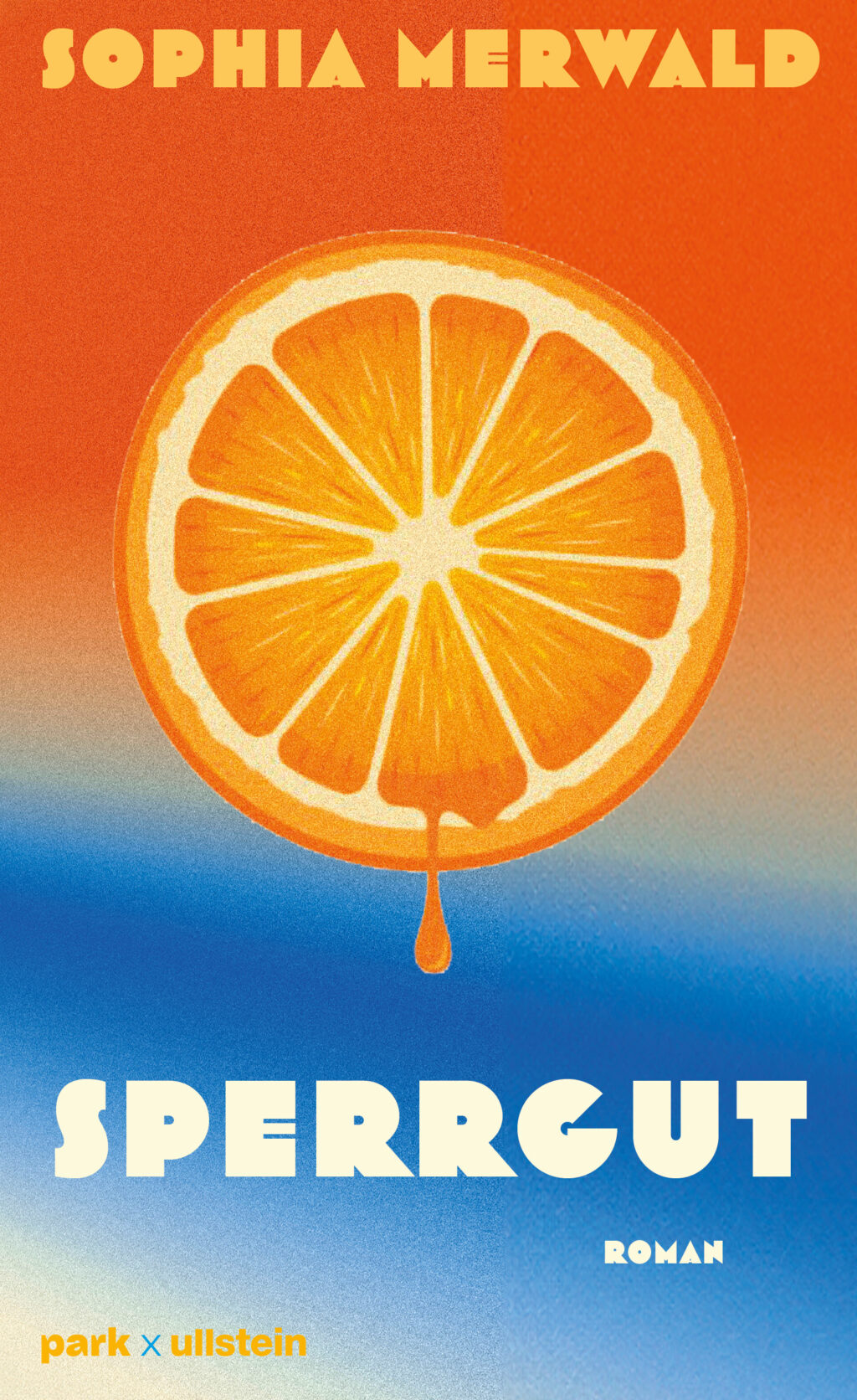
Sophia Merwald’s award-winning debut (Alfred Döblin Prize 2025) is a fiercely idiosyncratic novel about queer kinship, anti-establishment homemaking, and the precarious construction of safety. With fairy-tale logic and postmodern mythmaking, it creates a world where utopia and threat sit side by side, and where the most intimate forms of care are constantly tested by memory, violence, and the pressure of the outside world.
At the centre is the Lusthansa, a house and refuge built illegally by Chrissie, or Kristalloma (‘Crystal Granny’), on an abandoned industrial site she calls ‘Kummerfeld’, ‘sorrow field’. With her partner Bruno, she establishes a home that draws in women seeking shelter and a different way of living. Decades later, Stevie stumbles upon the house after an assault and finds that the commune’s original heyday has faded, but that it continues to function as a guesthouse and safe space.
Stevie’s relationship with Maj, whom she meets on a bus, provides the intimate drive of the novel. Their bond is tender, charged, and unevenly balanced, sustained by shared routines and interrupted by Maj’s recurring disappearances, often to the nearby silos. Stevie’s uncertainty becomes its own kind of weather system, and intensifies when her estranged father arrives, bringing old emotional damage into the household’s fragile equilibrium. When the threat of eviction arises, the book tightens further, showing how quickly a supposedly private sanctuary can become vulnerable to bureaucracy, and how easily the world can force its way back in.
Merwald writes in short, deceptively simple sentences, letting lyrical force come through wordplay, repetition, onomatopoeia, and sudden shifts into heightened typography and associative, dreamlike passages. The result is a tone that can feel like a fable while staying rooted in bodily reality, trauma, hunger, desire, and the need for protection. The Lusthansa itself is imagined as something alive, a house that breathes, holding different generations, different stages of life, and different kinds of longing in the same rooms.
‘Outsize’ is not a straightforward realist narrative. It is stranger than that, deliberately surreal, and committed to building its own language. Its voice-led fiction, queer domestic mythologies, and playful forms carry real emotional weight and make it a distinctive, unsettling, and oddly tender read.
Find out more: https://www.ullstein.de/werke/sperrgut/hardcover/9783988160645

All recommendations from Spring 2026