
review
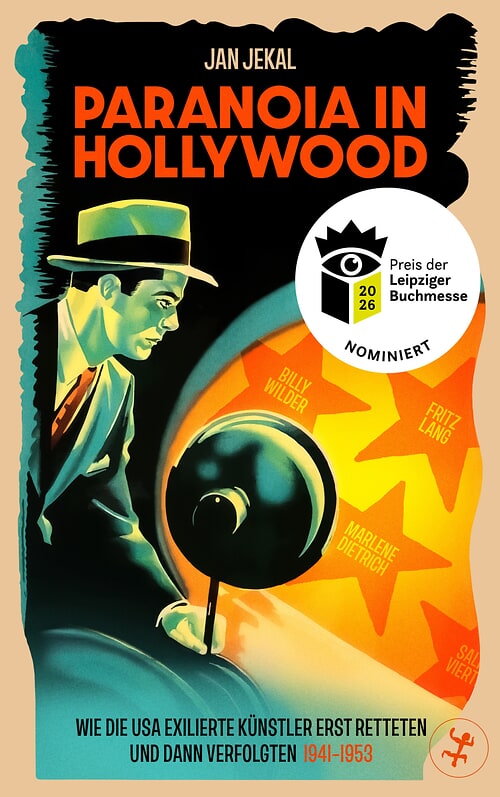
A compelling work of narrative history, ‘Paranoia in Hollywood’ tells the extraordinary story of the German-speaking artists and intellectuals who fled Nazi Europe and transformed Hollywood into an unlikely centre of European cultural life. Spanning the years from the Second World War to the rise of McCarthyism, Jan Jekal’s impressive debut explores the relationship between exile, creativity and political persecution in mid-century America.
Beginning in the early 1940s, Jekal reconstructs the remarkable community of writers, filmmakers, composers and philosophers who rebuilt their lives in Southern California after escaping fascism. Thomas Mann emerges as the moral voice of liberal Germany in exile, while Bertolt Brecht struggles to reconcile his artistic convictions with the commercial realities of Hollywood. Ernst Lubitsch, Billy Wilder, Fritz Lang and William Wyler reshape American cinema, Marlene Dietrich becomes an outspoken opponent of Nazism, and composer Hanns Eisler, philosopher Theodor W. Adorno and Arnold Schönberg contribute to an intellectual milieu that was unlike any other in twentieth-century America. As the Second World War draws to a close, however, the optimism that once surrounded this remarkable community gradually gives way to suspicion. Anti-communist hysteria, FBI surveillance and the investigations of the House Un-American Activities Committee begin to dismantle the fragile refuge these émigrés had created, culminating in the Hollywood Blacklist and the disintegration of one of the most extraordinary artistic communities of the modern era.
Jekal weaves together literature, film, music and political history into a single chronological narrative. The result is both an engaging group portrait and a broader reflection on exile, censorship and the uneasy relationship between art and political power. While the cast of characters is necessarily extensive, recurring figures provide continuity, allowing readers to follow both individual lives and the larger historical forces that shaped them. Throughout, Jekal shows how artists who fled one form of authoritarianism found themselves confronting another, lending the book an unsettling contemporary resonance.
Written for a general readership, ‘Paranoia in Hollywood’ combines meticulous research with the pace and accessibility of narrative nonfiction. Jekal balances vivid biographical storytelling with broader historical analysis, bringing familiar cultural icons into fresh focus while recovering lesser-known figures who played equally important roles within the exile community.
A timely and absorbing account of one of the twentieth century’s most remarkable artistic migrations, ‘Paranoia in Hollywood’ will appeal to readers of Erik Larson’s In the Garden of Beasts and Anthony Heilbut’s Exiled in Paradise for its vivid reconstruction of the German-speaking émigré community that transformed Hollywood and its compelling exploration of the intersections between art, politics and history.
Find out more: https://www.matthes-seitz-berlin.de/book/paranoia-in-hollywood.html


All recommendations from Autumn 2026