
review
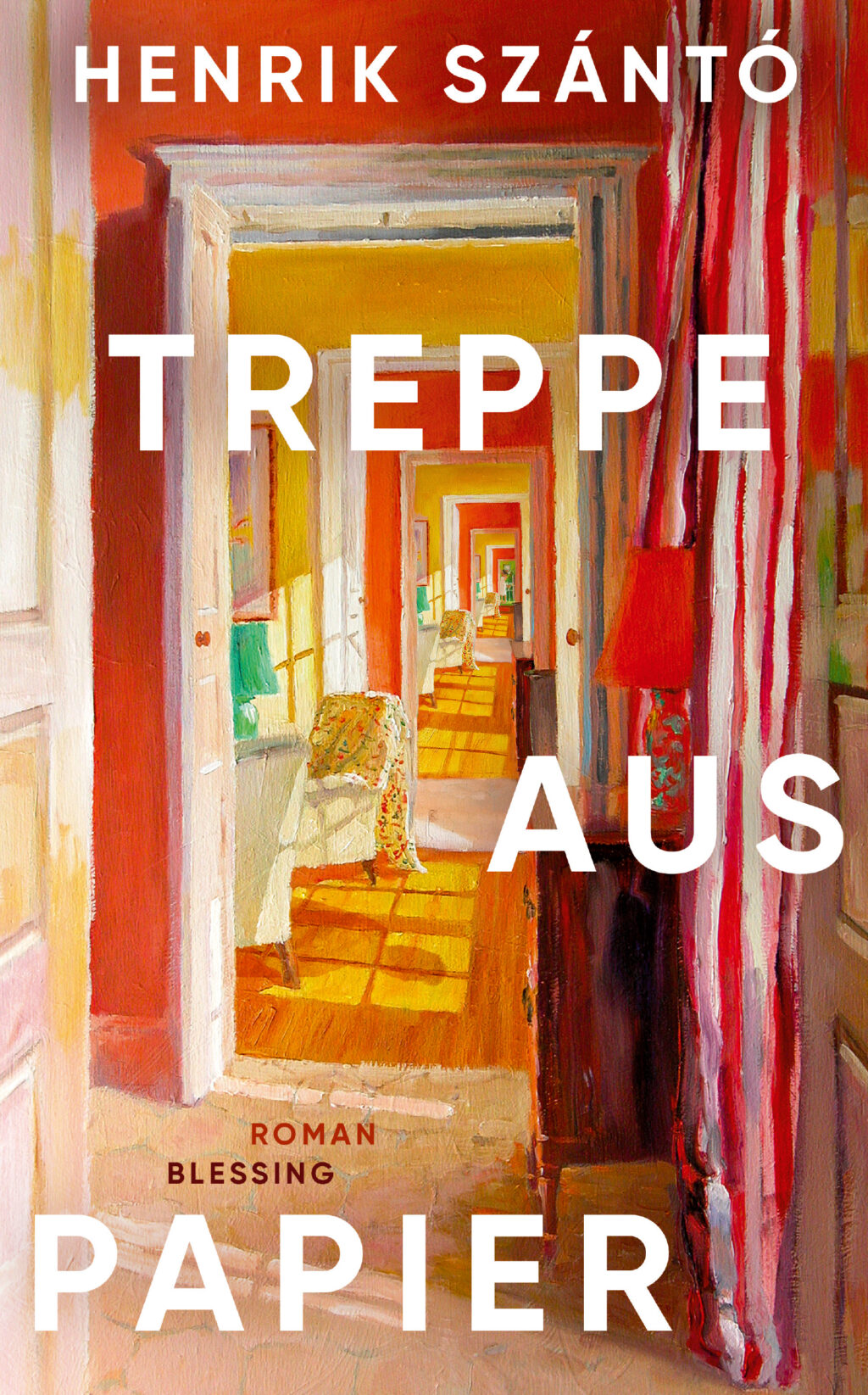
The building at the centre of ‘Stairs Made of Paper’ harbours dark secrets within its walls, events that took place during World War Two. Now, its past and present are connected when a teenage resident strikes up a friendship with an elderly neighbour who has been living in the house since the 1940s.
Teenage Nele is learning about the Nazi and postwar period in German history class. Through a chance encounter with her 90-year-old neighbour, Irma, the lessons she previously found so tedious are brought to life. Although Irma was still very much a child at the end of the war, she clearly remembers the Jewish Sternheim family in the building – how they were ostracised during that period, the terrors of Kristallnacht, and their ultimate deportation. On one occasion, she tells Nele, she even accidentally betrayed her childhood friend Ruth during a Gestapo raid: Ruth’s parents, Alwin and Golda, had hidden her in the attic of the building and tried to convince the men their daughter had already died. Not sensing the gravity of the situation, Irma insisted that her friend was quite alive and led the Gestapo to Ruth’s hiding spot.
As she retells these stories, Irma comes to realise how much she benefited from her parents’ early membership of the Nazi party. Her revelation leads Nele to ask her own parents some tough questions about her deceased grandparents. At this, her father reluctantly shows her a photo album in which her doting grandfather is unmistakably a member of the Nazi intelligence service, rather than a mere policeman, as she has previously been told. These dramatic past events are contrasted with Nele’s burgeoning romance with a classmate named Laura. All the while, the various historical levels narrated by different residents are commented on by the building itself, which is occasionally personified as “we”. In a final twist, a World War Two bomb is found in the neighbourhood, forcing everyone to evacuate while it is defused.
This compact novel is shaped by frequent jumps between the present and the Nazi era, and features plenty of narrative twists and turns. In its personification of the building as a holder of memories, it is reminiscent of Great House by Nicole Krauss (Penguin, 2011) and Visitation by Jenny Erpenbeck (Portobello Books, 2011, tr. Susan Bernofsky). Henrik Szántó’s skill as a spoken-word artist and writer – he was nominated for the Bachmann Prize in 2024 – shines throughout.
Find out more: https://foreignrights.penguinrandomhouse.de/paper-stairs/978-3-89667-778-5


All recommendations from Autumn 2025