
review
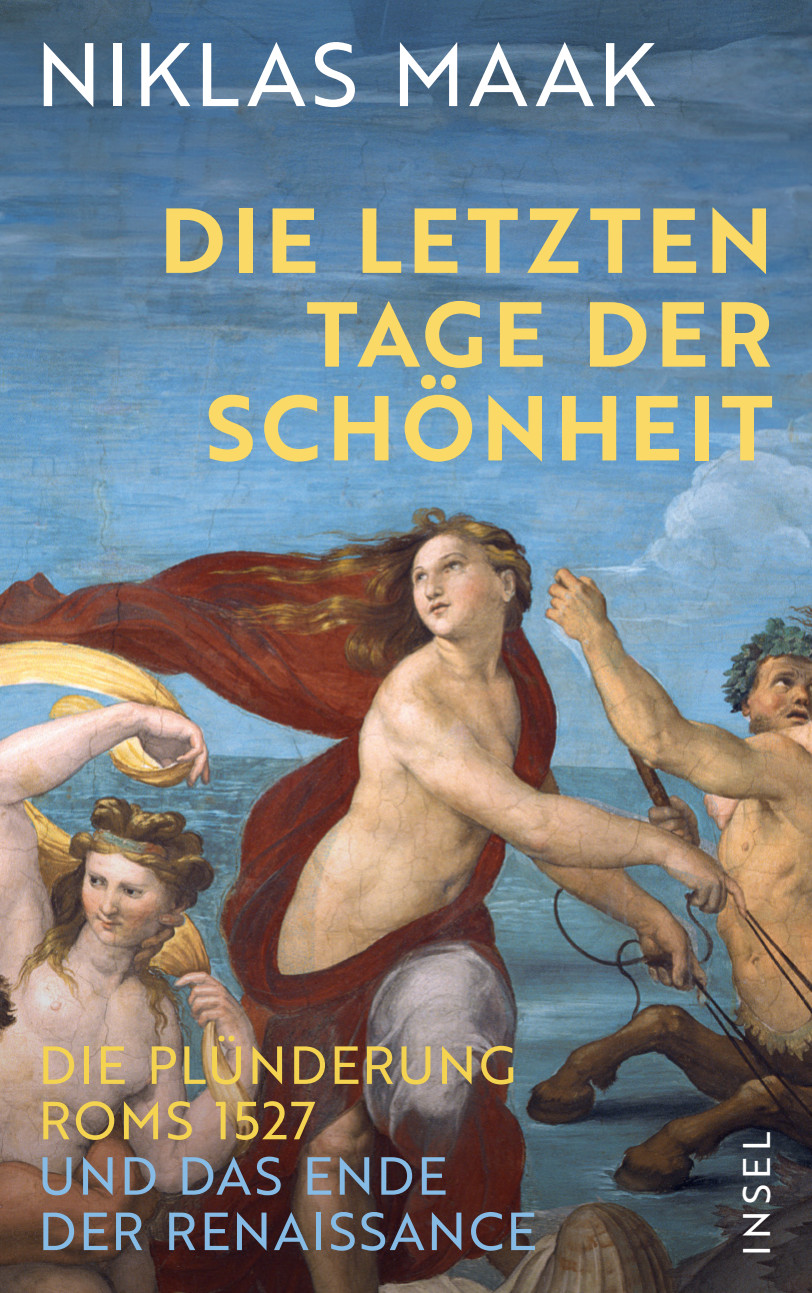
Niklas Maak’s ‘The Last Days of Beauty’ is a narrative account of the Sack of Rome on 6 May 1527, told through the lives of the mostly historically prominent figures who lived through it. The book uses the attack as a lens through which to consider the political, artistic and intellectual world of Renaissance Europe, at the height of its influence and the moment of its disintegration.
The narrative traces the escalating tensions across central Europe in the years leading up to the Sack, including Lutheran propaganda and unrest and the wider politics of the Holy Roman Empire. As the attack draws closer, the chapters shorten and the pace quickens, culminating in the destruction of the city, the imprisonment of Pope Clement VII, the collapse of the water supply, and the outbreak of plague. Recurring figures throughout the book include Agostino Chigi and his Villa Farnesina, Pope Clement VII and his advisors, the patron Isabella d’Este, the imperial commander Sebastian Schertlin, and artists including Raphael, Michelangelo, Pietro Aretino and Baldassare Castiglione.
The book’s structure is associative rather than strictly chronological, moving between individuals, artworks and moments in time before returning to the central events of the Sack. Artworks are treated throughout as forces that shaped how people of the period experienced and understood their world, rather than as objects of purely scholarly interpretation.
Maak, an architecture critic, writes for a general readership rather than an academic one, prioritising narrative, character and atmosphere. The book’s scope extends beyond Rome to the Holy Roman Empire, France, Spain and the broader impact of the Reformation, and closes by drawing a connection between the events of 1527 and present-day concerns about political instability and the fragility of culture itself.
The work’s blend of narrative history and art criticism invites comparison with Simon Schama and Neil MacGregor, and its accessible approach to popular history will also appeal to fans of Bettany Hughes and Dan Jones.
Find out more: https://www.suhrkamp.de/rights/book/niklas-maak-the-last-days-of-beauty-fr-9783458646280


All recommendations from Autumn 2026