
review
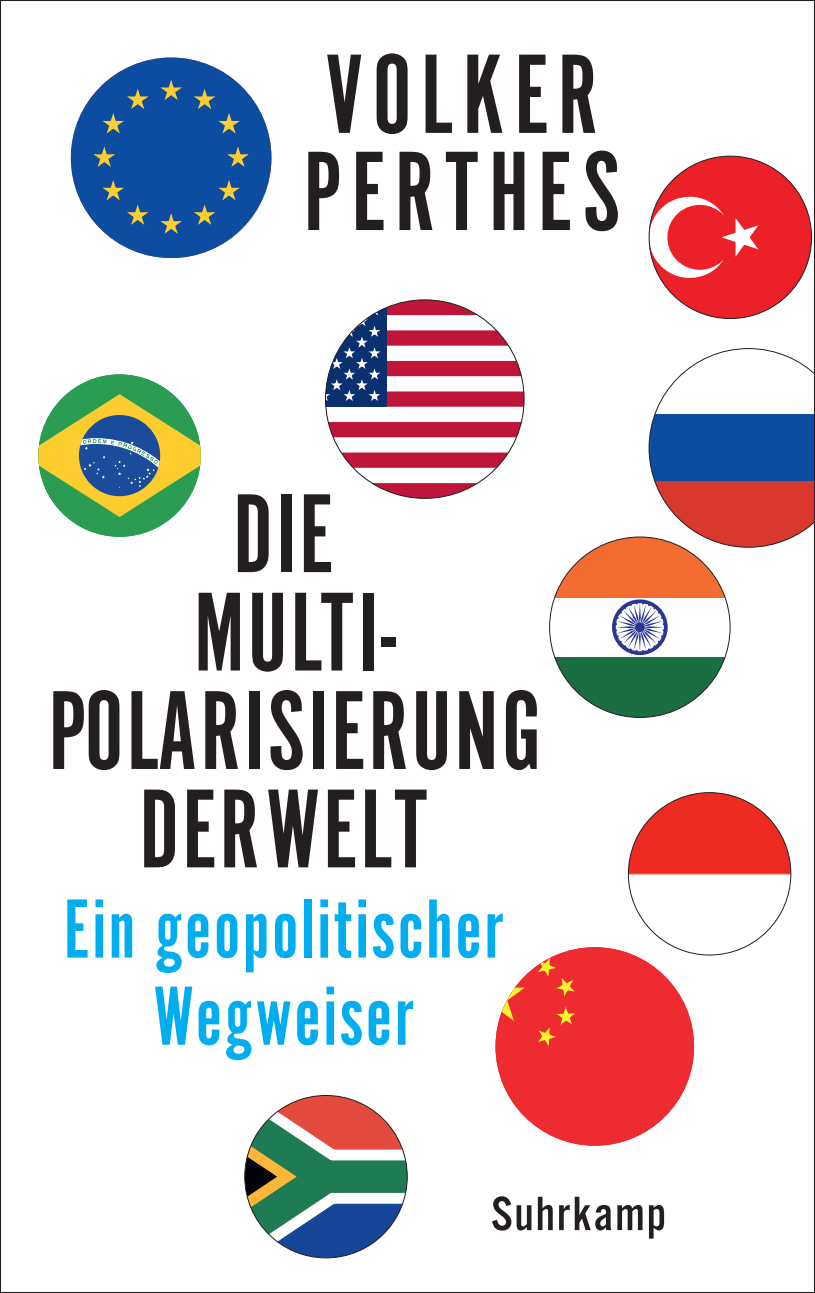
Perthes’ book offers a clear-eyed guide to a world where the post–Cold War domination of one single power has passed, and where international politics is shaped by competing centres of gravity. Rather than forecasting catastrophe, he focuses on how multipolarity actually works, how it shifts incentives, reshapes alliances, and makes outcomes messier but not necessarily more random.
His core approach is to treat the current world order as a system with five major poles, the United States, China, the European Union, Russia, and India, then to show how their interests collide and occasionally align. The argument is grounded in recent, recognisable flashpoints, but regularly pulls back to consider the underlying mechanics: trade, security guarantees, sanctions, supply chains, energy dependence, and the limits of military power when political aims remain unresolved.
Structurally, the book is built to help readers keep track of the various relations between different geopolitical regimes. Part one sketches the five major players, their internal constraints, and their external playbooks. Part two turns to regions where ‘middle powers’ can leverage rivalries among the big players, with chapters on the Middle East, Africa, and Southeast Asia. The effect is cumulative, each section adding a new lens without drowning the reader in detail, and maintaining a practical perspective: what kinds of bargains are possible now? Which assumptions no longer hold?
Perthes is quietly authoritative and not performative. He has long been associated with Germany’s foreign-policy ecosystem, including a stint in the leadership of Stiftung Wissenschaft und Politik, and he has also held senior UN roles. This vantage point sharpens his sense of institutional limits and diplomatic necessity.
The appeal of his work for an English-language readership lies in his combination of breadth and legibility. ‘The Multipolarisation of the World’ will suit readers who follow the news but want a sturdier framework than daily commentary can offer, and it should appeal to those who are interested in geopolitics from a continental European perspective, where the question is not only ‘what is happening?’ but ‘how does Europe avoid being manoeuvred by everyone else?’
Find out more: https://www.suhrkamp.de/rights/book/volker-perthes-the-multipolarisation-of-the-world-fr-9783518432907


All recommendations from Spring 2026