
review
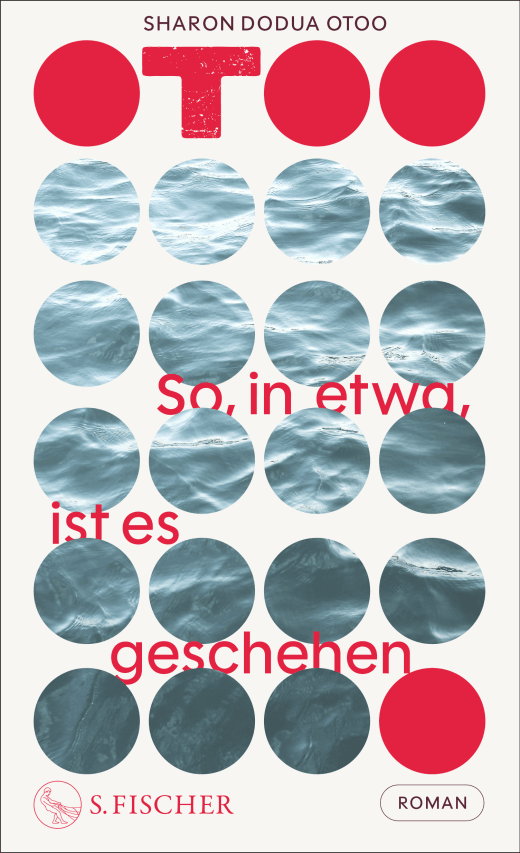
Sharon Dodua Otoo’s So, in etwa, ist es geschehen is a road novel set in contemporary Germany, and centred on Amata Haller, an Afro-German woman who kills her boss during a car journey to the Baltic coast. On the night before her trial, Amata writes an account of the day’s events for her publisher and close friend, Nkechi.
Every year on 3 May, Amata travels from Berlin to the coastal town of Timmendorfer Strand to meet her mother and commemorate the sinking of the Cap Arcona in 1945. The event led to the deaths of thousands of concentration camp prisoners; Amata’s grandfather was among the few survivors. On the day in question, train delays lead Amata’s boss, Heinz Brockhaus, to insist on driving her to the coast himself. Over the course of the journey, he talks continuously, issuing a stream of remarks that Amata experiences as demeaning and invasive. By the time they arrive, Amata has missed her mother, and the accumulated tension of the day culminates in her strangling Brockhaus in the car with a scarf.
Brockhaus’s monologue during the drive, presented as a transcript of an audio recording, makes up nearly half the book. Over the course of his speech, he speculates about a decades-old photograph of a Black woman, offering a series of justifications for an unnamed man’s behaviour towards her, while presenting himself throughout as tolerant and self-aware.
The novel is structured as a sequence of documents: Amata’s confession, written in four parts from her prison cell; the transcript of Brockhaus’s monologue; and a closing note from Nkechi, addressing the events from a legal standpoint. This structure sets Amata’s internal account against Brockhaus’s extended speech before closing on an external, legal perspective on what has happened.
The novel’s different registers, confession, monologue, and legal commentary, give a shifting form and feel, moving between road novel and crime narrative. It addresses everyday racism and its cumulative effect over time alongside inherited family memory of historical atrocity. Otoo, who won the Ingeborg Bachmann Prize in 2016, is also the author of the novel Adas Raum (Ada’s Room, tr. Jon Cho-Polizzi, Riverhead Books 2023).
Find out more: https://www.fischerverlage.de/verlag/rights/book/sharon-dodua-otoo-so-in-etwa-ist-es-geschehen-9783103977059

All recommendations from Autumn 2026