
review
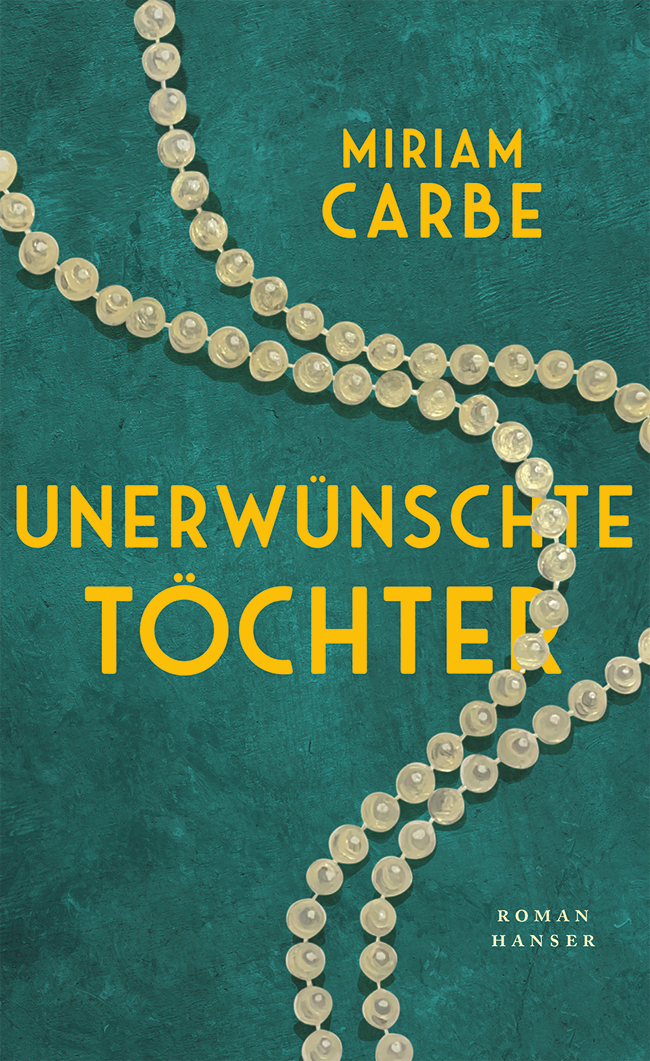
In her compelling debut novel, ‘Unwanted Daughters’, filmmaker and documentarian Miriam Carbe traces the lives of four generations of women within her own family, from the early 1900s to the present day. This is a sweeping, multi-generational saga which examines social class, the slow creep of Nazism, and the persistence of racism and antisemitism in Germany.
The narrative journey begins with Margarete, a rebellious daughter of the Dresden haute bourgeoisie, who finds her intellectual awakening through literature. Her story sets the stage for a long social descent, moving through the financial ruin of the post-WWI era and into the life of her daughter, Marianne. As the family’s social status declines, Marianne’s narrative reveals the chilling ease with which ordinary citizens succumbed to National Socialist ideology. In one scene, a teenage Marianne defends Hitler over dinner with her Danish aunts; later, she remains indifferent to the state-sanctioned murder of a relative who fell in love with a Black man in a German colony, believing the girl ‘had less of a right to live.’
A central leitmotif of the book is a wooden bookcase, crafted for the author’s great-grandmother and passed down through the decades. It serves as a physical witness to the family’s migrations between East and West Germany and their shifting identities. While Margarete stocked it with Goethe and Schiller, and Marianne filled it with superficial trinkets, the third generation – Monika – restored the classics alongside the Turkish novelists she read in the original. Monika’s own story is one of struggle; excelling in literature but battling mental instability, her life is transformed when a friendship with a Nigerian student in Marburg leads to the birth of the author, Miriam. Now, the author keeps both Freud’s collected works and the women’s numerous diaries in the bookcase, and draws on them for the novel.
Carbe shapes the narrative by quoting from diaries and letters to reflect on her experience of growing up mixed-race in the conservative West Germany of the 1970s. This adds a layer of dry, intelligent humour and a sophisticated reckoning with the racist attitudes of the women who raised her.
‘Unwanted Daughters’ offers a fresh and necessary perspective on the Nazi era and its aftermath. While it shares the multi-generational breadth of Zadie Smith’s White Teeth or Brit Bennett’s The Vanishing Half, its specific focus on the intersection of German history and mixed-heritage identity makes it an original contribution to contemporary literature. It is a deeply authentic literary work that speaks to universal themes of belonging and the complex ghosts of the past.
Read more about the book on the publisher’s site (in English)
Rights sold: Italy (Fazi), Netherlands (Meulenhoff).


All recommendations from Spring 2026