
review
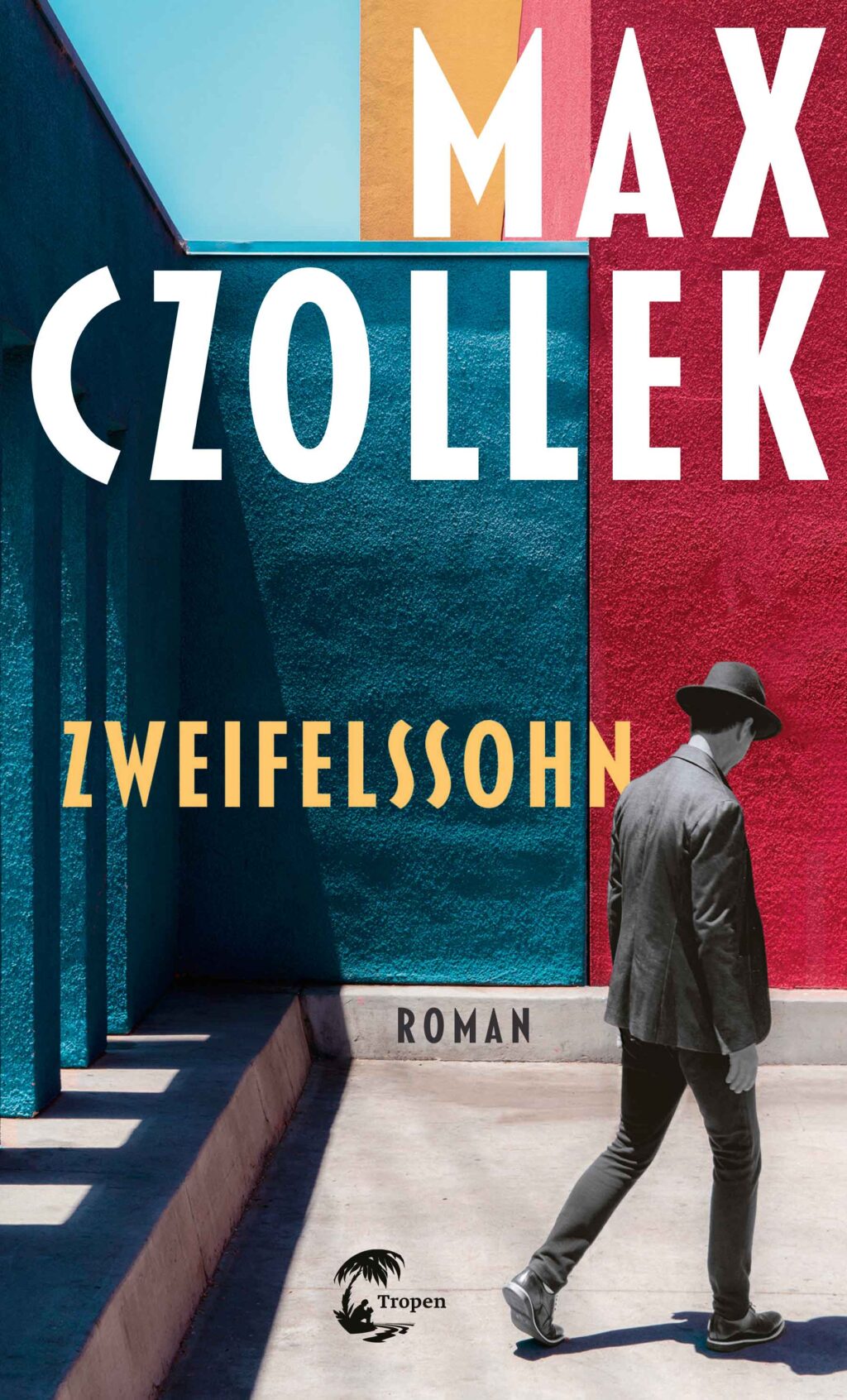
Max Czollek’s Zweifelssohn is his first work of fiction. The title, literally ‘Son of Doubt’, plays on the name of the Enlightenment philosopher Mendelssohn, replacing ‘Mendel’ with the German word for doubt. The protagonist travels alone by train from Vienna through Munich, Nuremberg, Weimar and Erfurt to Berlin, where he lives, before continuing to Oranienburg and Rügen. He is Jewish, and the novel follows his thoughts on his family’s history during the Nazi era and its bearing on a present once again shaped by right-wing politics.
The novel is not plot-driven. Zweifelssohn visits cafés, bars, museums and archives, and talks to strangers and to his girlfriend, Be. His perspective is shaped by what he calls the ‘Jeremiassyndrom’, a state named after the prophet Jeremiah in which he experiences hallucination, heightened clarity and strong emotion. He repeatedly sees dead family members and traces of their suffering. Towards the end of the novel, this resolves into grief for those he has lost.
The book includes several comic scenes alongside its more sombre material. On a delayed train, Zweifelssohn meets a woman who invites him to a dinner party. There, a group of upper-middle-class professionals, including a surgeon, an interior designer and an army colonel, make small talk. Zweifelssohn’s humorous questions and the other guests’ often tongue-in-cheek answers eventually out the German middle class as narrow minded and defensive when conversation turns to the protagonist’s Jewish identity and his research trip. The group attributes present-day antisemitism in Germany to migrants rather than confronting it directly.
The third-person narrative follows Zweifelssohn’s thoughts and experiences in a stream-of-consciousness style. Some chapters take the form of dialogue between the protagonist and strangers he meets while travelling. The book is structured chronologically around his journey, and chapters are titled ‘the book of Zweifelssohn, chapter [number]’, in a nod to biblical chapter titles.
Czollek’s style combines detailed, concrete description with more abstract passages, threaded through with similes. The heavier themes of memory, loss and antisemitism are shot through with humour, including the protagonist’s name and his repeated failed attempts at small talk. The novel contributes to debates in Germany around the legacy of the Holocaust and contemporary antisemitism, and references German writers and Jewish intellectuals including Goethe, Lessing, Thomas Mann and Hannah Arendt. Readers of Christian Kracht and Saša Stanišić are likely to find common ground here.
Find out more: https://www.klett-cotta.de/produkt/max-czollek-zweifelssohn-9783608502992-t-9537


All recommendations from Autumn 2026