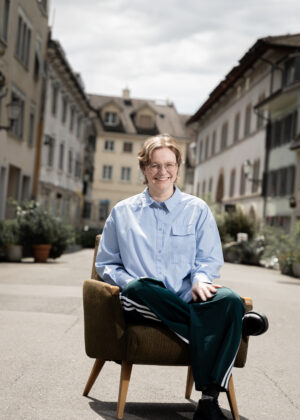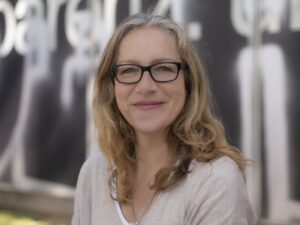
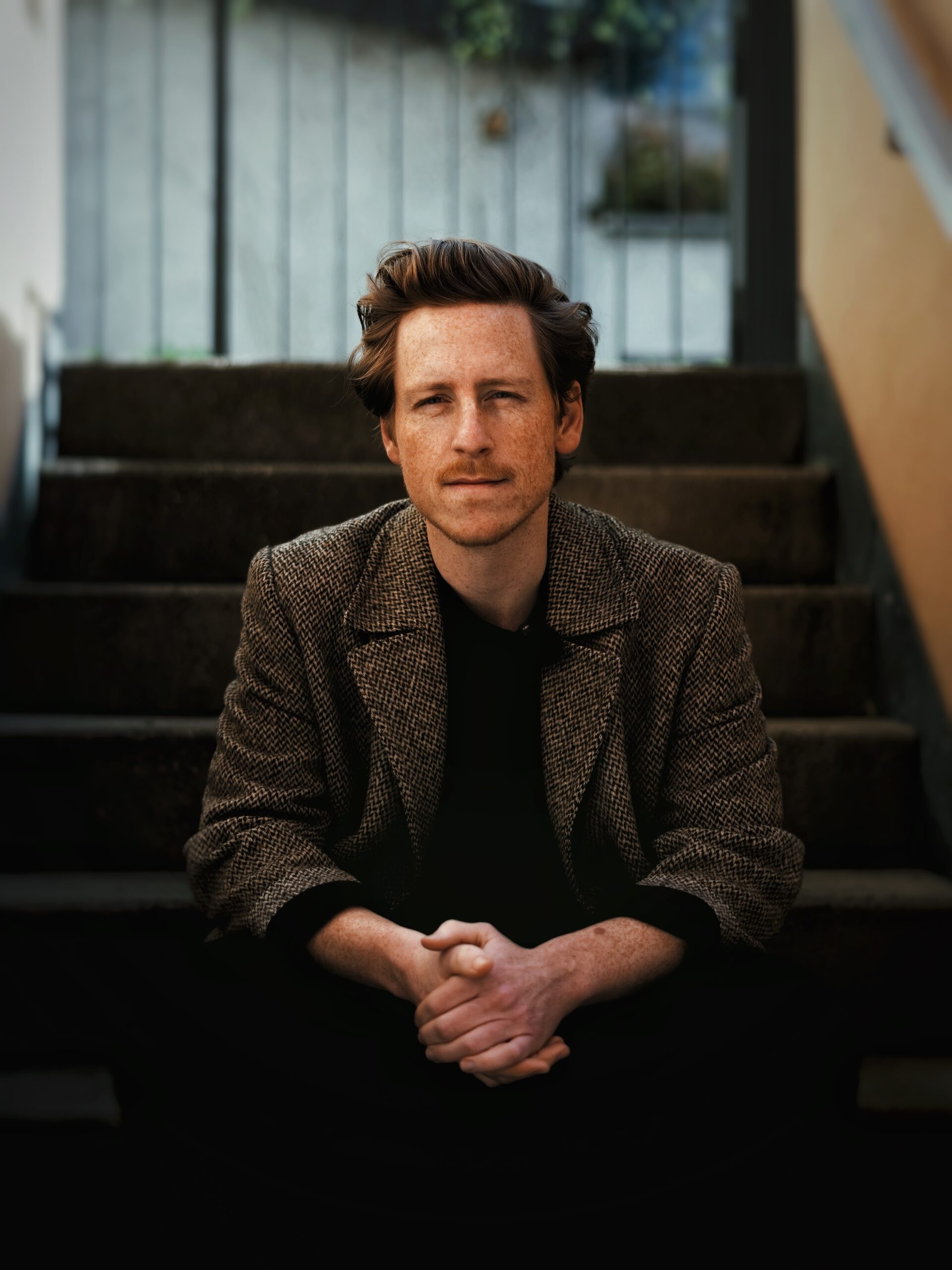
Author and psychologist Leon Engler talks to New Books in German about his acclaimed debut novel, Botanik des Wahnsinns (Botany of Madness), ahead of its 2026 English release. The novel, translated by Alexandra Roesch, follows a narrator gripped by ’agateophobia‘ – the paralysing fear of inheriting his family’s history of mental illness. Spanning Munich, New York, and Vienna, the narrative explores a young man’s flight from his predispositions, only to find himself working as a psychologist in the very institutions he once feared.
You use the term ‘botany‘ to describe a genealogy of mental illness. Why was the metaphor of a ‘Stammbaum‘ (family tree) or ‘Veredelung‘ (grafting) the right way to visualise inherited trauma?
It is a metaphor that is particularly fertile in German. We also say that the apple does not fall far from the tree. And of course there is the family tree itself, whose finest branches the narrator traces. At the same time, these natural images have deeper connections to the psyche. The predecessors of psychotherapists, from shamans to ancient physicians, were also knowledgeable about plants because medicine was largely plant-based.
In the time of Hippocrates of Kos, who explained mental illness not through magic or metaphysics but through organic causes, namely an imbalance of bodily fluids, treatment often involved plant-based remedies to induce vomiting. Then there is humanity’s desire to classify. With the Enlightenment and rationalism, the comprehensive ordering of the plant world was transferred to the world of the soul. The English Hippocrates, Thomas Sydenham, asked a millennium and a half later why this should not be possible.
It was often botanists who began this work of classification, for example Carl Linnaeus with his Genera Morborum. And once again it was a doctor with botanical interests, Emil Kraepelin, who laid the groundwork for today’s classification of mental disorders. So it was the botanically trained gaze that shaped this field. Kraepelin was a pioneer of modern psychiatry, but he also had two faces. He was a conservative social Darwinist who helped prepare the distinction between lives worth living and those deemed unworthy, a classification later taken up by the Nazis and applied to mental illness. As you can see, there are many branches to this metaphor.
Your narrator is gripped by agateophobia – the fear of insanity. Early in the book, he calculates his hereditary risk as an 80% risk of bipolar and 50% risk of alcoholism. Is his career as a psychologist a form of self-protection for him?
There is certainly the idea behind it that when one understands things they cease to be threatening. But fundamentally it is also a defence mechanism. He intellectualises and rationalises, hides behind books, and thus creates distance from his emotions. It takes him almost 200 pages before he begins to access his feelings.
The novel begins with this fantastic idea of a mix-up following the clearing out of the narrator’s mother’s apartment, where boxes containing family mementos have accidentally been destroyed and the seven boxes that have been preserved actually contain rubbish. What does this situation say about the reliability of memory?
Research suggests that memory and imagination follow similar principles. When we remember, we do not retrieve something from an archive. It is a reactive pattern. We recreate the moment anew. The narrator makes use of this. This void, this lack of family history, troubles him deeply. So he decides to imagine a memory.
In Freudian psychology, a patient’s family narrative is also called a family novel, precisely to highlight its fictional component. But that does not make it any less meaningful.
You reference Carl Linnaeus and the idea that if you don’t know the names, the knowledge of things perishes. Do clinical diagnoses provide names that help the narrator, or are they just another label?
Diagnostic labels have many advantages. Fear becomes nameable. One gains access to the healthcare system. One can justify rest, even to the point of so-called gain from illness. The confusion of tongues gives way to a standardised international language through the major diagnostic systems. Clinicians can communicate, researchers can study disorders, and treatments can be developed more systematically. But there are also disadvantages. Beyond stigma, such labels can alter self-understanding. My experience may change once I know others interpret it as, for example, the experience of a psychotic person. It can also lead to diagnostic inflation, ordinary human conditions becoming pathologised.
There is also what philosophy calls looping effects. Labels can create new kinds of people, as the philosopher Ian Hacking puts it. For example, anorexia did not exist in Hong Kong until 2004, when a widely publicised case of a young woman collapsing from malnutrition led to its sudden emergence as a recognised phenomenon. Something similar happened with depression in Japan and schizophrenia in Zanzibar. Faced with both the benefits and drawbacks of these categories, the narrator remains somewhat at a loss.
The book moves from the ‘grey‘ proletarian Munich of the narrator’s youth – via New York, where the narrator flees in an attempt to escape his family’s predisposition to mental illness – to the intellectual circles of Vienna. How does social class play into the way mental illness is managed or hidden in your story?
It is clearly the biography of a working-class family. The narrator says he descends from drinkers, dreamers, and day labourers. And the risk of mental illness increases with lower socioeconomic status, higher exposure to poverty, and reduced access to educational opportunities. This is well documented in studies.
And yet this knowledge of social causes has long been ignored, from Freud to the positive psychology of the twenty first century. In doing so, psychological suffering is privatised. The social becomes psychology’s blind spot, as if it were solely the domain of sociology. There are exceptions. Mark Fisher, the pop philosopher, for example, repeatedly argued that his depression should be understood as a political symptom. And sociology, anti-psychiatry, critical psychology, and socio-analysts have pushed back against this.
You describe the psychiatric ward (Steinhof in Vienna) almost like a peaceful garden with greenhouses and beehives. Why was it important to subvert the ‘dark asylum‘ trope?
The psychiatric institutions built around the turn of the twentieth century were often beautiful places, and Steinhof is a good example. The site is so attractive that a private university recently considered moving in. Its architect, Otto Wagner, followed the principle of creating the most beautiful environment for the poorest.
But this also reflects the relationship between psychiatry and society. A certain safety distance was maintained. Such institutions were often located on the outskirts, like on Vienna’s Wilhelminenberg. This distance also carried a warning. If you are not careful, you might end up there. These places became warnings. You will end up in Steinhof. In Munich it is Haar. In Hamburg Ochsenzoll. It serves to affirm one’s own rationality. Madness belongs to others.
But this relationship is not one-sided. It was not only society that sought protection from the mentally ill. Patients also had to be protected from so-called asylum tourists and voyeurs. So much so that walls were built, not to keep patients in, but to keep the public out.
How has your real-world work as a psychologist informed the scenes where the narrator interacts with his patients?
It is a subject I would never have approached without firsthand experience, without having worked as a psychologist on a closed ward. I aimed for a realistic portrayal of this parallel world, written very close to life.
At the same time, there is confidentiality, so nothing concrete emerges from that closed space. But I tried to achieve a certain realism, something that stands pars pro toto for our way of dealing with the other side of reason.
Your portrayal of the grandmother – moving between radiant mania and ashen depression – is central to the book. Did you find it difficult to capture the ‘shimmering’ quality of her madness without romanticising it?
Not really. I was not trying to romanticise anything, quite the opposite. If anything, I was trying to de-romanticise it. The grandmother suffers from bipolar disorder with psychotic features, which is a serious condition. I was more interested in highlighting the neglected stepchildren of psychiatry, conditions that have benefited little from destigmatisation: schizophrenia, addiction, and bipolar disorder.
Siri Hustvedt has praised the book’s ability to be ‘grave and light, tender and tough‘ at once. How do you find humour in topics like suicide and addiction without diminishing their gravity?
I do not really find humour in things themselves. I think I place it against them, almost like a shield.
I have spent some time with existentialist thought, for example Karl Jaspers’, and with the psychotherapeutic traditions that grew out of it, such as Daseinsanalysis and existential psychotherapy, and with Buddhism. All of them assume that there are certain basic conditions of human existence that we cannot avoid. We have to face death, loneliness, freedom, meaninglessness, and suffering.
At some point, everyone encounters these limits. Life does not spare anyone. The idea that it might remain painless is something we can only sustain for a while. When that illusion breaks, the question becomes how to respond.
Humour can be one way of responding. In Germany, people say the situation is serious but not hopeless. In Vienna, they say the situation is hopeless but not serious. I suppose I feel close to that.
In the end, there is not much we can control. Perhaps only our attitude, and even that only to a degree. We do not really live life. In a way, life lives us. And I try to remain aware of that, with a certain humility and a sense of wonder about the stories that come my way.
Humour can be one way of responding. In Germany, people say the situation is serious but not hopeless. In Vienna, they say the situation is hopeless but not serious. I suppose I feel close to that.
Leon Engler
How do you feel about the book being translated into English? Have you worked with Alexandra Roesch on the English edition?
I am aware that it is not common for a German language debut novel to be translated into English. I also feel a strong connection to the United States, having lived there for a while.
This is also a translation I was able to read myself, and I had the opportunity to exchange ideas with Alexandra Roesch, something that is not always possible with other languages. I am also strongly influenced by English language literature und music. Another nice aspect is that friends who do not speak German can now read the book.
The book concludes with the idea that a person is always more than a diagnosis. What do you hope English-speaking readers take away regarding the stigma of mental health?
I hope the book does not provide answers, but raises questions, many questions. That it challenges assumptions and certainties about mental illness that are currently widely discussed and encourages readers to consider them in their historical and social dimensions. But as Samuel Goldwyn once said, leave the messages to Western Union.
Can you tell us whether you are working on a new novel, or whether you have any other literary projects in the pipeline?
I am working on several texts at once and have not yet decided which to pursue further. A short story about a group of Europeans travelling to Malaysia to seek enlightenment in a silent monastery, only to take inspiration instead from a lizard. A feature film about unemployed people sent to empty hotels at the edge of the Alps. And a nonfiction book on the social causes of mental illness.
I also have a few ideas for a new novel, but I do not want to jinx it. The world interests me so much. It is less a question of deciding what to write than of deciding what not to write.
And finally, who do you turn to for literary inspiration?
Ah, there are so many names I could mention: from Robert Musil to Flann O’Brien to Ingeborg Bachmann and Kjell Askildsen. But I feel I’ve learned just as much about writing from songwriters like Loudon Wainwright III or Sibylle Baier as from literary authors themselves, and also from therapeutic thinkers such as Viktor Frankl and sociologists and philosophers. For twenty years, I’ve wandered through libraries, absorbing whatever I could find. I find that deeply inspiring. The serendipitous discovery.
But it’s just as much the other things: overhearing conversations in cafés, a film scene or a song that suddenly captures something exactly – without bullshit, affectation, or artificial obscurity. Solitude. Travelling. Waking up in unfamiliar countries. A peculiar chord progression. A view, a climb, a landscape, a meal, a dead animal, a beautiful building.
Things beyond pure intellectualisation. I think what I’m trying to preserve is a certain capacity for resonance, to remain responsive to the world around me.
Thank you so much for your time.
Main photo © Anna Freytag
Botany of Madness will be published by New Vessel Press in November 2026.