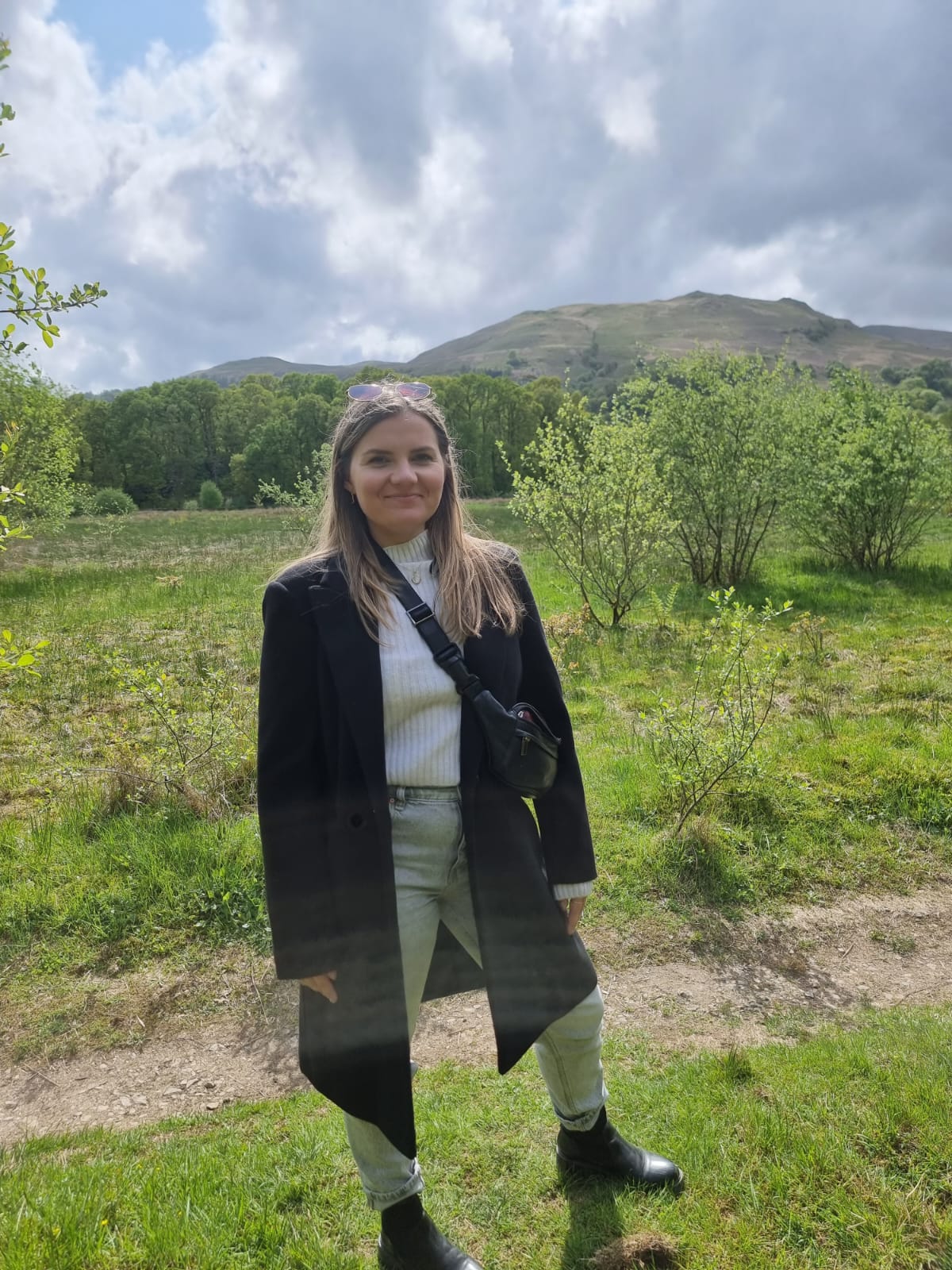
New Books in German supported Stephanie Louise Anderson’s participation in this year’s Oxford Translates with a partial bursary. In this article, Stephanie reflects on her experience of the workshop.
Subscribe to the mailing list to be notified when Oxford Translates applications open for 2027!
Translation has been a part of my life for as long as I can remember. Growing up
bilingually in English and German, I became aware early on that moving between
languages is rarely as simple as finding one word for another. Language carries
culture, humour, identity and perspective, and even the most familiar expression can change when it crosses a linguistic border.
This awareness has stayed with me throughout my academic and professional
journey. I studied Current English Linguistics and Literary Studies at the University of
Mannheim before completing an Erasmus Mundus Master’s in Children’s Literature,
Media, and Culture at the Universities of Glasgow, Aarhus and Tilburg. Throughout my
studies, I encountered translation in both practical workshops and theoretical
modules, which made me increasingly curious about what happens when literature
moves from one language to another. Since graduating, I have become particularly
interested in literary translation and its place within publishing.
When I came across Oxford Translates, I immediately saw it as an opportunity to
explore this interest further. I had never attended a summer school dedicated to
literary translation before, and I was particularly drawn to the programme’s
combination of practical workshops, discussions with experienced translators and
opportunities to learn about the wider publishing industry. As someone interested in
German-to-English translation, I was especially excited about the German translation
workshop, but I was equally keen to meet other people who shared my interest in
bringing literature across languages.
I started the week with several expectations: I wanted to develop my understanding
of literary translation, learn more about the relationship between translators and
publishers, and explore how translation works beyond conventional prose. My
particular interest in graphic narratives made the discussions around multimodal
translation especially appealing. Most of all, I hoped to leave with a better sense of
what it might mean to pursue translation professionally.
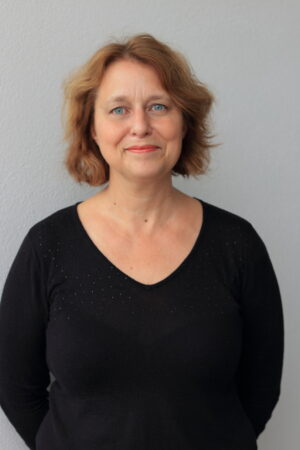
Rather than seeing uncertainty as something that needs to be eliminated, [Ann Morgan] suggested that not knowing can create space for curiosity and discovery.
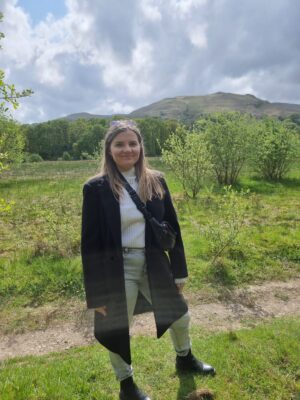
Stephanie Louise Anderson
What I did not expect was that one of the most important lessons of the week would
be about not knowing. In her keynote, Ann Morgan introduced the idea of approaching literature – and translation – through a willingness to embrace “not-knowing”. Rather than seeing uncertainty as something that needs to be eliminated, she suggested that not knowing
can create space for curiosity and discovery. This idea stayed with me throughout the
summer school.
As a translator, there can be an instinctive pressure to understand everything: to
identify the perfect word, decode every reference and find the definitive solution to a
difficult sentence. Yet translation constantly confronts us with things that are
uncertain, unfamiliar or open to interpretation. The challenge is not necessarily to
remove that uncertainty, but to become comfortable enough with it to investigate
what lies behind it.
This became particularly apparent during the small-group German-to-English
workshops led by Lucy Lee Jones. Working closely with challenging texts alongside
other participants showed me just how many decisions can be hidden within what
initially appears to be a straightforward sentence.
Sometimes the challenge was obvious: an unfamiliar word, a specific dialect, an
unusual expression. At other times, the difficulty was less visible. Punctuation could
affect the rhythm and length of a sentence; a character’s voice could determine the
tone of an entire passage; an intertextual reference could carry significance that was
not immediately apparent. Even seemingly small choices could influence how a
reader understands a character or approaches a text.
Perhaps most importantly, there was rarely one single “correct” translation.
Discussing our choices as a group made this particularly clear. We could approach the
same passage from different perspectives and arrive at different solutions, each
supported by a slightly different interpretation of the original. Rather than making
the process feel arbitrary, this showed me how much careful thought goes into a
translator’s work. Translating a text is not simply about transferring its words into
another language. It requires close reading, asking questions and considering what
the text is doing beneath the surface.
Hearing another participant explain why they had made a particular choice could make me reconsider my own interpretation, while sharing my own reasoning gave me greater confidence in my own voice as a translator.
Stephanie Louise Anderson
The collaborative nature of the workshops was one of my favourite aspects of the
summer school. Translation is often imagined as a solitary activity, with the translator
sitting alone with a text, but Oxford Translates demonstrated how valuable it can be
to think through a problem together. Hearing another participant explain why they
had made a particular choice could make me reconsider my own interpretation,
while sharing my own reasoning gave me greater confidence in my own voice as a
translator.
That sense of exchange extended beyond the workshops. The participants came from
different countries, languages, professional backgrounds and stages of their careers.
Some were already working as translators, while others, like me, were still exploring
what a career in literary translation might look like. I found it reassuring to discover
that uncertainty – and even imposter syndrome – does not necessarily disappear with
experience. Instead, it can be part of the process of continuing to learn.
The panel on Translation Ethics in Practice offered another perspective that
broadened my understanding of the profession. Discussions of dialect, multilingual
texts and feminist approaches made me think more carefully about the responsibility
involved in representing another person’s voice. Translation is not only about finding
the right words, but also about making choices that can carry cultural, political and
ethical implications. Listening to translators speak openly about these challenges
made me appreciate the skill and thoughtfulness behind decisions that a reader might
never notice.
This was one of the unexpected benefits of the week: discovering just how much of a
translator’s work is invisible. Readers may encounter a beautifully flowing translated
sentence without ever considering the questions, research, discussion and
experimentation that made it possible. Oxford Translates gave me a much greater
appreciation for this hidden work.
At the same time, the summer school reminded me that translation can be fun. There
was something wonderfully freeing about being able to play with language, test
different possibilities and debate the smallest details of a sentence simply because we
cared about getting it right. The balance between practical workshops, panels and
conversations made the week feel both intellectually stimulating and welcoming.
Looking back, my greatest takeaway is not that I now know all the answers. In fact, it
is almost the opposite. I have come away more comfortable with asking questions,
acknowledging what I do not yet understand and approaching a text with curiosity
rather than immediately searching for certainty.
I also leave Oxford Translates with greater confidence in my own voice as an
emerging translator. Hearing from translators at different stages of their careers
showed me that there is no single route into the profession, while the connections I
made with fellow participants reminded me that there is a generous and supportive
community to be found within literary translation.
When asked at the end of the week how I would move forward as a translator, I wrote
down four words: curiously, confidently, creatively and boldly. They capture what I
hope to take from Oxford Translates. I may not leave knowing all the answers, but I
leave more comfortable with the questions – and much more excited to keep asking
them.