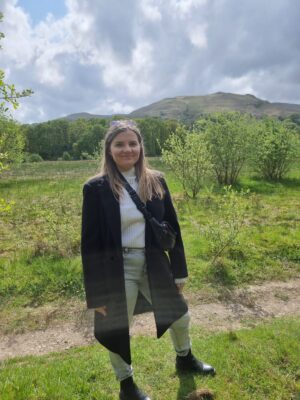

Sheridan Marshall spoke to the translator and academic, Susan Pickford, shortly before the publication of her latest book. Translating Books for Publication is out now
SM: You began translating professionally in 2001, after a short period working in publishing in Paris, and have since combined a career as a translator with academic research and teaching. What was it about translation that first drew you in, and what has kept you working in the field for more than two decades?
SP: During a stint working in publishing, it became clear to me that a nine-to-five job and I were not meant to be. I was working for a large publisher on international illustrated co-editions, basically coffee table books. I left to start my PhD and funded myself by doing translations, starting out for the company I’d been working for. I was doing books back-to-back on anything and everything: I did a book on lighthouses, one on model trains, lots of recipe books. I was learning the trade through doing a lot of translation on some very random topics. I did lots of art books, which then got me into the Louvre a year or two down the line. I was working with a whole network of people, and we became friends, and I loved the work, so it all just snowballed from there really. This was back in the early 2000s – the market has obviously changed significantly since then. I think it was helpful at that point that a lot of places were just beginning to develop their web presence, so there was a lot of work sloshing around for institutions that were setting up websites.
SM: Your academic work has often focused on translators who have been overlooked by literary history – from nineteenth-century professional translators to translators working in fields such as travel writing, science and children’s literature. What is it about the people behind translated books that fascinates you?
SP: I think it’s partly because I have always been a translator myself, and because I have a lot of friends who are translators. I always think it’s a bit of a shame when people do textual analysis without taking account of any of the people behind it. I know from my own working practice I made more mistakes when my children were tiny and I hadn’t slept. It’s impossible to take it fully into account because you’ll never fully know what’s going on in someone’s private life – did they have toothache, or are they getting a divorce? You can never know, but I think it’s a shame to not even think about how that might impact what a text might look like – to treat the text as a disembodied thing that springs out of the ether fully-formed. It boils down to the fact that I’m quite nosy: I’m very interested in books, but I’m also interested in people! When I started out it wasn’t really a question that was being asked, and it felt important to ask questions that weren’t being asked from a research point of view, and that seemed to be one that went well for me.
There’s a lot of focus on the very visible people in translation – people like Baudelaire translating Edgar Allan Poe. But he wasn’t the first, he wasn’t the best, he wasn’t the most representative, so there’s not much you can extrapolate from a case like that. I’m interested in what you can learn if you find someone who is representative, where you can extrapolate their working conditions to other people.
SM: You open the book by asking yourself, “Am I a literary translator?” Did the process of writing the book change your answer to that question?
SP: I would say probably not, because it’s something I’d been thinking about for a long time. I would hesitate to define myself as such. I’ve translated a lot of books in my time, but it’s not my primary professional identity and it hasn’t been for a very long time. I’m particularly interested in the way people define themselves – they’ll state on social media that they’re a literary translator sometimes even before achieving publication. What does it mean to say that this is what I do professionally when you’re doing other stuff alongside it or you’re not doing very much of it, it’s not primarily how you’re earning your money. It’s clearly very different to something like dentistry, where you can’t just set yourself up as a dentist overnight, and there are hoops that you have to jump through.
I’ve hardly done any fiction. I’m doing a little bit more now, but it’s taken me twenty years to get to this point. It’s an interesting little knot of things to think about. Sociologically speaking, literary translation really is not a profession, so it’s interesting to think about how people are self-defining as literary translators or putting themselves out there for other people to identify. What are the personas that they’re adopting when they say that they’re a professional literary translator?
SM: You talk a lot in the book about the steps towards the professionalisation of literary translation over the last ten years or so. Do you think it would benefit from being more formally professionalised?
SP: I don’t think it can be, because artistic professions by definition can’t really be. It’s very much about formal gatekeeping, having a set of criteria that you need to be able to fulfil in order to do it, and that’s very antithetical to how we think about art, at least in the western world in the twenty first century, where the notion of individual genius and creativity is a very embodied, individual thing. It’s kind of the opposite of what a profession is sociologically, with the collective standards and gatekeeping designed to exclude anybody who doesn’t meet a minimum standard.
SM: I feel like literary translation occupies some kind of middle ground.
SP: Absolutely. There are different definitions of professionalism, but essentially professions are about the collective defence of working conditions and I think that translators very strongly identify with the opposite end of the spectrum, which is that we are artists. Trying to get the message out there that we are creative writers kind of precludes the collective end of the spectrum.
SM: You described how you entered translation at a time when there were far fewer formal training opportunities, and how you learned much of the profession on the job. How do you think the experience of becoming a translator has changed since you started in 2001?
SP: I would say that in some ways it’s become easier, in that there are much clearer paths for getting into it. It’s much easier to build a formal network through the summer schools and the MA programmes – there are much clearer routes to do that. As long as you can stick with it and do the unpaid “hope” labour of sending out work on spec.
Obviously, it’s very dependent on your language pair. Translators need to know more about the market they’re trying to get into. So in some ways it’s got easier because the routes into it are clearer but by the same token because the routes are clearer, I think that there are more people hoping to do it, and so more people are potentially crowding into the same narrow path. Particularly in language pairs like French-English, which is the area I work in, it runs the risk of being oversubscribed in terms of people who are hoping to get their foot in the door. It’s a double-edged sword.
SM: So does this crowded market mean that what you call “soft” skills in the book – things like networking, communication, resilience, managing relationships and dealing with rejection – are going to become relatively more important in the skillset of a literary translator?
SP: I think that they’ve always been important, but they’ve been underemphasised in the discourse. The skill set is definitely shifting and I think in the crowded markets you need to have some sort of USP and speak convincingly about what your USP is, e.g. I work in French-English but also, I specialise in postcolonial literature, or queer literature. You need to have something more distinctive than just being a French English translator.
We also need to remember this is a business – the publishers are not doing this out of the goodness of their hearts, they’re doing it as a business transaction. If you’re coming to it from your side as an act of pure love for the art then you’re not in a very strong negotiating position. If you’re thinking about it as a business transaction then it’s actually an act of service to the idea of professionalisation, making it very clear that you’re a professional negotiating in a business partnership. I think that’s something that’s very under-discussed. I know there’s a little bit of a labour movement that’s starting, in the Anglosphere at least, and there are people taking it seriously as labour.
In Norway in 2006 there was a translators’ strike. They worked-to rule with the conditions that they had which were no longer applicable – they were sending their texts in on floppy discs. And it actually worked. They achieved a standard contract. I don’t think that would work in the Anglosphere because the numbers are very different.
But I think the more we think about literary translation as a business transaction and an act of labour, I think it is helpful for collective working conditions for everybody across the board. It’s helpful for publishers as well because they’re not getting people in who are out of their depth and signing contracts with completely unrealistic deadlines.
Relationships between publishers and translators are very much affected by which end of the market you’re in. Working for Harper Via or Scribe is going to be a very different experience from if you’re working for a much smaller organisation where you’re going to have a much more personal relationship.
SM: We tend to think of literary translation primarily in terms of novels, poetry and other highly literary texts. Your book deliberately takes a much broader view, including academic, institutional and illustrated books. What do we gain by expanding our understanding of what “literary translation” is?
SP: I do think that by just focusing on fiction, and especially high-end literary fiction, then we miss the fact that there’s a lot of the same stuff going on in other types of writing. I think there a lot of people who would find satisfaction from working in less crowded or less aspirational sectors. If people want to see a book with their name on it then there are easier ways of doing it than pitching high-end literary fiction. In the couple of decades I have been translating I have barely done any fiction, and I find a lot of satisfaction in using the very similar writing skills that are needed in non fiction. I really enjoy translating academic books because I learn so much. I’m doing a book on Stalin at the moment, and I’m learning so much interesting stuff.
I think embracing a range of styles can be important in sustaining a career. There are obviously a handful of very visible exceptions but a lot of people are doing a mix of various types of writing that we’re not talking about very much. If you want to be building a sustainable, long term translation career, then it can be helpful to include other types of writing. Academic books and museum texts are quite AI-resistant. Or genre fiction – there’s absolutely no shame in translating books that a lot of people will enjoy reading. They pose a lot of the same creative dilemmas as the higher end stuff.
SM: What kinds of projects have most surprised you in terms of the creativity or ingenuity that they’ve asked from you as a translator?
SP: I did an art criticism book a few years ago which was a real mind-bender. It’s actually the most creative thing I’ve ever done. It was a museum text about a surrealist painter, and the original text was like an A-Z of surrealism in his paintings. Obviously, none of the words matched in English so I had to rewrite the whole thing. That’s the sort of thing I’m thinking about when I talk about creativity in non-literary texts.
I did a crime novel a couple of years ago which was for a really broad audience and has far more reviews on Goodreads than anything else I’ve ever done. What was interesting there was thinking about how the plot worked with reveals and clues; you could choose a particular word and it would give the game away a little bit more, or you could choose a different word and keep the clue secret for a little longer. That was quite fun to work on.
SM: You write in your book about the importance of trust between translators, publishers and editors. What makes a publisher trust a translator – particularly when the publisher cannot necessarily read the source language?
SP: This is the “lemon problem” asymmetry of information argument where you can’t access the original so you have to trust the translator to be telling you the truth about it. It’s a famous problem in economics: you encounter it in used car sales, where you can’t tell if the car is going to work or not so you have to trust the salesman.
There are signalling mechanisms that say “I’m a trustworthy person” – things like diplomas and portfolios. In literary translation, reputation is key, which is why it can be hard for newbies to break in. Basically, it’s about getting people who already have trust to vouch for you, which is why networking is so important.
SM: Has focusing on the business and labour of translation in your book changed the way you think about the creative dimensions of translation?
SP: I would rather think about translation as an act of labour because I think that that helps the collective defence of working conditions much more than thinking about it as a creative act. It’s very clear that there are social categories who are underrepresented in translation: people of colour, people with disabilities, people from underprivileged socioeconomic backgrounds. There are various axes of exclusion, and economic exclusion is a big one that I’m interested in. For me, thinking about translation as a form of labour focuses attention more on that axis of exclusion that I think is historically under-discussed.
SM: You are also interested in the “chain of command” involved in getting a translated book from commission to reader. Where in that chain do you think translators have the most influence – and where are they most vulnerable?
SP: I think that translators can intervene at any point in the chain. Obviously, they can play a big role in scouting and pitching, at the very beginning of the process. Then they also have a role at the end in terms of shaping reader responses, for instance by being visible on social media, doing readings. I think that the translator has to have very hot source language skills, because that’s the single point of failure in the transfer process – to use an engineering metaphor that I’ve never used before but that I really like. For pretty much all the other stages there are other people who can catch errors or pick
up on anything that’s wrong. The single point of failure is when the translator goes from the original into the target language, and that’s where they have sole responsibility – they’re the only person who can do that work.
You also have to be very good in the original language because if you want the work to be sustainable you have to work quite fast and you don’t want to spend a lot of time looking things up. So I would say that translators are important all down the line, but I do like this idea of the single point of failure where you’re the only person in the chain who has that exact skillset.
SM: The book asks aspiring translators to think almost entrepreneurially about their careers – pitching, building portfolios, networking and finding visibility. Does this entrepreneurial model empower translators, or does it risk placing yet more responsibility on individuals working in an already precarious profession?
SP: Thinking entrepreneurially isn’t necessarily about being individual, it can be about forming collectives. There are lots of very good informal translator collectives out there; I’ve been in one myself for twenty-five years. Thinking entrepreneurially means that you are aware that you are part of a business. That doesn’t mean you have to have an MBA; you can take the idea of entrepreneurship as seriously or as lightly as you like. There are people who are quite visible out there who are quite entrepreneurially-minded about getting their name out there, about being visible in the right spaces, about building their profile, about building their USP. So I think if you want to prioritise the sustainability of your career that’s one of the ways to go: having the project
management skills; knowing how long things are going to take and how many projects you can slot into a year, how much lead-in time you need, and so on. If you’re a freelancer then some of the onus is on you to do the work, but there are various models of collective groupings out there to let you share the load. There’s the Guerrilla Media Collective who are an interesting example of a translators’ cooperative. Another example is the Starling Bureau. The idea is to pool resources so that the labour is not falling on the same pair of shoulders all the time. These organisations enable translators to raise their profiles and mitigate the risks involved with working in isolation at the same time.
SM: The final chapter in your book turns to AI and other emerging technologies. What do you think AI is likely to change most radically about literary translation: the actual act of translating, the economics of the profession, the relationship between translator and publisher, or something else?
SP: I wrote that chapter two years ago and things have moved on somewhat since then. Publishers are getting more savvy about the reputational risk. That said, I think we need to be aware that from some points of view there are real benefits to AI in terms of labour-saving and cost-saving; there are arguments to be made for it in terms of levelling the playing field for authors who would otherwise not be translated from minority languages where it’s not going to be economically feasible to do it, as well as for readers who will be able to access books more quickly. Independently of the quality of AI translation, for a lot of people in the chain there are clear benefits. The question is then whether the reputational risk of poor-quality work outweighs the benefits for some parts of the chain – particularly with the legal aspect that it can’t be copyrighted, which came out since I wrote that chapter. I think that’s really weighing in the balance on the anti-AI side, and then a lot of people in creative spaces are very opposed on AI, which I think will weigh in the balance as well.
Mass market genre fiction is already being influenced by AI. People have been going down that line for three or four years now. We’re yet to see how it’s going to influence translators’ careers. If we move to a post-editing model where more books are being translated, that might create a steadier pipeline. There seems to be some evidence of that. One of the translation agencies that does this AI translation work with a post-editing model, Nuanxed, are clear that they have a bigger pipeline and that they have more work for people who are post-editing. I can see that that could be quite enticing, particularly as instability of income is such a big excluder in translation. Post-editing could be a way of bringing in people with different profiles who might have been excluded from pure literary translation. Post-editing doesn’t scratch the creative itch in the same way, but if the potential is there to create a more stable financial footing, then it’s going to be tempting for people.
So it’s swings and roundabouts. I personally am not a fan of AI, but I think that we do need to be aware that there are pros and cons for people in the market and not stick our heads in the sand about it.
It’s going to be interesting to see what happens for people who are starting out in literary translation – people who are currently in other parts of the translation industry, who are being crowded out by AI. These people come with a lot of translation baggage, they have the translation skillset and are hoping to get into the literary side as a kind of safe haven, a protected anti-AI space. It’s also interesting to see what will happen when you have people with no background in translation but with a summer school or whatever, against people with a lot of translation background in other areas, trying to move into the same space. I think it will be getting more crowded.
SM: If you could give one piece of advice to someone who has just discovered literary translation and is wondering how to turn that interest into a sustainable career, what would it be – apart from to buy the book?!
SP: Well, I’m very happy if people get it from the library! I’m a big library fan. I always say that libraries are green tech, in that they reduce the carbon footprint of a book by having multiple people read it. So I’m very very happy for that to happen. Otherwise, I would say, don’t shy away from numbers. We need to be more data-driven in translation discourse. Try and do a bit of number crunching to see how much you’re earning with this contract, what’s your hourly rate. Think about literary translation as work and fight your corner. And please don’t work for free!
SM: Thank you so much for your time.
SP: It’s been a pleasure, thanks so much!
Susan Pickford photo Cécile Guiraud