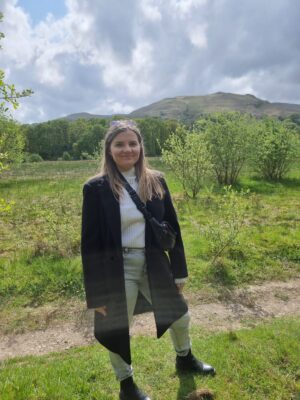

Sarah Hemens writes: I will be stepping back from my work with New Books in German at the end of the month. As I move on from the project after seven years, the Steering Committee has asked me to reflect on my time with the organisation. It seems fitting to do this in seven ‘chapters’.
Preface
New Books in German (NBG) came into being three decades ago, with the aim of helping more excellent German-language literature make its way into English. The project published a high-quality magazine, eagerly awaited every six months by readers who were excited to see which titles NBG’s book jury had recommended for an anglophone readership.
When NBG first came together, both the publishing landscape and the world looked very different than they do today. The World Wide Web was in its infancy. There was no social media, no Amazon same day delivery, no ebooks – and no way of finding out about books with the immediacy we now take for granted. WG Sebald’s The Emigrants and Bernhard Schlink’s The Reader were just appearing in English translation (by Michael Hulse and Carol Brown Janeway respectively). Google tells me that this was also the year the Spice Girls released Wannabe, Dolly the Sheep was cloned, genetically modified foods went on sale in the UK and the summer Olympics took place in Atlanta. And on a personal level, the autumn of 1996 saw me move into the Studentenwohnheim in Berlin’s Schlachtensee to spend a year studying at the city’s TU and FU.
The world has changed a lot in the intervening years and New Books in German has changed with it: we have responded to new technologies and the changing needs of the industry. But our commitment to promoting translations of German-language books so that they can find readers in English has remained constant.
My seven ‘chapters’ focus on different aspects of the project over the last seven years.
Chapter One: Developing the Platform
One of the first things we did after I joined the project in 2019 was to develop the website. The need for focus here meant saying goodbye to the hard copy magazine. We wanted to create something contemporary and welcoming: a site people would really want to dive into. The project was put out to tender and the applicant with the best grasp of the project – völlig ohne – happened to be based in Germany. It felt fitting that another Anglo-German relationship was part of the project infrastructure. A new NBG logo was designed with a graphic suggesting books climbing towards success. When users hover over a book cover, it moves slightly on the screen. This small interaction presents the books as dynamic and engaging, and encourages further exploration.
Our recommendations, showcasing books with guaranteed translation funding, remain at the heart of the site. A book’s page can be updated to include prize nominations, or sales in particular territories. When the rights are sold and a translation is published, the page can be updated to reflect this, with a link to the English version.
Alongside the books, we have built up a hub of interviews, articles and the twice-yearly Enjoy in English roundup of recent translations. We’ve aimed to demystify some of the processes involved with publishing work in translation and to help build knowledge and community.
Chapter Two: The People
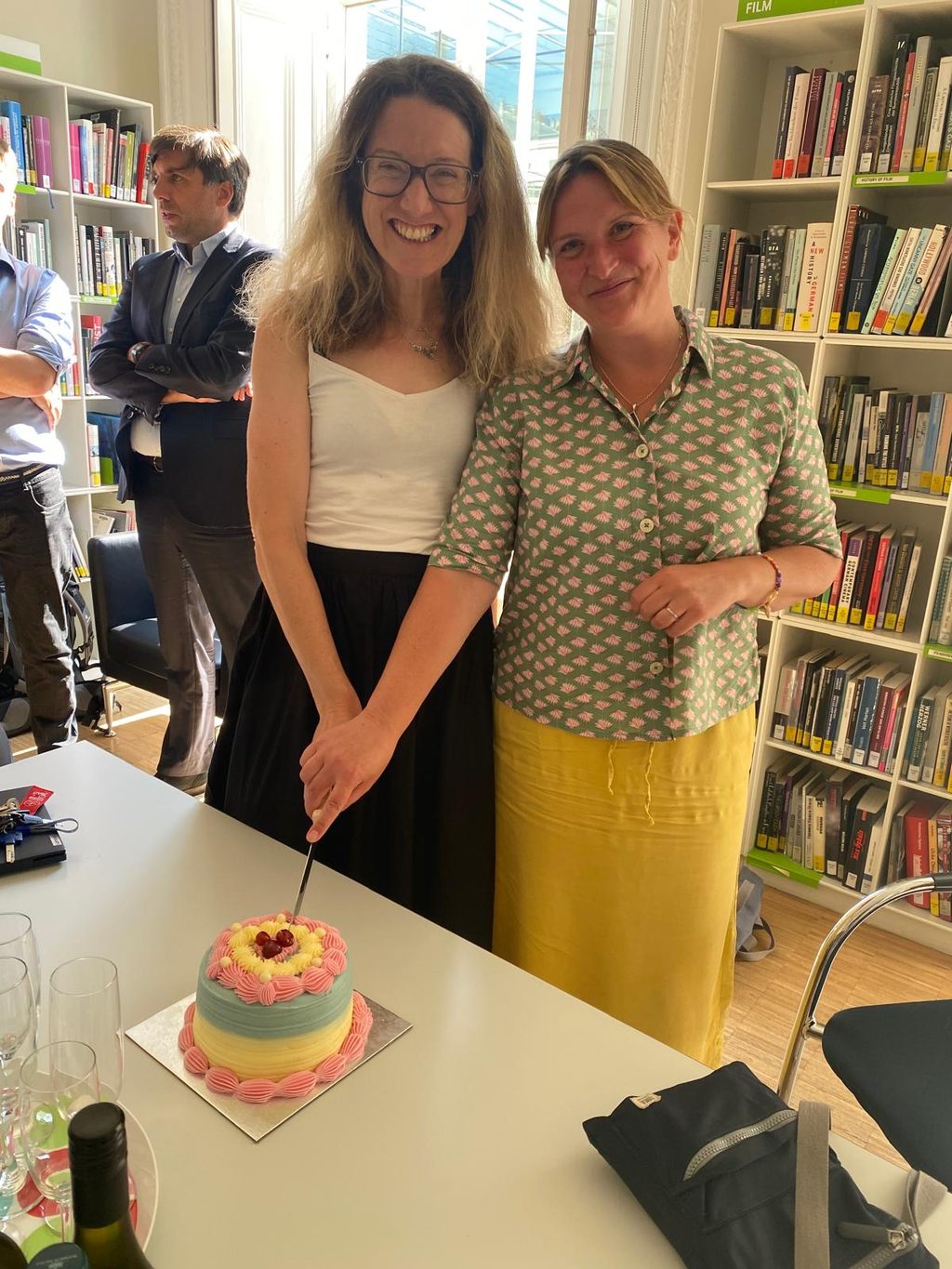
When speaking about NBG’s work, I often characterise it as a ‘people’ project rather than a ‘book’ one. Of course it is both. In the role I have certainly been aware that I am standing on the shoulders of giants. Rosemary Smith, Astrid Kurth, Sally-Ann Spencer, Rebecca K. Morrison, Charlotte Ryland, Jen Calleja, Sheridan Marshall and Alyson Gardner all edited the magazine and spent time at the helm of the project.
The book selections on the site come about because of the hard work of numerous people. We are lucky to have a great team of freelancers. Sheridan Marshall has worked with the project for close to two decades and serves as our Editorial Consultant, writing many of the recommendations and articles you read on the site as well as being an all-round good colleague and advisor across the project.
Thanks to both Becca Calf (our current freelancer) and Sarah Buckmaster (who previously did the work) for their work on our social media communications. Sarah Rimmington has provided proofreading and copyediting to sharpen our written word. Beyond Jamie Bulloch’s consistent work as a juror over the last seven years, he has championed both New Books in German and German-language literature more broadly. Thanks also to Edinburgh-based translator Annie Rutherford, who saw writing for the NBG website as a way to reinforce the links between translation and publishing communities in Scotland and England…a spark that ignited and led to our Glasgow jury meetings. And thanks to Dean Whiteside who represents the Goethe – Institut New York on the jury.
Caroline Waight, Regan Mies, Jamie Lee Searle and Alex Roesch work as advisors to the first jury round, providing expert research and analysis on the books sent to us by German-language publishers. This role was previously held by Steph Morris and Shaun Whiteside.
NBG co-founder Tanja Howarth sought me out not long after my appointment – to check who NBG had been entrusted to! but more to offer guidance, friendship and counsel over many sandwich lunches in Covent Garden.
Annemarie Goodridge (formerly of the Goethe Institut in London) worked closely with me on the jury and on book launch events including with Daniela Krien, Katya Oskamp and Shida Bazyar. As the emails flew back and forth, we sometimes lamented that we didn’t sit at adjacent desks. Gosia Cabaj of the Goethe Institut and David Beck (formerly of the Swiss Embassy in London) had enormous input into the website development and were close partners and supporters of the project during my earlier years. David was the prime mover behind the NBG online afternoon tea for translators during the pandemic, with Swiss herbal tea and chocolate posted out to translators round the country in advance.
The jury meetings are where a lot of the magic happens and I am grateful to the publishers, translators, book sellers, scouts, agents, funders and cultural institution workers who have sat on juries over the years and so generously shared their insights and opinions. I know you have all spent weekends at home with a cup of tea balanced on one arm of your chair and a pile of reader reports on the other. The jury’s work in selecting books is supported by the work of our excellent cadre of readers, who provide assessments of the titles submitted to us.
I have had new colleagues every six months in the form of interns, who have all brought energy, enthusiasm and their own mark to the project. The submission rounds could not happen as smoothly as they do without their administrative assistance.
People sometimes ask if I work alone and the answer is very much no!
Chapter Three: The Books
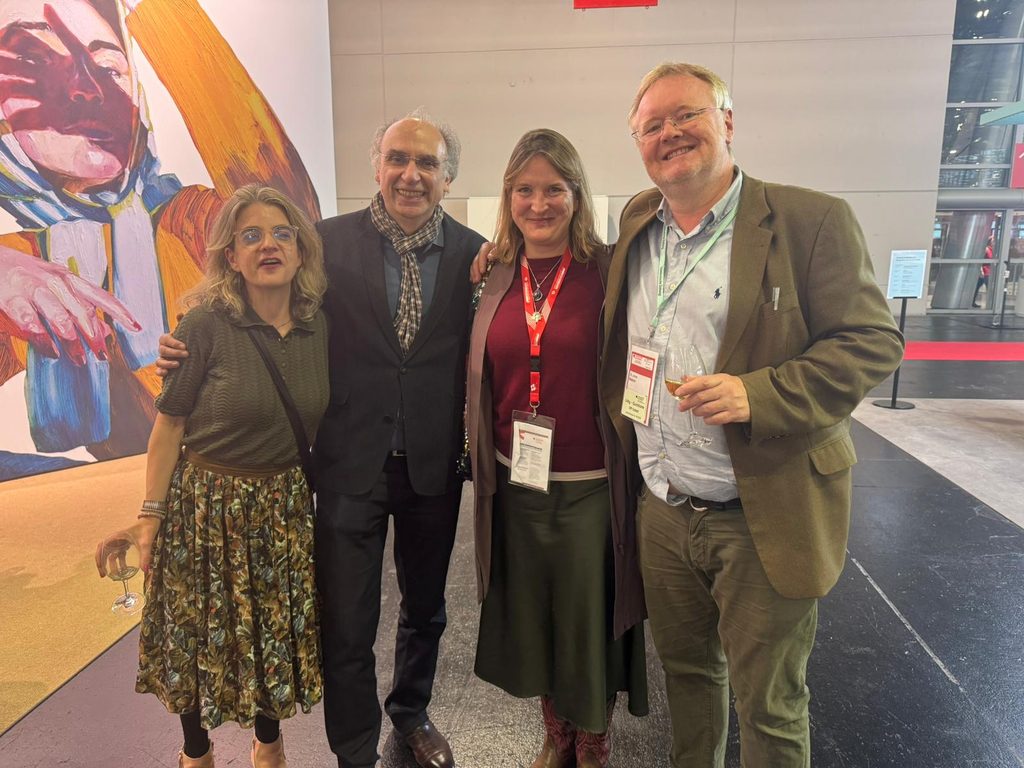
Launching a selection round has never lost its sparkle. It’s always exciting to see books progress from an initial pitch at a book fair. I have now been with the project long enough to see lots of the jury’s choices on tables in UK bookshops or on a friend’s shelves.
Sometimes NBG plays a more direct role in connecting a book with an English-language publisher, through a conversation at a jury meeting, or an email or social media post. This is always really heartening but it is only one part of the story. The German-language publishers also work hard to sell the rights, make the case for the book and find it the right English-language home.
Some 700 books have been sent in for the jury’s consideration whilst I have been heading up the project. Autofiction has been a strong trend, with authors drawing on family histories, memory and lived experience and playing with the boundaries between fact and fiction. There has also been a more nuanced engagement with the GDR and reunification, moving beyond simple East–West narratives to questions of memory, identity, complicity and complexity. Jenny Erpenbeck’s Kairos, winner of the 2024 International Booker Prize, intertwines the personal and the political, with a failing relationship mirroring the collapsing of the GDR.
At the same time, German-language fiction has also been outward-looking, reflecting lives shaped by migration and by connections to more than one country, language or culture. Climate fiction and nature writing have also grown in prominence, alongside an appetite for experimentation with form.
The German Book Prize winners from the last five years provide a nice snapshot of some of the trends: Anne Weber’s Annette, ein Heldinnenepos (2020), Antje Rávik Strubel’s Blaue Frau (2021), Kim de l’Horizon’s Blutbuch (2022), Tonio Schachinger’s Echtzeitalter (2023), Martina Hefter’s Hey guten Morgen, wie geht es dir? (2024) and Dorothee Elmiger’s Die Holländerinnen (2025).
Chapter Four: Book Fairs
Frankfurt and London provide the rhythm of the NBG year. Frankfurt heralds the run up to the spring selection and London helps launch the autumn round. There are meetings with publishers, agents, scouts and translators, conversations about forthcoming books, discussions about rights – and lots of walking and coffee.
NBG has also had opportunities to travel further afield. In 2023 I spoke on a panel at the Sharjah Publisher’s Conference on promoting national literatures for translation and attended a dinner given by Bodour bint Sultan Al Qasimi at Sharjah’s cultural hub The House of Wisdom. I have travelled to Solothurn several times for the wonderful Literaturtage – a superb opportunity to immerse myself in German-language literature in a beautiful riverside setting. I went to Buch Wien just last year and enjoyed a long walk and talk with author Kaśka Bryla, a couple of hours in a café with Zsolnay’s Annette Lechner and a wide variety of author readings. In 2024, the German language was guest of honour at the Salone Internazionale del Libro di Torino and NBG took part in the Literaturparade – a festival parade through the streets of Turin with music and readings, in the company of colleagues from the Frankfurter Buchmesse, Goethe Institut and Pro Helvetia.
Chapter Five: Partnerships
As a small project we have looked to work together with others to amplify our voice and increase our impact. Translators Aloud has been a great friend to NBG, hosting feature weeks on their channel with translators reading from their samples of books selected by the NBG jury. There are now some 79 readings on the NBG playlist, making translators more visible and giving readers and editors the opportunity to engage with the books in a different way.
The Frankfurter Buchmesse has showcased NBG selections digitally and at various fairs around the world. Riky Stock and Niki Théron from the Frankfurter Buchmesse have always found time for a zoom call, and to spread the word about NBG and champion our work. Claudia Dobry-Schneider of the Frankfurter Buchmesse has been a welcoming face at the London Book Fair, where space has been made each year on the German Collective stand for NBG to display books and meet with publishers.
Rosie Goldsmith of the European Literature Network has always shared our updates and been supportive. NBG is the proud English-language media partner for the German Book Prize and Nonfiction Book Prize. NBG has supported bursaries at translation summer schools and been welcomed in to speak to the German-English translation cohorts.
Chapter Six: Steering Committee and funders
NBG brings together several institutions and departments from Austria, Germany and Switzerland, all of whom share the aim of promoting German-language literature. These organisations form a Steering Committee which oversees the project’s work. In addition to this role, individual organisations have worked with NBG in a variety of ways. For example, the Swiss Embassy has supported NBG interviews with Kim de l’Horizon and Joachim B. Schmidt and the German Embassy hosted a drinks reception at the German Ambassador’s Residence during the London Book Fair, where NBG was able to speak about its work.
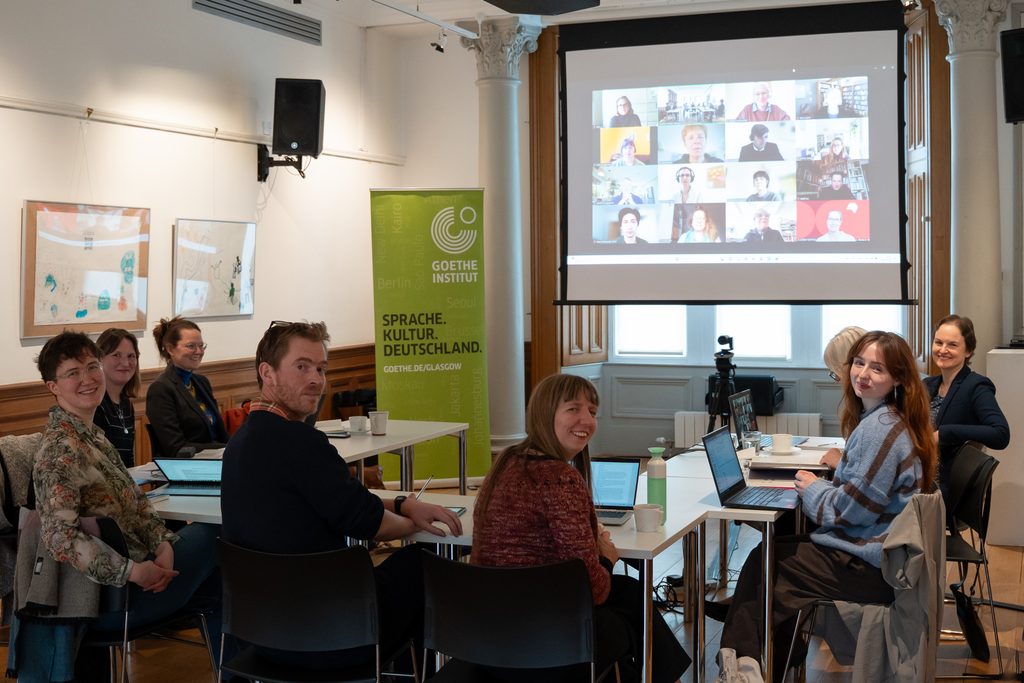
The Goethe Institut in London has welcomed our juries twice a year and provided warm hospitality. The Goethe Institut in Glasgow has hosted two jury meetings (thus far…), enabling us to convene outside of London.
New Books in German is funded by the Austrian Federal Ministry for Housing, Arts, Culture, Media and Sport, the Austrian Federal Ministry for European and International Affairs (via the Austrian Cultural Forum London), the Frankfurter Buchmesse, the Goethe-Institut London, and the Swiss Arts Council Pro Helvetia. It also receives support from the German-language publishing industry in the form of publisher fees. On behalf of everyone involved in the project, my thanks go to each of these for their continued support and encouragement.
Chapter Seven: What Comes Next
After seven years – and 14 submission rounds – it is time to step back. I am leaving the project at the end of September.
The Steering Committee is taking the time to think about the shape and priorities of NBG as it gears up for future opportunities. A transitional manager will be appointed soon to help keep the project moving forward.
It is time to hand over my pen and leave others to write the next chapters. My thanks to the Steering Committee who entrusted me with their project and to everyone who has made my time here so enjoyable and rewarding.