New Books in German speaks to literary translator Simon Pare about translating Thomas Mann’s The Magic Mountain and blogging about his work.
It was a great pleasure to read Thomas Mann, to recognise how the book works, not only the nuts and bolts, but also the brilliance of the setting, which is absolute genius.
– Simon Pare
Anna Compton: What did it feel like to get the chance to translate such a well-known work?
Simon Pare: It felt great, because it was one of my favourite books as a student. It has remained very much lodged in my memory for the last 25 years or so. It’s been interesting talking about it because, of course, everyone knows it and I get the impression that either it’s the best novel people have ever read, or they really can’t stand Thomas Mann. It’s interesting to work on something which polarises people.
As a translator, when you busy yourself with a text, you can see the structure emerge, the repetitions and the use of themes and motifs. It was a great pleasure to read Thomas Mann, to recognise how the book works, not only the nuts and bolts, but also the brilliance of the setting, which is absolute genius. And then there are so many interesting characters who have their own habits, ways of speaking and allegorical roles. It was a great honour to immerse myself in that world.
Another way in which it was great was that it was one of the first times where I’ve had an editor who was not only an expert in German literature, but also actually read every single word I wrote and asked questions. To have that kind of dialogue with my editor, Ritchie Robertson, who is Emeritus Professor of German literature at Oxford University, was also fantastic.
AC: How did the opportunity come about?
SP: I was contacted immediately after I was named runner-up in the Schlegel-Tieck Prize in early 2022. My translation is one in a series of five new translations of Thomas Mann by Oxford World’s Classics – The Buddenbrooks, Doctor Faustus, the early stories, the late stories and The Magic Mountain. They’d already allocated the others, but didn’t have anyone for The Magic Mountain, which was my favourite, so that was good.
AC: How did you approach your research and background reading for the translation?
SP: I decided to read as much Thomas Mann as I could in the year and a half that I was working on it. I’ve now read almost everything he wrote – certainly all the major works. I wanted to get to know Thomas Mann’s writing.
Because I was going to write a blog about my translation process, I also had to think about areas which might be good for posts. So I looked into topics such as tuberculosis and the history of Walpurgisnacht. I was in touch with the Thomas Mann archive in Zurich, and I asked my translators’ group, which meets every month, about any linguistic problems.
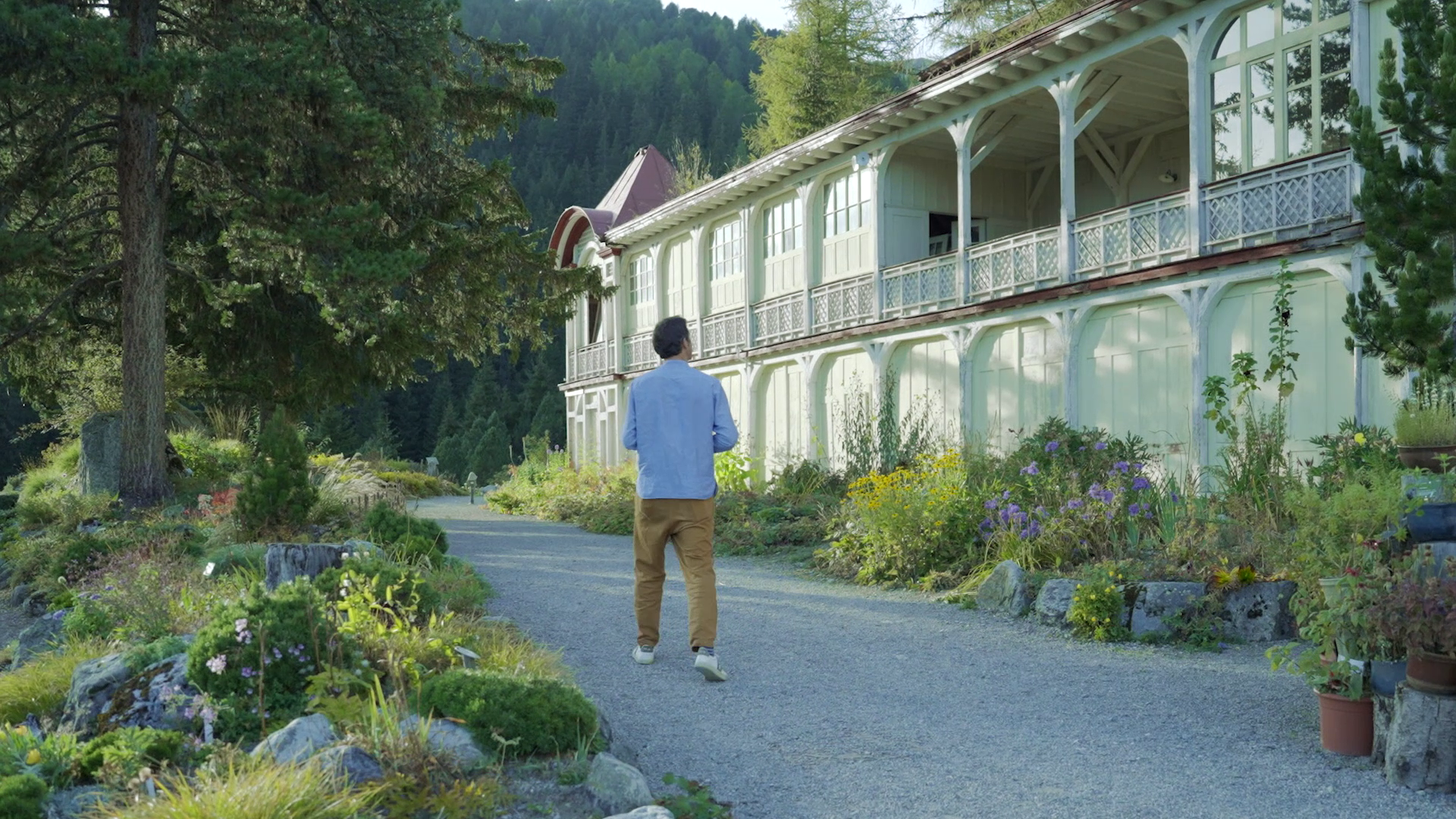
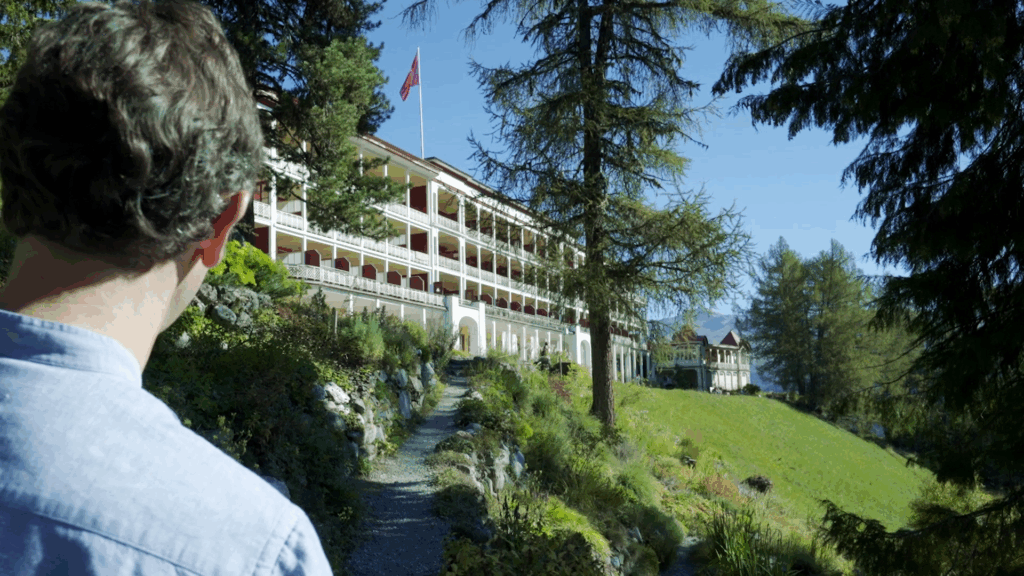
In 2024, there were also events around the centenary year of The Magic Mountain, like a wonderful conference in Davos, where I got to know Benjamin Miller. He not only has a massive collection of all kinds of medical equipment linked to the sanatoria, but also grew up at the sanatorium which was a potential model for the Berghof sanatorium in The Magic Mountain, and is now the Schatzalp hotel. In the book, the character Hans Castorp never really sees anyone die. When I visited the location in real life, the man who runs the hotel showed me a lift where he said the dead bodies were brought down to be taken out the back and put on sleds. However, Benjamin Miller told me that that didn’t happen, because people were kicked out before they could die and sent down to the valley. But he did say that, as a boy, he can remember being kept away from the dining room, while he assumes a dead body was being carried out. I went to Davos about three times and it was nice to be able to look around and meet people there.
AC: How did you approach the translation itself? Were you influenced by existing English translations of The Magic Mountain?
SP: I don’t usually read a book just before translating it, but The Magic Mountain was an exception, because it’s so long. When I was translating, I read around 200 pages ahead each time to anticipate what was coming so I didn’t encounter sudden challenges as I went through my draft. I didn’t really want to read a thousand pages and then start.
I decided immediately that I wasn’t going to read the existing English translations, but I did occasionally refer to the French translation, which came out a few years ago. It was always interesting to see how the French translator had tackled certain challenges. Even if I then thought that I didn’t agree, it was interesting as a double check.
AC: I really enjoyed looking through your blog about The Magic Mountain. What was it like to blog about your work and what did you learn from it?
SP: To be honest, I found it almost more stressful than translating the book sometimes, because I’m not used to doing social media. But a friend of mine who runs a social media consultancy said that The Magic Mountain may be the only book of that kind that I translate, and that maybe I should keep a blog about it. One good thing to come out of it was that quite a lot of people started contacting me, commenting on things I’d said or choices I’d made. In one case, I wasn’t completely happy with one of my solutions, but having communicated with an American guy, I found a really good solution, so that was helpful. There was also Karolina Watroba, who wrote a book about The Magic Mountain and its reception. She got in touch with me to talk about my post about Olga Tokarczuk’s The Empusium and its dialogue with The Magic Mountain, and she explained a few things to me, which was really cool.
AC: What impact did your blog have on the translation process?
SP: I found it very useful as a chronicle of my translation. It helped me to document my research so that everything I’d learnt in the process of translating didn’t get lost. I also found that half the fun and half the benefit of doing something like a blog is that you’re halfway to solving a problem if you can formulate what the problem is. That’s a big part of the translation process.
AC: Why did you choose to use a mixture of text, audio and video in your blog?
SP: It depended on the ideas that came to me. Some things just suited images rather than writing. I felt like there was a need for variety. My friend who suggested the blog also made it very clear to me that it was not going to work if it was only written posts. He kept saying that people will watch if you’re in the picture – social media works on the basis of you being there and you doing something interesting about your work, which feels a bit of an odd thing to be doing as a translator, being largely in the background, but I think he’s right. And I did the readings because I don’t get much opportunity to read aloud, and I love doing that. The Magic Mountain is an incredibly visual novel – the people and setting are described so beautifully – so it just lends itself to images and video. That’s also why my friend Vincent Bourgeau, who is an illustrator and children’s book writer, did the drawings. When I first realised I was going to be translating the novel, I was visiting him and he had just finished reading it. He said he’d just picked it up, he’d never really read any Thomas Mann and had completely loved it. So when I asked him to work with me and depict the characters, he was in. I’m going to make his illustrations into postcards.

AC: Do you think your experience of doing the blog will change how you approach future translation projects?
SP: Yes, I think so. For example, I’ve just translated the correspondence between Max Frisch and Ingeborg Bachmann with Chantal Wright for Seagull Books. It’s going to come out next year, and it’s a big book again, around a thousand pages. At first we thought we were going to write a blog about it, but then we wrote to each other, as they did – whenever we noticed something in particular about the text, we would shoot off an e-mail. We also met up regularly, and we actually read the first 150 out of the 300 letters aloud to each other to see how they sounded. It certainly made me think that there are lots of things you can do to make the translation process less lonely, more fun and more inclusive. I’ll definitely explore those in future.
AC: Will you continue to blog and use social media more?
SP: I think so. While writing my blog, I began thinking that it could be a feature of other projects too, although not all books lend themselves to it and I won’t always have time. The wonderful thing about The Magic Mountain is that, even though my blog is called ‘A Year on the Magic Mountain’, I had eighteen months to work on my translation. I find posting consistently on social media a bit of a challenge, but I’m on Instagram now, I’ve got a few followers and it’s fun. I enjoy seeing what other people are translating and what events they’re doing. So maybe they’ll be interested in what I put out as well.
Thanks for the interview, Simon! I’m looking forward to reading your translation.
The Magic Mountain, newly translated by Simon Pare and Edited by Ritchie Robertson will be published in March 2026. You can pre-order here.
We also had the pleasure of talking to Simon about his career in translation, including his upcoming projects and a recommendation on what book he’d love to see revived in English; read the full interview here.
Photos © Simon Pare
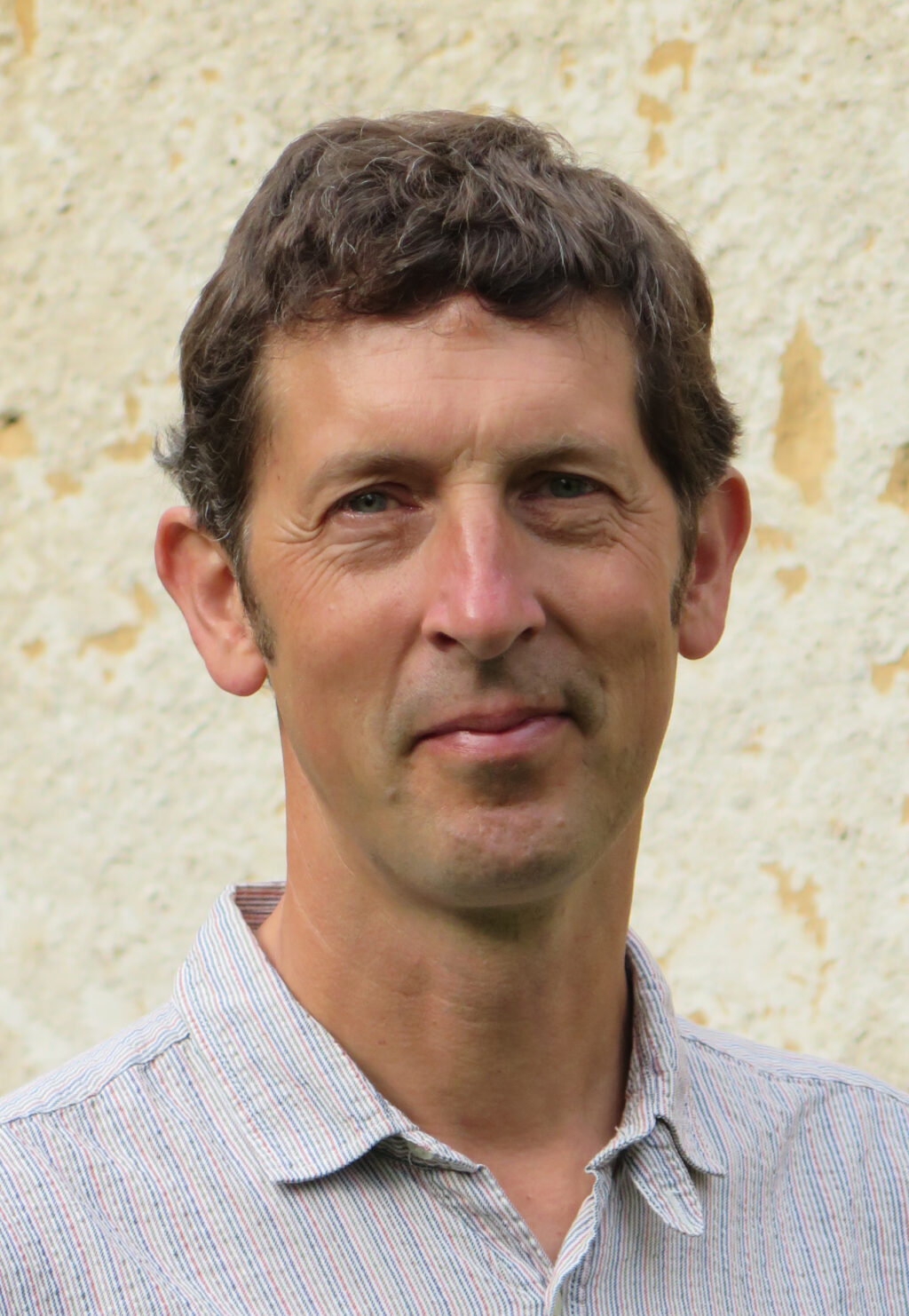
Simon Pare grew up in Shropshire and developed a love of foreign languages at secondary school, he studied French and German (and Occitan troubadour poetry) at Cambridge. After almost nine years working in ecology and sustainable agriculture, Simon became a translator working in literary translation and film. He currently lives in the Alpine foothills near Zurich.