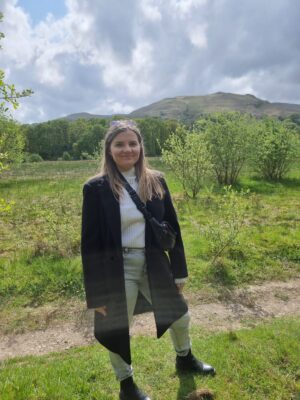
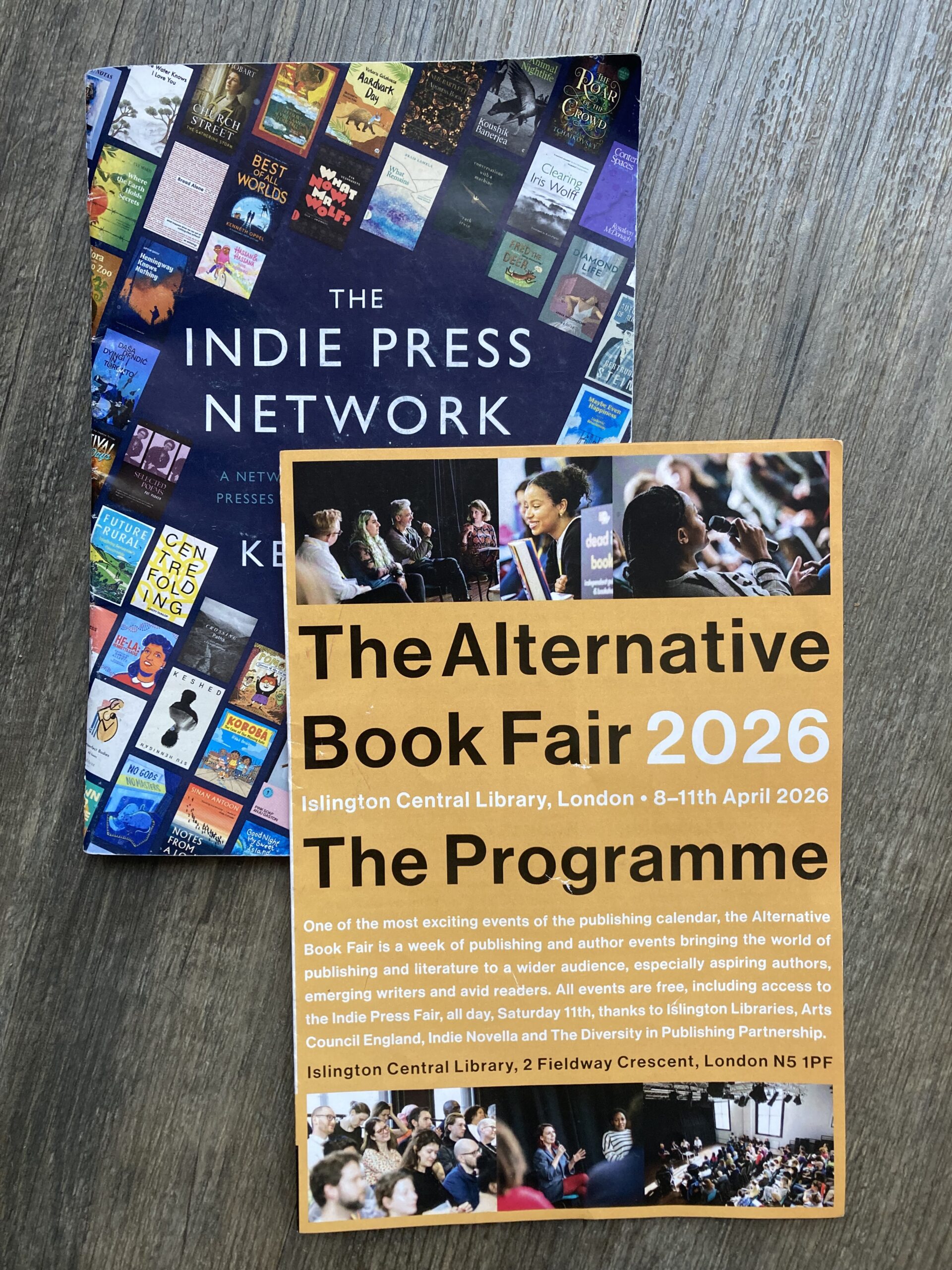
Sheridan Marshall, Editorial Consultant at NBG, attended the Alternative Book Fair in London. A yearly event, the four-day fair is free and includes panels to bring the world of publishing and literature to a wider audience. Sheridan reports on the fair.
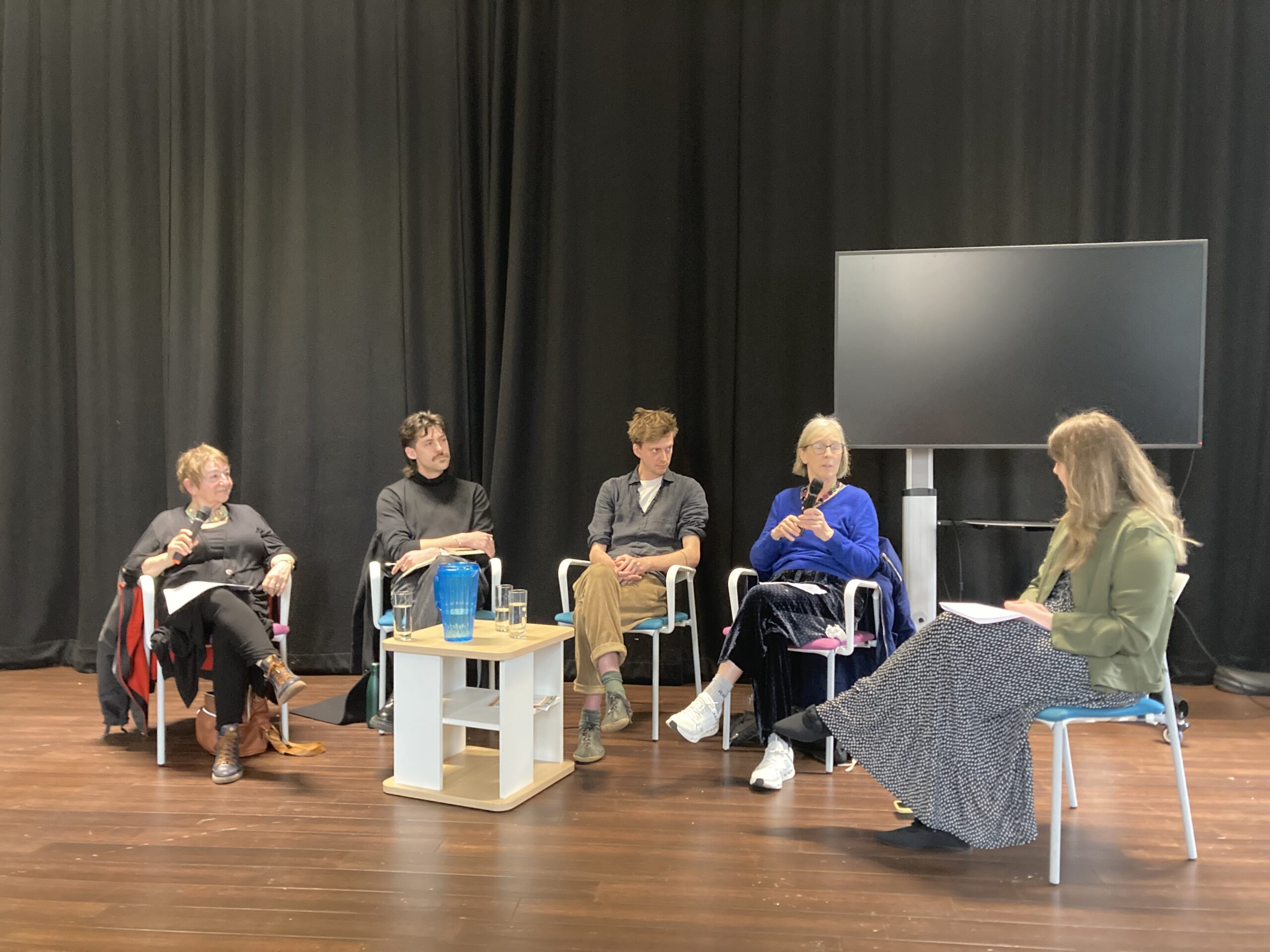
Back in April I attended London’s Alternative Book Fair for the first time at Islington Central Library in London. Designed to give independent publishers more of a platform than the huge corporate international books fairs like London and Frankfurt, the Alternative Book Fair is a friendly, welcoming event that is free to attend. Its popularity was evident from the fact that the panel on ‘The Rise of Translation’ that I was keen to attend was sold out when I tried to book a ticket on Eventbrite the week before the Fair, and I was advised to arrive early and queue up for a spare ticket in the event of any non-shows. People were already queuing for the 11 a.m. event by 10.15 a.m., and by 10.55 a.m. there were around twenty people standing in line hoping to gain admission. The reading public’s appetite for translation was certainly affirmed by this panel, where we had a packed audience to listen to the group of five experts discuss their takes on the current state of play in the UK publishing industry’s approach to translated literature.
The lively discussion between Nicky Harman, a Chinese to English translator, Will Forrester, Head of Literature Programmes at English PEN, Ros Schwartz, Co-Director of Oxford Translates, and James Tookey of Peirene Press, was chaired by Sarah Parfitt. Sarah Parfitt began by asking the panel what made for a good fit between translated literature and indie publishing. Ros Schwartz talked about the agility of indie publishers who know their tastes and will take risks with something they believe in, whereas the big five publishers may be more conservative and risk-averse. James Tookey remarked that two thirds of books submitted for the International Booker Prize this year came from indie publishers; he said that big publishers were catching up, and that the situation doesn’t have to be as Ros Schwartz describes it, particularly as younger people are reading more translated fiction. Nicky Harman mentioned that indie publishers had the flexibility to make bold decisions like focusing on just one language. Will Forrester added that indies often focus on just one book, meaning that they are able to individualise how they are working with a book and know their audiences, without behemoth marketing departments. This makes them good at getting books to their readers.
Sarah Parfitt then asked members of the panel how people might go about getting into literary translation. Ros Schwartz mentioned the University of East Anglia’s MA in Literary Translation and summer schools like those offered by Oxford Translates and the BCLT, involving workshop-based learning with fellow translators. It is important to be aware of networking organisations such as the Emerging Translators’ Network, and translation events which provide informal networking opportunities. Mentoring schemes, such as that run by the National Centre for Creative Writing, are also a valuable way of accessing support when embarking upon a career in literary translation. Nicky Harman added that there are groups with a specific language focus, such as Paper Republic which promotes Chinese literature and its translation. James Tookey stressed the importance of honing your craft: translation is a form of writing and writing improves the more a writer does it. So the more you practise translating, the better you will be.
Ros Schwartz described her sense of having three responsibilities as a translator – to the author, to the reader, and to the publisher – and that sometimes these responsibilities conflict. As a translator she has to decide whether to retain culturally specific words or to gloss them to help the reader, and then balance her chosen approach with that preferred by the publisher.
The next question for the panel from Sarah Parfitt was about the responsibilities that a translator carries when they sit down with a writer’s text, and what sort of conflicts they might face. Nicky Harman replied that translating from Chinese was like riding two horses at the same time, as she tries to reflect what the original writer has produced in the English version. Particular difficulties arise when she is translating food from Chinese, where there may be no English equivalents for certain food items. Ros Schwartz described her sense of having three responsibilities as a translator – to the author, to the reader, and to the publisher – and that sometimes these responsibilities conflict. As a translator she has to decide whether to retain culturally specific words or to gloss them to help the reader, and then balance her chosen approach with that preferred by the publisher.
Sarah Parfitt then posed a question about the panel’s experiences of the ‘lacuna’, or untranslatable space. Nicky Harman mentioned that this concept becomes more relevant the further away the cultural background is. Some things are difficult to translate and you just have to give it your best shot – the translator has to put themselves in the place of the reader who may not know much about the particular cultural background. Nicky Harman added that Chinese authors are less likely to describe emotions, and might instead just describe body language, meaning that she often feels like she wants to add something when she is translating into English. Translator’s notes – either as a foreword or an afterword – are very valuable.
The discussion then moved on to AI, and how this has affected people’s practice as translators. Ros Schwartz replied that AI has mainly impacted the non-book translation sector, such as the translation of marketing and technical texts, and that it hadn’t affected the higher end of literary translation or her personally. She noted that it is now becoming much more common for translators to be asked to do post-editing. Nicky Harman said that ChatGPT was worse than Google Translate or DeepL at translating Chinese, but that AI could be useful for research, e.g. translating a 1920s author who uses classical language. Will Forrester mentioned some horror stories of AI sample translations and expressed his hope that however good AI gets it will still only be able to translate the words, and not the gaps between the words. He believes that there will always be translation by humans, although on a less hopeful note, AI can be trained on words stolen from authors and translators. James Tookey said that he feels very strongly about AI translation and is worried about the hollowing out of the translation space. A difficulty arises if half of literary translators’ work is commercial work and this is taken away by AI, as this may have been what enabled them to take on literary translation work.
James Tookey spoke about the cost of translated fiction, noting that it can be quite expensive, especially when the texts are long. Peirene Press, for example, only publish six books per year, and can only afford for one or two of these to be unfunded translations. He mentioned that Sweden, Norway and Catalonia are all good at providing funding for translated fiction; Germany and France are good too, but there are so many books that it is difficult to choose. English PEN is so useful because it makes it possible to take risks with translated fiction as a publisher, although ‘we try not to let the funding tail wag us’, James concluded.
As a closing question, Sarah Parfitt asked the panel if they would each recommend a translated work to the audience. Ros Schwartz recommended In Late Summer by Magdalena Blažević, translated by Anđelka Raguž and published by Linden Editions. Ros Schwartz praised it as one of the best books she has ever read, in which the writing and translation are exquisite. Will Forrester chose Favorita by Michelle Steinbeck, translated from the German by Jen Calleja and published by Faber, describing it as ‘wild, manic and a bit of a masterpiece.’ He also commended Jen Calleja’s book, Fair – an interesting story about translation in which Michelle Steinbeck also features. James Tookey’s top tip was The Life of Rebecca Jones by Angharad Price, translated from the Welsh for Maclehose Press by Lloyd Jones. The book is a gorgeous story of one woman’s life in the twentieth century, never leaving her valley in Wales, but the world comes to her. James Tookey praised the moving, profound text with a metafictional twist, mentioning that the author is herself a translator from numerous languages. Nicky Harman chose a YA book that she translated herself, Huang Beijia’s Flight of the Bumblebee, mentioning that YA books in Chinese are often more accessible to foreign readers. She described the book as a romp of a story with a really tragic ending; a story about a large family during the Sino-Japanese war, in which the protagonist grows up and discovers how incredibly destructive war is.
There followed some interesting questions from the audience, including one about how world conflict influences what is being published. Will Forrester replied that global conflict is deeply affected by ongoing global crises, and referenced what he termed ‘opportunistic publishing’, such as the rush of Ukrainian and Palestinian authors being published without much editorial support, leading to a potential lack of care and safeguarding around these authors. James Tookey commented that even though it is agile, indie publishing moves quite slowly due to a tendency to think two years ahead, meaning that it is ‘less buffeted by those winds.’ He observed that it would not be appropriate to rip up a careful publishing schedule just because something terrible has happened. He cautioned that there is a fine line between offering somebody a platform and exploiting them.
Will Forrester was asked about why translating the gaps between words was out of the reach of AI. He replied that while AI can translate each given word, it does not do justice to the arc of the feeling between them. His hope is that readers don’t want to read art that has been translated by a machine, but that they want human art instead. In her affirmative concluding remarks to the session, Ros Schwartz observed that literary translators’ abilities to convey the cultural moments beyond the words on the page are where human translation excels over AI.
The standing-room-only turnout for the translation panel at The Alternative Book Fair demonstrates the UK public’s strong appetite for translated literature. While independent publishers are taking creative risks to bring international voices to English-speaking audiences, they continue to face real hurdles, from rising publishing costs and delicate funding models to the uncertainties around AI. As the panel highlighted, literary translation is ultimately about far more than just exchanging words in different languages; it is about conveying the human spirit, nuance, and cultural moments behind the text. With passionate translators, brave indie presses, and supportive advocacy networks all working together, translated fiction will continue to enrich the UK’s reading landscape.
While the annual London Book Fair serves as a busy trade hub for major international rights deals, the Alternative Book Fair offers something quite different and wonderfully refreshing. Held in the friendly, accessible setting of Islington Central Library, without the steep entry fees and corporate gloss of the main fair, it creates a welcoming, free space that puts the reading public front and centre. The Alternative Book Fair gives independent publishers a much-needed platform to showcase their work without being overshadowed by giant marketing budgets, creating an intimate, inclusive environment where readers, aspiring translators, authors, and small presses can gather together, share ideas, and celebrate a mutual passion for books.
Read on! Interviews with translators and independent publishers: