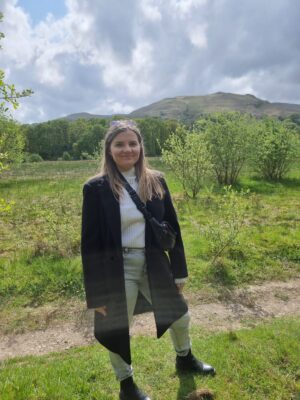

Acclaimed translator Shaun Whiteside speaks to NBG about the increasingly colloquial style of modern German history writing, the art of capturing an author’s voice, the distinct charm of Austrian literature, and why the human touch remains the baseline of the craft in an era of AI.
…German narrative non-fiction is in the ascendant.
Shaun Whiteside
Since your last interview with New Books in German in 2022, there has been a surge in ‘History of the Present’ and narrative non-fiction in German-language publishing. Having translated works like Harald Jähner’s Aftermath, have you noticed a shift in what English-language publishers are seeking from the German market?
I don’t know if it’s just me, but yes, it does seem that German narrative non-fiction is in the ascendant. I’ve been lucky enough to do three volumes of history by Harald Jähner – the last one due out next year – and three by Wolfram Eilenberger in his series of group biographies of philosophers. The latest one, The Haunted Present, about a range of post-war philosophers, is particularly brilliant. Perhaps because of that I’m being offered a lot more history, biography and philosophy than before, which is great, just something of a shift. I think also that the style of German history writing has become much looser over the past few years, it’s not quite so footnote-heavy and paragraphs don’t go on for hundreds of pages the way they used to (or that’s how I remember it anyway).
How do you balance the responsibility of historical accuracy with the creative act of making voices from the past resonate with a modern English ear?
The styles of the narratives have become more colloquial, less stodgy (or less dusty), so perhaps the translations of past voices go in that direction as well. This also holds by the way for books written in English about German history – I’m thinking of brilliant work by Katya Hoyer on the history of the GDR and of individuals in Weimar, and of Andrea Wulf’s brilliant study of the idealist philosophers in Jena at the end of the 18th century, Magnificent Rebels. It takes history out of the academy and makes it accessible to the general reader, but without over-simplifying, I think it’s a very welcome trend!
You translate from German, French, Italian, and Dutch. Have you ever encountered a project where these languages intersected – perhaps a text that required you to draw on the linguistic nuances of one to solve a problem in another?
I’m currently working on a book by Uwe Neumahr about two bookshops in occupied Paris, Shakespeare and Company and La Maison des Amis du Livre. It’s really fascinating, and involves reading reference material in German, French and English – likewise, my latest Eilenberger translation, The Haunted Present, involved reading a lot of material by Michel Foucault that has only been published in French and German, so yes, it was useful to be able to be able to go back to the originals and translate directly from those. Not original archival research, perhaps, but intriguing in its own way.
In 2022, you described translation as a form of ventriloquism. Is there a specific author you’ve translated recently whose voice felt particularly resistant to being ‘thrown’ into English?
I’ve translated a few books now by the great Austrian writer Marlen Haushofer, most recently the novellas Killing Stella and The Fifth Year. There was a sense of having to be very careful with those because she’s telling you things and at the same time withholding. There’s a balance, and you don’t want to be overly direct with an author who’s being deliberately ambiguous. I’ve noticed before, and I wonder if a lot of translators feel this way, that when you go through the manuscript you can almost spot the point where you got the author’s voice. You ease into the music of it, and then redo the first few pages when it wasn’t quite in tune. So I don’t know if that’s a resistance as such, it’s more about striking a very particular note and holding it.
Are there any German concepts or idioms you’ve encountered in your latest manuscripts that you still find beautifully – or frustratingly – untranslatable?
In writing about the 1940s and 1950s you do inevitably come across very bureaucratic terms and names of institutions that you have to be quite careful with. They can’t be colloquialised too much because that officialese was very much part of the language, and part of an attitude that was reflected in the language. I suppose I’m thinking of something like the Verband der Heimkehrer, Kriegsgefangenen und Vermisstenangehörigen Deutschlands e.V. (vdH) (Association of Returnees, Prisoners of War and Families of Missing People of Germany), which does at some length identify its function, and has something of the ring of those long composite nouns that non-German-speakers enjoy hearing about – but there’s something else going on, which is an intensely official language running into a more relaxed and perhaps more American-influenced social setting. I’m also thinking here of the philosopher Theodor Adorno (who features in Haunted Present), in the 1960s, being stiffly formal in his impeccably anti-fascist analyses and having to deal with the circus-like demonstrations of the student movement. It’s a clash of civilisations that has to be reflected in the language.
Having served as the Chair of the Translators Association, how do you view the current state of translator visibility and credit on the cover compared to where we were five years ago?
The landscape is utterly transformed. I’m very aware of being part of the old guard now, but also of having been part of a shift towards greater visibility over the past few decades. I’d still like to see the names of translators on the cover as a matter of course, but I find that more publishers are open to the idea than would have been the case a few years ago,
You are heavily involved with the British Centre for Literary Translation (BCLT). Has teaching the next generation of translators changed your own approach to any parts of your work?
I greatly admire what BCLT does and I do miss those day-long workshop sessions that we used to have at the Goethe-Institut – nearly all of today’s generation of German translators passed through those, and many have gone on to do great things, some indeed to reinvent themselves as novelists which I think is brilliant.
Writing and translation both have to come from within an embodied person, with the passions and wishes and nostalgia and whimsy that go with being human.
Shaun Whiteside
We can’t avoid the AI question in 2026: where do you see the boundary between technology as a tool and the ‘soul’ of literary translation?
My European association (CEATL) recently held an AGM that was to a great extent based on the AI question, and also coincided with issues about the use of AI in creative writing. Writing and translation both have to come from within an embodied person, with the passions and wishes and nostalgia and whimsy that go with being human. It’s hard to avoid it now completely – if you so much as use a search engine you’re rubbing shoulders with a bot – but we’ve got to stress the human, that’s very much the base line.
You have translated both Nietzsche and contemporary bestsellers. Does the weight of the philosophical canon feel different on your keyboard compared to translating a modern novel, or is the process identical?
Maybe it’s like playing classical music versus pop or jazz? You’re still using musical skill and techniques but the spirit’s different. I see some brilliant translations of lighter contemporary writing these days. It’s as if translators feel freer to play.
Is there a lost German classic or a contemporary voice that you haven’t yet had the chance to translate but are actively championing?
I’d like to see more Austrian writing in translation. There’s a tradition of coming at things from defiantly odd angles that I love and I’m not sure we’re seeing quite enough of that right now (I’m very keen on the writing of Alois Hotschnig, for example, excellently translated by Tess Lewis). And it’s interesting to see novels from the GDR being rediscovered. I suspect there are more of those to come.
To close on a classic NBG note: what are you reading for pleasure right now?
A friend from Switzerland just brought me a collection of stories by Peter Stamm, Auf ganz dünnem Eis (On Thin Ice) so I’m looking forward to that. Peter has strong associations with the Translators’ House at Looren near Zurich, and he’s always a reassuring presence.
Thank you Shaun!
Read on!
Our interview with Shaun from 2022, in the context of his work with CEATL.
Our interview with Gabriela Stöckli, the Managing Director of the Translator’s House at Looren.
Main image © Camila Pastorelli