
Literary translation can often be underpaid, misunderstood, and invisible but Jen Calleja’s Fair brings it to the centre of the story. In this conversation with NBG, Jen reflects on how the book took shape and what it means to be both welcoming ringmaster and party-pooper.
Gemma Craig-Sharples: Could you tell us a bit about the background to writing Fair – when did you first have the idea, and (how) did the project evolve as you went along?
Jen Calleja: I had been writing articles and columns about literary translation in parallel to my work as a literary translator for many years and wanted to create a book that brought together my ideas and experiences in one place. I mainly wanted to take some time to explore how I had ended up in this quite particular job, what had got me here, and what I thought the translation of literature was.
I had given a few talks and workshops at the University of East Anglia on the invitation of Cecilia Rossi, who runs the MA in Literary Translation, and she floated the idea of applying to do a PhD in Creative and Critical Writing there, which would allow me to research hybrid life writing by literary translators in the form of a thesis and also write Fair. I was awarded a fully-funded studentship from the university to undertake the PhD, and I went to my graduation ceremony earlier in July!
The most significant change was that the fictional structure of the fair was originally a tower, but I realised halfway through the project that I was conforming to the bottom-to-the-top/rags-to-riches cliché that didn’t reflect the reality that was far more up-and-down (like a rollercoaster) and was far more rags-to-rags.
Prototype market Fair as a book which blurs the lines between memoir, autofiction, satire and polemic. How do you think of the book? Was this hybridity important to you?

Yes, I think that describes the book accurately, the first three descriptors certainly. I actually actively avoided writing a polemic as I had been turned off by polemical writing about literary translation in the past/present that seemed to be more interested in being provocative for provocation’s sake, but on finishing it and having people read it I recognise that it has strong thoughts on matters such as the undermining and underpaying of translators, and I stand behind that!
All of my books have been hybrid and experimental – for me, it’s the only way I can write, and there are so many benefits and thrilling challenges with this mode of writing, much like literary translation, which we could also describe as experimental writing. As I tell my creative writing students, form and content should be working together, so the way I see it, writing a ‘traditional’ memoir wouldn’t have been fitting for a book that’s exploring multiple artforms, clowning, snacks, ghosts, and emotional and physical extremes.
There can often be this goal in academia towards perfection in translation, when I wonder why the goal isn’t to perfect the lived experiences, pay and rights of translators. I think there can be no theory without practice, and it’s why translators should be viewed as experts in their practice.
Jen Calleja
As someone who’s also interested in both translation theory and practice, I’d be interested to hear how your academic study has informed your translation practice or understanding of your work. To what extent do you see theory and practice as connected?
I did read some translation theory while studying for an MA in German Studies, where I ‘discovered’ literary translation. I found the theorising around the multiple approaches and considerations in translating a text, the ethics and politics of translation, and its (obvious) concern with literary concepts and devices like voice very exciting – though there was zero actual translation that took place on the course. It gave me a foundation, a survey, and a deep awareness of the conversations and theories up to that point.
Then I went out into the world and started translating poems and short stories and then books, and reading interviews with and essays by literary translators themselves. It revealed some of the theorising to be very detached from the ‘real lives’ of translations and the publishing industry, and from living, breathing translators. There can often be this goal in academia towards perfection in translation, when I wonder why the goal isn’t to perfect the lived experiences, pay and rights of translators. I think there can be no theory without practice, and it’s why translators should be viewed as experts in their practice.
It feels like an important throughline in Fair is the idea of opening translation up, both in terms of making it more accessible and also demystifying it as a profession. I’m thinking about who’s responsible for doing this work – is this something which has to come from translators, or do you see other people like teachers, funding bodies and publishers also playing a role?
I am playing in Fair with making translation seem comprehensible and accessible and close to how I view it on a daily basis and for people to get right up to the edge of it where they feel like they could do it with or without another language, and then pulling it back to be very clear what translation is not and that without knowledge of the language you’re working with translation cannot take place, and why there’s any important distinction. I had to be welcoming ringmaster and party-pooper.
Everyone has to play a role in spreading the message of what literary translation is, especially translators who don’t often get the platform they should, though it means that I’ve spend just as much time writing and talking about translation as I have translating.
I love the various images you use to talk about translation in Fair: the hall of mirrors, clown school, human cannonballing, weaving. Is there one particular image or metaphor for thinking about translation which you always come back to, or which you find particularly apt?
I mean, the human cannonballing is less a metaphor for translation and more the reality of being a precarious freelance bookworker in the publishing industry, but let’s go with that!
You write in conversation with a whole community of translators, friends, artists, and collaborators. Is there anyone or any work you’re particularly inspired by at the moment?
Today I’ve been going over the final edits on Kat Storace’s translation of Maltese author Loranne Vella’s novel Before the Rocket, which Kat and I are publishing this summer with our small press Praspar Press. I’m in awe of Kat, who hadn’t translated at all before we started the press in 2020.
She was shortlisted for the Society of Authors TA First Translation Prize for her first book-length translation, Vella’s story collection what will it take for me to leave, which we published as our first title, and she won a PEN Translates Award to work on Before the Rocket. I have been mentoring her as we go, but she really is a natural.
Form a community, form collectives, talk to each other, share your work and experiences with one another.
Jen Calleja
What advice, practical or otherwise, would you give to people starting out in translation?
Form a community, form collectives, talk to each other, share your work and experiences with one another.
And finally, what are you currently working on or excited about?
I’ve just finished two translations for Faber, Favorita by Michelle Steinbeck and Minihorror by Barbi Marković. Both are out next year, and I hope readers love them both. I’ll also be setting off on the second half of the Fair UK book tour in September and October.
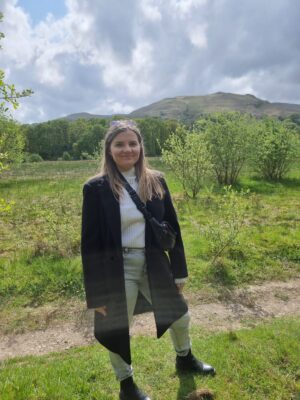
Jen Calleja photographs credit: Jorge Antony Stride.

Jen Calleja is a writer, translator and musician. You can find out more here Jen Calleja
Gemma Craig-Sharples is a translator from London and former NBG intern. She’s currently completing an MA in publishing and contemporary literature at the Freie Universität, Berlin.