
We spoke to Ulrike Draesner about her 2019 novel, Kanalschwimmer, newly translated as Channel Swimmer by Rebecca Braun and published by Upper West Side Philosophers, Inc.
Sheridan Marshall: So today is actually the publication day for your newest book, penelopes sch( )iff? Congratulations! Can you tell us a little bit about this latest book?
Ulrike Draesner: Thank you. It is a ‘post-epic’, in which I retell the ancient myth of The Odyssey from Penelope’s perspective. It is written as an epic poem, but it is also a great story with a lot of suspense and humour. We encounter Penelope as the very successful queen of Ithaca that she actually was. A gifted saleswoman, an astute ruler – and a person who knew how to enjoy life. When Odysseus returns from the war he proves unfit to rule, and so Penelope sets sail with her daughters and one hundred other women, in search of a new life. They embark on a journey ‘ametros’, beyond anything that has ever been told and is known to man. Keenly aware of the fact that the men of Ithaca are going to try to hunt them down, they resort to artifice and cunning, coming up with wonderful tricks. I did a lot of research into life in ancient Greece; I enjoyed inventing new scenes and writing about the sea and its many aspects.
The ancient Greeks had slaves from sub-Saharan Africa. Once the journey is under way the existing hierarchy with the slaves collapses: each individual woman, her knowledge and experience, becomes important for their collective survival. The former slaves start to find their voices. The capture and transfer of their parents and grandparents by slave traders needs to be acknowledged if the women on the ship want to find themselves a new home. They have to develop new modes of relating to each other and to their environments. There is a utopian moment to this, without negating death, violence and trauma. At the very end there is Penny who tells the rest of the story – Penny who is studying classics in Berlin right now!
Karen Leeder is actually already translating the first part of the book as a sample translation for Penguin, and I know she would be happy to translate the whole text if we can find an English-language publisher.
Read Karen Leeder’s sample translation here
Which brings us to Channel Swimmer, your first full-length novel to be translated into English. I read the novel back in 2019 when it was first published and was disappointed that it wasn’t selected by New Books in German at the time, but it is such good news that it has now found its way into English. I know that Channel Swimmer is a book that emerged over many years; please can you tell us about how you came to write it?

In the late 1990s I had the idea of writing four books corresponding to the four elements: air, water, fire and earth. I have always been interested in nature writing – and was worried about the natural world. At the time, there were a lot of climate change deniers, and I wanted to respond to that. I started by writing about air, and then I turned to water. During my time studying at Oxford in the 1980s I came across the peculiarly British sport of swimming the Channel. In around the year 2000 I was thinking about what my water book could be, and I remembered this sport and started to do some research. At that time the internet hardly existed, but there was a documentary film about a Channel swim which I watched.
The character of Charles emerged quite early on. I knew he wouldn’t swim for a record but would do it for himself. He just wanted to reach the French coast. Channel swimming is the sort of sport in which being older – in your 40s, 50s or 60s – is not necessarily a disadvantage. Endurance swimming doesn’t only require a reasonable level of bodily fitness and specific training, but also mental fitness, so that being older certainly doesn’t rule out your participation.
It wasn’t difficult to find Charles’ motivation for the swim – this marital crisis with Maude. I liked my idea of turning around the usual situation in which there is a man with two women, so that instead there is a woman who wants to have a relationship with two men and suggests that they live together as a threesome. All of them were young in the liberal ‘70s – so why not return to a bit of hippie spirit? But Charles can’t cope with that, and he turns to the water hoping to find his answer during the swim.
So, I had got him into the water all right, his route and the conditions were clear – but for a long time I didn’t know how the novel would end. The act of swimming is at its centre: what this kind of strenuous physical activity in very cold water does to your mind, to your perception of your environment and yourself. Alarms are triggered in your body; you go into a kind of survival mode. How could I write this experience – translate something so physical and existential into language? It is a swim for your life.
I had started and then I got stuck. Other writing projects interfered. But mare, the publishers in Hamburg with whom I had published a short excerpt of Charles in the water in an anthology of sea stories, kept phoning me and asking about Charles. They didn’t let me get away with my easy solution eschewing the end.
When I went back to live in England again for two years in 2015, I eventually finished the novel there. I went to Dover and did some proper research, and when I was talking to Channel swimmers, I discovered this attitude where the swim is judged very straightforwardly as a yes or a no: you either make it or you don’t. It was then that I realised that this binary situation wasn’t the entire truth. There were three possible endings: (1) you make it; (2) you don’t make it and are transported back to England on the accompanying boat; and (3) you die. Now I knew what I had to do with the end of the novel. It needed to be told in in a multi-versional way. I remembered The French Lieutenant’s Woman and the double ending there and I wondered how I might achieve telling three possible endings within the linear flow of narration and reading. Once I arrived at this understanding, the book was easy to finish – it’s just that it took nineteen years or so to get from the first idea to its publication day!
It was only afterwards, when I started talking about the book at different readings, that I fully realised what I had done. It is quite a crazy concept for a book. I sometimes imagine giving it as a writing task to my students: how do you write an entire book with a protagonist who is essentially mute and constrained to one action? I am glad I didn’t think of it like that beforehand, because I don’t think I would ever have started to write!
Did the book tempt you to get into the water in real life?
No! My fellow German writer, John von Düffel, is well-known for being a long-distance swimmer. He has been a keen swimmer all his life and has written about water as well. I see him regularly and have given him the book and he is so frustrated with me – he always asks how anybody who doesn’t do this kind of long-distance swimming, and who doesn’t even particularly like water, could possibly write about swimming like this. But for me, even as a child, writing was always a way of experiencing adventures and worlds which I couldn’t physically experience or wouldn’t have wanted to experience. I think this is the big advantage of literature: I don’t have to be in the water to have that kind of experience.
When the book was very nearly finished, I went to Dover for three days to do some final research. It was in August and I was talking to the Channel swimmers who were yet to start their swim. At that time of year the Channel is really warm – around nineteen degrees. While the swimmers all did short acclimatisation swims of around twenty minutes or so, I walked in as far as my knees, and that was more than sufficient to give me an experience of the cold water! Afterwards we all went to a pub, and the swimmers all had triple portions of porridge and full English breakfasts while I sat there just drinking a coffee, and that was the only moment when I felt envious of them!
When I was doing readings from the book in Germany, I would often get asked about why people only swim the Channel in one direction, from England to France, and whether it was even possible to do it from the other side. It is such a marvellous question, because it makes it clear that the idea of swimming the Channel is largely unappealing to the French mindset. Why would you want to enter this cold water when you can sit in a restaurant on the beach eating and drinking?! Of course you could swim the Channel the other way around, but it would be so unFrench!
How does it feel to you to have Channel Swimmer in an English translation now?
Oh, it is wonderful! As you mentioned, this is my first fiction in English. I am so grateful to Rebecca Braun for taking it on and translating it into English. Much of the book is about the rhythm and beauty of language. As I said, the action is suspenseful, but a lot of the book’s variety and inner beauty arise from the nature writing about the Channel: what does the sea look like, what does the sky look like, what about the horizon, night and day. Rebecca reported back to me on the specific melody in the nature writing sections, as well as the different tone in the love story.
Michael Eskin, the cofounder of the Upper West Side Philosophers, Inc. publishing house, had a very interesting observation. He said that for him, in the English version, the love story became more prominent and somehow made more sense. I thought that was an amazing comment and in some ways it reminded me of my literary upbringing. I was nurtured by Anglo-American and especially English literature, and I have always found – and other people have observed – that the combination of my desire to tell a story, the enjoyment of narration, with my approach to language is quite strange and unexpected in German. It is more usual to be either someone who experiments with languages or somebody who is interested in plot, not both at once. But I have always loved language and I have always loved a good story, and there is a precedent for this. If you read Virginia Woolf or James Joyce, these are good stories too – full of plot points and churns and characters who come to life. If you combine that with a more essayistic question, such as ‘what does cold water do to our bodies and our self-perception?’, there is a more extensive context for that in Anglo-American literature than in German literature. When Michael made this observation, I wondered how it could be the case when the book is unchanged – Rebecca didn’t extend the love story. It must come from the literary context, the kind of space which is evoked just by being in English. So, in a way, perhaps Charles is swimming home.
It can be challenging to write convincingly about a culture in a different language from that culture – but you have managed it!
The Channel has always been both a dividing border and a connecting route. It is a very contemporary place in the novel, fighting against pollution, and in the end questions of migration today and border control enter the novel…The idea of Great Britain as a tiny, closed-off island is negated by the book.
Ulrike Draesner
I am very glad you say so. I was lucky to study in England and then live there again in 2015-17. Brexit was happening, but things were still open, and it wasn’t entirely clear to what extent they would go through with it – how fast or to what degree. Brexit gave rise to many debates about national identity, but I am not convinced of the truth or facticity of these national identities, and so it was important for me to give Charles and Maude mixed identities. They are partly British – Maude is more British as far as her DNA is concerned, whatever that may mean, but she has had a sound European education in Vienna and a long-term experience of living in Germany. Her daughter was partly brought up in Germany, so you become a mixed family, and you take things on from this other culture and country. Charles comes from a family who have been migrating through Eastern and Western Europe for one hundred years and more, they have been affected by the wars. It is in the subtext, not an extra story, but part of the novel’s probing into our concepts of identity. Who decides about them? What can we choose or change? And what is ‘home’ supposed to mean – for our peace of mind, our dreams and visions. For Charles it is essentially linked to Maude – that much becomes clear during the swim.
The Channel has always been both a dividing border and a connecting route. It is a very contemporary place in the novel, fighting against pollution, and in the end questions of migration today and border control enter the novel. Charles thinks about how the Channel was created by a tsunami some 9,000 years ago, which is nothing in terrestrial time. The idea of Great Britian as a tiny, closed-off island is negated by the book.
Has Channel Swimmer been translated into any other languages apart from English?
It came out in a wonderful Italian translation a year ago and got very good reviews. As it is a relatively short book it isn’t such a big risk for a publisher because the translation isn’t too expensive, so the hope was always that it might open the doors to something else, and now penelopes sch( )iff is being translated into Italian too.
How does Channel Swimmer fit into your creative oeuvre?
One of the key strands of my work are questions of intergenerational transfer, of the meaning of family and home. Having been a child during the Cold War, I moved to Berlin in the ‘90s, enjoying open borders and peace – for a limited time. I have always been an acute observer of political and social change, and it has become obvious that we need to strengthen Europe. What could a European identity mean beyond economics and pressing political questions?
Ulrike Draesner
On one hand it is part of my long-term involvement as a writer with questions of forced migration, ‘Heimat’ and memory. I have written three novels about the consequences of the ‘agitated twentieth century’ for the identities of four generations after the war. Maude and Charles are the generation after the war. At the same time, I am interested in the connection between the body and language, the body and self-perception, and here, too, Channel Swimmer comes into play. I am just reading a book called Philosophie der Verkörperung (‘Philosophy of Embodiment’). There has been a huge discussion going on for decades now about how embodied knowledge or experience is. We don’t only have a brain in our head, but also in our vertebrae, our intestines. Violinists even have a tiny brain centre in their elbows – some of the movements they make are so fast that the nerve impulse doesn’t have time to travel to the brain and back, so it travels to the elbow and back instead. Certain knowledge – like coordination or the ability to spin – is completely embodied. I am interested in this kind of bodily knowledge and its connection to language. What does it mean to be a body, a human body? To have a human body? Interesting wording already, isn’t it? Wittgenstein brings that up in his Philosophical Investigations. As a young writer in the 1990s the question for me also meant what it meant to have a female body? And how modern medicine and biotechnological progress would change us and our concepts of ourselves. I am still wondering about all this, but now, given the rise of AI, the questions have taken on new dimensions and a different kind of urgency. What does it mean not to be a machine? To be mortal, but to have this embodied language and embodied knowledge? In view of history, it is necessary to discuss what values and consequences we want to connect to that.
I grew up in a family with no money and hardly any education. Farmers from Bavaria and forced migrants from what is now Poland. I was different and I had to work hard finding and defending who I wanted to become. One of the key strands of my work are questions of intergenerational transfer, of the meaning of family and home. Having been a child during the Cold War, I moved to Berlin in the ‘90s, enjoying open borders and peace – for a limited time. I have always been an acute observer of political and social change, and it has become obvious that we need to strengthen Europe. What could a European identity mean beyond economics and pressing political questions? A second strand are questions about what it means to have a body – to be a warm, mortal, human being? And thirdly, nature writing. All these strands combine in Channel Swimmer, so in the end it was a book I had to write.
Will you complete your series on the four elements by writing books about earth and fire?
We’ll see! I have thought about combining them and writing about volcanoes, but I don’t know yet.
My next novel is going to be about the glory and horrors of extraordinary intelligence. Especially in women – yes, joke. I just started doing research on Emmy Noether. The maths for Einstein’s general theory of relativity is so difficult that he couldn’t calculate it. But Emmy Noether, a Jewish-Bavarian mathematician could and did. Einstein became the popstar of physics, while she was forgotten for a long time. The way she did maths was so ingenious that the real impact of her inventions is still being discovered. Contemporary quantum physics wouldn’t be possible without her work. It’s time to retrieve her from oblivion. And I’ll see what else!
That sounds wonderful! Thank you, Ulrike.
With grateful thanks to the Goethe-Institut London for their support of this interview.
Author photo credit and copyright: MelliwWang
To see other titles by Ulrike Draesner with guaranteed translation funding, please click here.

Ulrike Draesner is a celebrated novelist, essayist, and poet whose work spans fiction, poetry, essays, multimedia projects, and translation. She has received major literary honors, among them the Konrad Adenauer Foundation Literature Prize and the Grand Prize of the German Literature Fund. Her novel Die Verwandelten was shortlisted for the Leipzig Book Fair Prize. After several years in England and international teaching posts, Draesner has been Professor at the German Literature Institute in Leipzig since 2018. A member of the Berlin Academy of Arts and the German Academy for Language and Literature, she now lives in Berlin with her daughter.
Learn more on her website Ulrike Draesner – Autorin
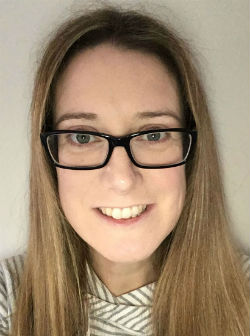
Sheridan Marshall is the Editorial Consultant at New Books in German. She works as a freelance literary editor and translator.