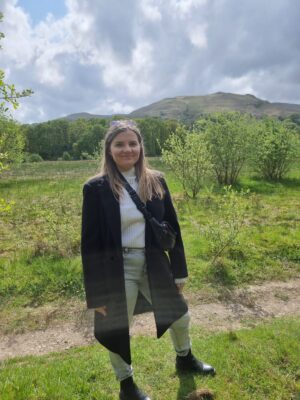

Recent intern Anna Compton reflects on her stint with New Books in German
What is your professional background?
I began my career working as an in-house translator from German and French to English at a translation agency, where I spent nearly 10 years honing my skills and discovering where my interests lay. I was surprised to find how much I enjoyed learning about the legal and financial fields and the specific vocabulary and writing styles they require, so I came to specialise in legal and financial translation. However, I have also wanted to translate literature ever since I studied for an MA at the University of Bristol back in 2011–2013, so I’m finally pursuing that ambition now I’m a freelancer.
How did you first hear about New Books in German?
I think I’ve known about New Books in German since 2012, when I participated in a translation course called ‘Use Your Language, Use Your English’ run by Birkbeck University. I remember the then director of NBG, Charlotte Ryland, talking to us, and I applied for the New Books in German Emerging Translators Programme! However, I soon got my in-house translator job and turned my attention to other translation fields instead. It wasn’t until recently that I remembered New Books in German and realised what a great opportunity the internship could be for me at this stage in my career.
What have you enjoyed most about your internship with New Books in German?
I’ve enjoyed all of it, but the absolute highlight for me has to be attending the jury meeting at the Goethe-Institut in London. It was amazing to witness the book selection process first hand and to learn about the selection criteria. I particularly enjoyed getting to meet such a wide range of translators, publishers and agents. I’ve also absolutely loved doing the interviews. It was brilliant to have the chance to speak to such interesting people and I learned a lot about what it’s like to work in publishing and as a literary translator.
What have you learned during the internship?
On a personal level, I’ve also learned, or reminded myself, that I can do so much more than just translate. Conducting the interviews and writing for the website pushed me out of my comfort zone but it’s been so exciting and satisfying to see my writing published online.
The internship has given me a much better overview of contemporary German-language literature and a clearer understanding of how books come to be translated and published in English. Perhaps the most useful thing I’ve learned for the future is what can help a book to achieve success in English translation. I’m always searching for German-language literature to pitch to publishers and it’s been really helpful to find out about what kind of books are chosen to be translated. On a personal level, I’ve also learned, or reminded myself, that I can do so much more than just translate. Conducting the interviews and writing for the website pushed me out of my comfort zone but it’s been so exciting and satisfying to see my writing published online.
Do you have a favourite from the books the jury selected and why?
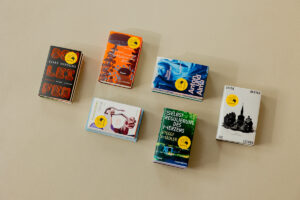
I loved reading the book I wrote a reader’s report on: Durch das Raue zu den Sternen by Christopher Kloeble. The story unfolds in such an unusual and intriguing way. I’m also looking forward to reading Fabula Rasa by Vea Kaiser, Die Schrecken der Anderen by Martina Clavadetscher and Karen W. by Gerti Tetzner.
Which book would you most like to translate?
I’m still trying to work out what my ideal book to translate would be. However, I’m especially drawn to Austrian literature set in Burgenland, where my mother grew up, such as Nincshof, by Johanna Sebauer. I’m also fascinated by the history of the German Democratic Republic, so it’d be amazing to translate something set in that era.
Thanks, Anna, for all of your work! It has been great to have you as a colleague.